ICAP Combines EBS and BrokerTec Businesses

And two become one – a new low-touch trading platform that is.

ICAP, a leading markets operator and provider of post-trade risk mitigation and information services, announced that it will combine its electronic businesses EBS and BrokerTec.

The combined business, which will be known as EBS-BrokerTec, will allow ICAP to leverage BrokerTec’s trading platform, client relationships and strong team, as well as EBS’s technology pipeline, to deliver unique products and services to the industry and manage cost efficiencies.

EBS and BrokerTec are two electronic trading platforms in FX and fixed-income trading, respectively.
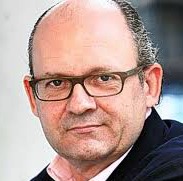
Michael Spencer, ICAP Group chief executive, will be chairman of unified EBS-BrokerTec.

“Bringing EBS and BrokerTec together will allow us to deliver new products and reach new client segments,” Spencer said . “We have demonstrated that we are able to deliver successful new trading solutions with the launch of EBS Direct last year, which has experienced exceptional volume growth. We want to continue to expand our addressable market with the launch of innovative products into other asset classes. I look forward to working closely with Gil and the team in this exciting phase of growth.”

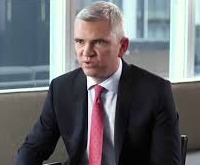
Gil Mandelzis, current CEO of EBS, will become chief executive of the new EBS-BrokerTec business. He il founded Traiana, a provider of post-trade and risk management services acquired by ICAP in 2007, and has led EBS since March 2012.

Seth Johnson will step down as the chief executive of BrokerTec but remains on ICAP’s global executive management group. Richard Kerschner, head of corporate development at EBS, has been appointed as the interim CEO of BrokerTec.

These platforms offer electronic trading solutions to more than 3,300 customers in over 50 countries across a range of instruments including spot FX, U.S. Treasuries, European government bonds and EU and U.S. repurchase agreements.

Swaps Clearinghouses Need Greater Oversight, CFTCs Wetjen Says

(Bloomberg) — Clearinghouses meant to reduce swaps market risk must face greater oversight to ensure they dont threaten the financial system, according to a member of the U.S. Commodity Futures Trading Commission.

Regulators should weigh having clearinghouses put up more of their own capital in the event of a default and requiring them to undergo standardized stress tests, Commissioner Mark P. Wetjen said in remarks prepared for a Futures Industry Association conference in Singapore last week.

After the 2008 credit crisis highlighted the threat posed by financial companies exposure to swaps, regulators including the CFTC moved to require that most trades be guaranteed at clearinghouses including those owned by LCH.Clearnet Group Ltd., CME Group Inc. and Intercontinental Exchange Inc.

As clearing volumes increase, however, we need to be cognizant of, and effectively address, the resulting increased concentration of risk, Wetjen said.

Todays comments show Wetjen aligned with a growing number of regulators and traders encouraging heightened scrutiny of clearinghouses. CFTC Chairman Timothy Massad, Federal Reserve Governor Jerome Powell and executives at JPMorgan Chase & Co., the largest U.S. holder of swaps, have urged more oversight as clearinghouses play a bigger role in the market.

Regulators should consider publishing a release on possible standard stress tests, said Wetjen, a Democrat. The CFTC should also consider rules for how much of its own capital a clearinghouse should contribute in a default, he said.

Wetjen said he will hold a CFTC advisory committee meeting to discuss additional oversight.

SunGard Launches TCA Solution for Foreign Exchange Trading

Currency traders are about to get another choice when it comes to trade cost analysis.

SunGard has launched an independent, real-time transaction cost analysis (TCA) solution for foreign exchange (FX) trading to help traders, corporate treasurers and portfolio managers understand the quality of their FX executions. The FX TCA solution helps firms gain transparency over their FX trading by providing real-time FX pricing and transaction data on a customizable data analysis toolkit delivered in a software-as-a-service (SaaS) environment.

The absence of a central or regulated pricing venue is driving the need for FX pricing transparency for managing exposure and costs. As FX execution unbundles from custody arrangements, and trading continues to move from manual to electronic methods, more attention is being paid on monitoring the cost of execution, closing out positions intraday to drive real-time trading and hedging of FX risk, and utilizing TCA to evaluate performance while maintaining better control over pricing.

“With growing adoption of electronic FX trading, including algorithmic order routing, becoming an integral part of the daily workflows of real asset managers, hedge funds, and corporate treasury departments’ end-users alike, the resulting demand for FX TCA services of all types -: post-trade, pre-trade, and real-time analysis, will continue to grow healthily into the foreseeable future,” said Howard Tai, senior analyst, Aite Group.

according to SunGard, its TCA solution analyzes forex transactions and shows the relative performance of the customer’s FX trading activity.

TRADERS ON THE MOVE: IEX Adds SalesTrio, CAPIS Promotes Kiselica To Trading Head

Buyside-owned trading venue IEX has hired a trio of new salespeople aimed at growing its global trading business and client base. The new hires include Peter Gallo, Rob Leffand Julie Huhn.

Gallo, a 22 year veteran of the finance industry, is charged with building relationships with mid-size regional broker-dealers and deepening IEX’s existing relationships. He joined IEX from Cantor Fitzgerald & Co. where he was head of electronic trading. Prior, he was with Citigroup, Bear Stearns & Co, and Tools of the Trade.

Leff, a pro with over 25 years of experience, will be building relationships with trading shops and with the hedge fund community. He comes from Quad Capital where he was senior portfolio manager. He also worked at SAC Capital and Millennium Partners.

Huhn is in charge of building relationships with high-touch single stock and program trading desks as well as with derivatives traders. She spent 10 years on the high-touch sector trading desk at Deutsche Bank. After that, she spent three years at Bloomberg in sales covering the Northeast region.


If you’ve gotten a new job or promotion, let us know at onthemove@sourcemedia.com


Capital Institutional Services, (CAPIS) promoted Matt Kiselica to manager and head of Head of International Trading. Kiselica, a 24 year veteran, will be responsible for managing the international trading desk’s execution services, trading staff, and business development initiatives. Prior to joining CAPIS, he was vice president of Cazenove’s global sales trading desk in New York. He also spent time at Robert Flemings and Smith New Court. He reports to director of global trading John Naudo.

WallachBeth hired quantitative trading veteran Matthew Rowley as its chief technology officer, a newly created position. Rowley, a professional with nearly 20 years of experience, most recently served as head of alternative execution at Credit Agricole Cheuvreux, helping grow its global electronic trading business. Prior to Cheuvreux, he was global head of advanced trading products at financial software vendor Fidessa. He began his career as a quantitative analyst in the Strategic Risk Management Advisory group at First Chicago Corp.

Technology and execution services provider SunGard has appointed Robert Santella as its president for the firm’s Global Trading business. In this newly created position, Santella is responsible for the overall strategy and global infrastructure of the trading solutions across the firm.

Also, Ralston Roberts was promoted to the role Chief Operations Officer for the firm’s Global Trading, Market Data/Network business. Ralston is responsible for the firm’s network and market data overall strategy; linking the world’s banks, investment managers, brokers and asset managers together to facilitate straight through processing and consumption of financial information.

Lastly, Christian Kromann was promoted to the role Chief Operations Officer for SunGard’s Global Trading, Trading Software and Services business. Kromann will be focused on providing multi-asset trading solutions to banks, brokers, trading firms and other financial institutions in the Americas, EMEA and APAC.

Barclays Seeks to Put Dark Pool Trading Suits Before N.Y. Judge

(Bloomberg) — Barclays Plc asked that a federal judge in New York handle claims it hid the role of high- frequency traders in its dark pool.

Barclays, the U.K.s second-biggest bank by assets, is being sued by institutional investors in at least five federal lawsuits claiming it cheated customers by giving preference to high-frequency traders on its alternative trading venue, Barclays LX. New York Attorney General Eric Schneiderman sued Barclays in state court in June.

Jeffrey T. Scott, a lawyer for the bank, today asked a panel of five judges to assign the federal suits to U.S. District Judge Jesse Furman in Manhattan, saying the evidence in the case is incredibly complex, including millions of trading records. The judges, on the U.S. Judicial Panel on Multidistrict Litigation, heard arguments on the request today in Charleston, South Carolina.

If the Barclays request is granted, Furman will supervise pretrial evidence-gathering and requests by Barclays and other defendants to dismiss the case.

In addition to Barclays, investors sued seven public exchanges, including the Chicago Board Options Exchange Inc., Nasdaq OMX BX Inc. and New York Stock Exchange. The investors claim the exchanges fraudulently provided private data feeds and co-location services to high-frequency traders, at the expense of other traders.

Barclays and the other defendants are seeking to have the suits thrown out.

Dark Pools

Dark pools such as Barclays LX are private stock markets usually operated inside large banks. Unlike the public exchanges, supply and demand is kept private until after trades are executed. Investors that use dark pools may be seeking better prices by masking their trading strategies. Some investors claim the system allows the banks to provide secret advantages to favored traders.

Furman is already overseeing four of the cases, which were filed in New York. Barclays argued that the suits all share similar allegations and that Furman is in the best position to oversee them.

Costa Mesa, California-based Great Pacific Securities, which sued Barclays in federal court in Los Angeles, argued against transferring the case to Furman.

Barclays wants you to take a narrowly tailored action and bundle it with the New York cases, which include a broad range of claims, Great Pacifics lawyer Yury A. Kolesnikov told the panel.

Nationwide Class

The investors, which include the city of Providence, Rhode Island, the Plumbers and Pipefitters National Pension Fund and the Employees Retirement System of the Government of the Virgin Islands, seek to represent a nationwide class of investors who claim they traded stocks from April 18, 2009, to the present and lost money as a result of the defendants alleged misconduct.

When Barclays lawyer Scott started to make his argument from the counsel table, U.S. District Judge Sarah Vance, who led todays panel, told him to move to a podium in front the five judges.

If you are going to tell us about dark pools, you have to do it from close range, the judge said to laughter from spectators.

The case is In Re Barclays Liquidity Cross and High Frequency Trading Litigation, MDL No. 2589, U.S. Judicial Panel on Multidistrict Litigation (Washington). The Schneiderman case is New York v. Barclays Capital Inc., 451391/2014, New York State Supreme Court, New York County (Manhattan).

WSW 2014: Citi’s Sperry Is Not Just a Mentor, But an Advocate Too

Mentor of the Year Award

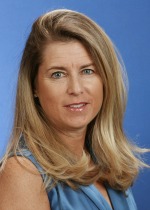
Christine Sperry

Firm: CITIGROUP GLOBAL MARKETS

At Citi, youve got not just a co-worker or another senior executive in Christine Sperry, but an advocate as well.

Sperry, a 19 year veteran of Citi Global Markets, got her start on Wall Street 30 years ago the old fashioned way, learning the trading ropes by working with other brokers, listening to the convertible bond traders at First Boston (now Credit Suisse) and learning all she could through observation. The debt instrument was new to the market, like her, and she began her career doing research and sales for the fledgling product.

I got my start on The Street thanks to a family friend whom I babysat for, she recalled. He was a floor broker, and that sparked my interest in finance.

See A Slideshow of All The Winners

After First Boston, Sperry moved to Lehman Brothers and entered its formal training program, adding to her knowledge of the capital markets and equity trading. From Lehman, she moved to Salomon Brothers until it was taken over by Citi in 1998.

This industry is always changing, and I can always learn something new, Sperry told Traders. And once she got to Citi, Sperry began to mentor women, and some men, as to how to get on the desk, stay on the desk and excel after time on the desk.

Over her career at Citi, she has been mentor and mentored. Sperry credits former senior Citi execs who always left the door open for her, and who would in turn advocate for both noticed and less visible employees. Sperry, like the execs before her, became an advocate herself for Citis unnoticed employees. She knows it takes more than just hard work to get noticed.

Sperry now spends her time mentoring both formally and informally at Citi by chairing several committees, including those charged with hiring. She coaches new applicants to help them get through the daunting interview process, and is also on the firms diversity committee. In addition, she informally mentors those outside Citi – both former employees and others.

People are your assets, Sperry said. No matter who you are, if you can take just 15 to 20 minutes a week and reach out to someone, it really can affect someone in a powerful and important way.

Lava Cools As Citi Exits ECN Business

Euclid could have been a hedge-fund manager.

The Greek mathematician and father of differential geometry defined our understanding of three-dimensional shapes in roughly 280 BC. Thanks to Euclid we know what a cube is and that right angles are all equal.

In 1982, mathematician James Simon started a money-management firm that would seek superior returns not by studying business strategies and financial statements but instead through adhering to mathematical and statistical methods, especially differential geometry. Today, secretive Renaissance Technologies, called RenTech by most, manages $37 billion mainly for its principals. Simons retired in 2009 with an estimated personal fortune of $12.5 billion. Math works.

In 1999, two years after the SEC passed rules on handling trades and set regulations for alternative trading systems that today we call dark pools, Richard Korhammer and his engineering colleagues started a direct-access platform they named Lava Trading. This was a subtle nod to differential geometry and the construction of surfaces. Everything, including equity markets has a surface, and in stocks its the top of the book. But below it, in whats not displayed, is where the action lies.

In 2003, Lava filed a patent on its technique for aggregating market data and placing some trades while hiding others – the top of the book versus the rest of the orders. Differential geometry. The firm became the market-share leader in direct access, a way to describe how investors could skip the stock exchanges to trade with each other.

In 2004, Citigroup spearheaded a dark-pool invasion by big brokers, buying Lava Trading for some $500 million and making it an independent unit. LavaFlow Inc. became known for its market-participant ID (MPID), a four-letter identifier traders use to see whos driving orders. Goldman Sachss primary MPID is GSCO. Morgan Stanleys, MSCO.

Lavas was FLOW, and FLOW was everywhere. Its still big. For the week ended November 10, FINRA ranked LavaFlow sixth among dark pools behind Credit Suisse, UBS, Deutsche Bank, and the star of Michael Lewiss hit market-structure tell-all “Flash Boys,” IEX. Combine FLOW with Citis two other dark pools and Citi ranked third.

But Citi is chilling LavaFlow, hardening the surface and shutting it down. In July, the SEC fined LavaFlow a record $5 million for permitting a smart order router, computer code that makes buy/sell decisions with high-speed data, to use confidential customer information in trading decisions.

The SEC said these orders totaled 400 million shares over three years. Citi dark pools match that much every two weeks so the allegations concerned roughly 1 percent of it, a rounding error.

Pulling out of a market where youre ranked 3rd of 36 seems extreme. But it reflects facts that capital-markets participants should recognize. First, the stock market isnt a market anymore and firms like Citi are demonstrating by actions that they recognize it. A market by definition is aggregated buy/sell interest.

The stock market today is the opposite of that, with disaggregated and hidden interest, intermediated oftentimes by parties with no wish to carry inventory in the products the market supposedly offers. This is not a guess but an observable and statistical fact. High-speed intermediation is routinely eight or 10 times the price-setter of natural interest, yet rarely more than 3 percent of all liquidity.

Number two, rather than admit the rules they made in 1997 birthed dark pools and shattered the stock market, regulators are going to regulate dark pools out of existence, and Citi sees it coming. If you think thats good, remember how we got here to begin with.

Third and perhaps most important, Citi ranks second in another market: Derivatives. Bloomberg reported in September this year that Citi has grown its derivatives business nearly 70 percent since the nadir of the financial crisis and now serves open derivatives contracts worth $62 trillion, second behind market-leader JP Morgan ($68 trillion). Its the largest counterparty for interest-rate swaps, the biggest derivatives segment. In derivatives, Citi IS the aggregator.

It fits what we see in equities. When energy stocks took a breathtaking hit following OPECs decision to maintain production levels recently, the behavioral shift was in hedging. The magnitude of movement in prices says it wasnt driven by ownership but notional value. Notional value can reflect tremendous demand or its utter absence in the space of heartbeats because its not actual ownership. We saw stocks drop 30 percent or more in two days without any meaningful movement in investment behavior.

This is what institutions are doing. It reflects the uncertainty of everything, everywhere. A great deal more money than most realize is putting and taking interest in stocks through derivatives like swaps. That fact is increasingly setting share-prices.

For Citi, the money is in this aggregation, not in equity fragmentation. And so Lava slows, stills, and hardens. Its just differential geometry.

– – – – – – –

Tim Quast is president and founder of market-structure analytics firm Modern Networks IR, LLC based in Denver.


Paul Hamill to Join Citadel From UBS to Boost Swaps Trading

(Bloomberg) — Paul Hamill has left UBS AG to joinCitadelLLC as the global head of fixed income, currencies and commodities for execution services as the hedge fund expands its role in fixed-income trading.

Hamill, 39, who served as the global head of currencies, rates and credit execution services at the Swiss investment bank, will start early next year atCitadelSecurities LLC, Jamil Nazarali, head ofCitadelExecution Services, said in an interview. The $24 billion hedge fund founded by Ken Griffin filed to become a swaps broker in March and hired Yanfeng Chen from Credit Suisse Group AG to help in its quest to become a market maker in interest-rate swap trading.

Citadelwas one of the most outspoken defenders of the Dodd-Frank Act and the reforms it made to the $691 trillion over-the-counter derivatives market, including the mandate that most swap trades be backed by a clearinghouse and traded electronically. The fund is now positioning itself to compete with JPMorgan Chase & Co. and other banks that reap tens of billions of dollars in annual revenue from derivatives.

Citigroup Inc. analysts in October estimated that about 35 percent of global bank revenues from FICC are attributed to derivatives such as swaps. That equates to about $13.6 billion from just the five largest Wall Street banks in the first nine months of the year, when total FICC revenue for the firms was $38.8 billion.

Market Making

Hamill didnt respond to a message left on his mobile phone. Karina Byrne, a UBS spokeswoman, confirmed Hamill left the bank. We wish him well, she said in an e-mail. We will continue to drive forward with our long term business plan with support from bank executives in the currencies, rates and credit businesses, she said.

With Dodd-Frank mandating clearing and electronic trading of these products it provided us a unique opportunity to make markets, Nazarali said.Citadelrecently began sending prices to swap execution facilities owned by Tradeweb Markets LLC, ICAP Plc, Cie. Financiere Tradition SA and Bloomberg LP, parent company of Bloomberg News, Nazarali said. It is already in the top 10 providers of client liquidity on Bloomberg in U.S. dollar rate swaps, he said.

OTC Derivatives

Used by corporate borrowers to convert floating-rate loans into fixed and by institutional investors to bet on economic growth and central bank policies, interest-rate swaps make up the bulk of the OTC derivatives market. They are the largest segment of OTC swaps, with $421 trillion of notional value of such contracts outstanding as of June, according to the Bank for International Settlements.

While at UBS, Hamill helped the bank shift toward electronic execution of swap trades that historically were done with clients over the phone. He worked on the Price Improvement Network in credit-default swaps and the Neo platform that aggregated UBS customer trades that were then sent to swap- execution facilities, the new trading system for swaps set up under Dodd-Frank.

Citadelhas been laying the groundwork to enter the swaps business ever since Dodd-Frank was enacted in July 2010. Starting that December, Randall Costa, then-operating chief of the technology group, and Adam Cooper, the firms top legal officer, held more than 30 face-to-face and telephone meetings with the SEC and the CFTC, according to the agency websites.

The firm joined with Getco LLC and others to push regulators to adopt a central-clearing process for swaps. With the establishment of central clearinghouses, all of the dealers that wrote swaps would commit billions in cash and securities to protect against default of any one contract, allowing smaller entrants to compete with banks on price rather than size and credit rating.

State Street Exiting Swaps Clearing Business, Citing New Rules

(Bloomberg) — State Street Corp. is closing down its swaps business after clients said new regulations steered them away for using the products.

The bank will shutter its U.S. business for clearing swaps early next year and will shelve plans to start a similar operation in Europe, Anne McNally, a spokeswoman for the Boston- based company, said in an e-mail statement Thursday.

State Street will instead focus on trading other types of derivatives, particularly more traditional exchange-traded futures, that have not been subject to broad new regulations imposed since the 2008 financial crisis.

Due to market and regulatory factors, our clients have largely evolved their investment strategies towards the use of futures and away from over-the-counter derivatives, McNally said in the statement.

State Street joins Bank of New York Mellon Corp. in exiting portions of the derivatives business in response to regulatory developments. BNY Mellon, the worlds largest custody bank, said in September that it was shutting its derivatives sales and trading business.

Global regulators moved to increase oversight of the $700 trillion swaps market after largely unregulated swaps helped fuel the 2008 crisis. The new rules seek to have most swaps guaranteed at clearinghouses, which accept collateral from buyers and sellers in order to reduce the risk in the trades.

BATS’ Fine in Direct Edge Settlement Could Be a Record

The Securities and Exchange Commission is about to levy what could be the largest fine ever against a market operator.

The U.S. equity market regulator is said to be near a settlement upwards of $13 million over how Direct Edge, which has been purchased by BATS Trading, handled investors’ orders, according to a report in the Wall Street Journal.

The three-year investigation by market regulators into allegedly unfair treatment of investors by stock exchanges could result in the largest fine ever levied against a stock exchange, according to people familiar with the matter.

The settlement in the Direct Edge investigation , the Journal reported, would hand the SEC a win in its examination of the opaque ties between stock exchanges and high-speed traders. Exchanges, in response to the heightened scrutiny, have published hundreds of pages detailing how their order types operate.
However, the WSJ reports that a deal isn’t assured, the board of BATS, which merged with Direct Edge last year, has signed off on the settlement, which is in the final stages of negotiations and could be announced within weeks, people familiar with the matter said.

The SEC investigation concerns actions taken by Direct Edge before the merger, these people said. The combined trading handled by BATS and Direct Edge exchanges accounts for about one-fifth of all U.S. stock-market volume.

An SEC spokesman declined to comment for the story.

The current record fine for an exchange came in May 2013, when Nasdaq OMX Group Inc. agreed to pay $10 million to settle securities-law violations tied to its handling of the chaotic Facebook Inc. public offering a year earlier.

The investigation into Direct Edge focused on the exchange’s usage of specific order types, instructions that exchanges provide to determine how customers’ buy and sell orders are handled. That includes instructions such as whether or when an order should be executed. Order types, which have proliferated in recent years, have come under increased scrutiny amid concerns that certain market players are gaining an advantage by getting more information than other traders about how order types work.

The WSJ wrote the SEC, which is investigating order types at the major exchanges, has been probing whether Direct Edge’s description of its order types didn’t match how its computer trading system actually worked, according to people familiar with the settlement talks. The investigation also has focused on whether certain clients had more information about how the order types operated then others, these people said.

As a result of the investigation, BATS forced out William O’Brien, Direct Edge’s president, earlier this year. He was replaced by Chris Concannon, formerly an executive at high-frequency trading firm Virtu Financial.

The investigation is one of several that regulators, law-enforcement officials and lawmakers have opened into exchanges and other trading venues, with a focus on whether high-speed traders have been given advantages over other investors.