About eight years ago, as the number of execution management systems on offer from brokers mushroomed, buysiders found themselves with more systems on their desktops than they needed.
What they wanted was one system that gave them access to multiple brokers. What the brokers wanted was for their customers to use their platforms to access their own services exclusively.
The two positions were at odds with one another. Finally, one side prevailed.
And it was the buyside. Its discontent drove the spread of the broker-neutral platform-a system that could be used by asset managers and hedge funds to trade with multiple brokers.
BROKER NEUTRALITY
All brokers, including Goldman Sachs, professed to supply broker neutrality, but many didn’t. Sources tell Traders Magazine that Goldman actively discouraged its customers from routing their orders to its competitors.
As broker neutrality gained in popularity, Goldman Sachs had to make a decision: Let its REDI division become an independent firm and grow. Or keep it in place as a service of Goldman Sachs, and risk obsolescence as the market moved away from its business model.
It chose the former. According to Rishi Nangalia, CEO of the technology provider now known as REDI Holdings, the buyside was clamoring for so-called “broker-neutral” execution management systems, so the umbilical cord to its parent had to be cut.
“We listened to market trends and clients’ demands for an independent, multi-asset EMS solution, but also to preserve the strategic relationship with the sellside,” Nangalia said. “This resulted in us partnering with several significant industry participants to deliver an innovative and uniquely positioned broker-neutral solution to the broader financial community.”
He added that the buyside said it wanted a single experience across all brokers, and this was something REDI couldn’t offer while at Goldman – too many other brokers saw Goldman as competition.
The buyside, Nangalia said, said it did not want eight different systems to trade with- just one or two. And this is where independent vendors like REDI are making inroads versus the brokers’ own systems.
Ready or not, REDI has taken the plunge and become an independent firm. It was a decision that took years to fully implement.
The Securities & Exchange Commission met with the heads of the top U.S. stock exchanges on Thursday morning to discuss the recent spate of trading glitches and system outages that have plagued investment firms and exchanges. The exchange operators also got some marching orders: Fortify your trading systems.
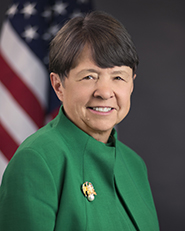
This unprecedented meeting – where the vulnerabilities of electronic trading were discussed with the new head of the SEC Mary Jo White – was inspired by the “Flash Freeze” that stopped trading on Nasdaq in mid-August.
According to news reports, White and her SEC team wanted assurances that the IT systems used by the exchanges was properly tested and had adequate redundancies and so-called “fail-over” plans.
Bloomberg reports that White ordered the heads of equity exchanges to work together on a set of recommendations that will strengthen the resiliency of U.S. markets.
“Our homework assignments are clear, they require collaboration and we’ve got 60 days,” said NYSE Euronext CEO Duncan Niederauer after the meeting with SEC’s White.
As it usually happens in these cases, the heads of the exchanges lauded the regulators’ mission while subtly pushing back on any plans to increase their regulatory oversight.
A statement from Robert Greifeld, CEO of NASDAQ OMX, reads:
“Today’s meeting organized by the SEC was an important and constructive step forward to address the soundness and reliability of critical infrastructure underpinning the U.S. capital markets. The recommendations discussed today with regulators and key industry participants are designed to accomplish three overarching objectives: to improve the operational resiliency of our markets, strengthen interoperability standards between exchanges and market participants, and establish a clear governance and testing framework for the industry.”
NASDAQ has the responsibility as a market leader to take all necessary steps to ensure the integrity and reliability of the markets, and we intend to continue to do so in a highly collaborative way with the other exchanges as well as our regulators, recognizing that investor confidence is the cornerstone of a healthy market.”
But not all was good cheer. The OTCMarkets, for one, issued a statement that pushes back against Regulation SCI, the SEC’s new proposal for improved “Systems Compliance & Integrity.”
“The staggering breadth of Reg. SCI, combined with the ambiguous language in the proposing release would immediately impose severe burdens on “SCI Entities,” as that term is defined in the regulation. The effect which would be felt by their members, subscribers and ultimately investors, who would be left to bear higher costs while receiving lower quality services. The organizations that should be focused on the consistent improvement required to keep the U.S. at the forefront of financial market structure would instead be stifled by monumental new reporting requirements. Raising the regulatory burden and resources required for systems change will reduce the industry’s capacity for technological innovation, causing the long term global leadership and efficiency of U.S. markets to suffer.”
Ah, another regulatory proposal followed by push-back from the financial firms who would really like to, you know, pass.
But as Harvey Pitt, a former head of the SEC, told CNBC earlier today, the regulatory body could always deploy the “nuclear bomb” and dismiss a head of a stock exchange or two. It has that power after all, he says.
(Bloomberg) — The complexity of the U.S. stock market poses the biggest challenge to ensuring systems run without failing, Nasdaq OMX Group Inc. Chief Financial Officer Lee Shavel said.
A six-year-old rule known as Reg NMS requires U.S. equity exchanges to route trades to the venue with the best price, a shift that spread trading across more than 50 markets. The underpinnings of that system were tested on Aug. 22 when Nasdaq halted trading for thousands of companies for three hours because of a glitch in its system for distributing price quotes.
“Given the number of connections within that system of various execution venues, and I think the competitive dynamics with which that environment has evolved within the Reg NMS context, it has created an environment that is inherently difficult to maintain consistency from a technology standpoint,” Shavel said Tuesday at a conference hosted by Barclays Plc in New York.
U.S. Securities and Exchange Commission Chairman Mary Jo White is meeting with exchange executives in two days to discuss Nasdaq’s Aug. 22 outage, which was caused by a flood of data sent from NYSE Arca that exposed a bug in Nasdaq’s software.
Shavel said today that industry discussions should result in “a compliance system that allows market participants and other exchange participants to have greater certainty in the types of situations that we’ll have to deal with and to make certain that we are anticipating as broadly as possible what may happen so that we’re prepared to address them quickly.”
SEC Meeting
When she announced the Sept. 12 meeting with exchanges, White said the Nasdaq outage “should reinforce our collective commitment to addressing technological vulnerabilities of exchanges and other market participants.”
In his comments today, Shavel minimized the role that the technology breakdown played in the length of the halt.
“The delay in restarting trading was not a technology issue, it was driven by the fact that we wanted to make certain that all of the market participants, the exchange, the member firms were ready,” he said. Nasdaq shares rose 1 percent to $30.98 today, paring their decline since the day before the halt to 1.8 percent.
The Financial Industry Regulatory Authority is likely to publish a draft of a rule proposal requiring dark pools to report their trading volume in October or November, Traders Magazine has learned. That will be followed by the submission of a formal rule proposal to the Securities and Exchange Commission before the end of the year.
The chances for its approval next year are high, according to industry execs.
Christopher Nagy, head of KOR Trading told Traders Magazine that discussions are underway for a formal reporting rule. While no information has been made public by FINRA, he feels confident that a timeline for any possible rule is taking shape.
FINRA first announced its plans to promulgate a reporting rule in July.
Driving the idea for such a rule are complaints by exchanges that too much trading is taking place off-board in dark pools and brokers internalization engines. Such a disclosure rule is considered a positive first step in achieving an understanding of the extent of dark pool trading.
While a formal public regulation has yet to be drafted by Finra, one is in the works both executives said, saying talks began back in June. A draft of the proposed rule is likely as early as October or in November. Once a draft is put out and discussed, a formal rule proposal will be sent to the SEC, presumably later this year with a comment period to follow, likely stretching into 2014. Full approval and implementation could happen during the first half of next year.
KOR’s Nagy, who has experience in such matters from his days as managing director for order routing and market data strategy and co-head of government relations at TD Ameritrade, said that Finra was currently working with the broker-dealers that run their own dark pools, other alternative trading system operators and the buyside to come up with a reporting system all could work with.
“This regulation will get passed,” Nagy said of the to-be-announced regulation. “The feeling of some operators is this type of mandate to report is ok but the frequency of said reports needs to be sorted out first.”
Dan Mathisson, head of equity trading at Credit Suisse, who said he had not seen any proposal yet, agreed with Nagy that a rule governing dark pool volume reporting would likely pass. He told Traders Magazine that he supports the idea of a Finra proposal despite not seeing all the details just yet and that a date of early 2014 for a final rule was likely.
Credit Suisse was one of several dark pool operators that self-reported its volumes but subsequently stopped in April due to frustration concerning the lack of uniform reporting criteria among self-reporters, according to Mathisson.
FINRA failed to respond to an email seeking comment by press time.
Bank of New York Mellon Corp. last week appealed a decision by the New York State Supreme Court to allow a lawsuit brought by the New York State Attorney General against BNY Mellon over its foreign exchange trading.
In August, the state’s highest court ruled in favor of the Attorney General’s office, allowing it to proceed with its lawsuit. New York’s top cop is accusing the giant custodian bank with defrauding various New York City pension funds over a ten-year period by overcharging them for currency trades.
The appeal is the latest volley in a nearly four-year legal tussle between BNY Mellon and various states as well as the U.S. Justice Department over its “standing instructions” foreign exchange transactions service. Other custodian banks, including JP Morgan and State Street have also been the subjects of fx-related lawsuits.
Besides New York, BNY Mellon is facing lawsuits in California, Massachusetts, and Florida. It won a dismissal of a so-called “whistleblower” suit in Virginia. It also has had whistleblower suits thrown out in New York and California.
Custodian banks such as BNY Mellon take custody of the financial assets of institutional investors such as pension funds, including foreign securities. As part of that service they may automatically enter into so-called standing instructions currency trades during the clearing and settlement process.
Standing instructions trades are typically smaller than negotiated trades, falling below the $1 million minimum necessary to qualify for trading in the inter-dealer wholesale market. The custodians’ customers often times don’t learn of the actual prices of the trades until weeks after the fact.
The New York State suit claims that BNY Mellon priced clients’ FX transactions “at the worst rate at which the currency had traded during the trading day rather than at the market rate at the time of the trade. The bank then pocketed for itself the difference between the worst price of the day it had given clients and the market price existing at the time it executed the transaction. Through this fraud, it earned two billion dollars over a ten-year period.”
BNY Mellon “flagrantly misrepresented its practice, writing to clients that in executing SI transactions, the bank would obtain the “best rate of the day,” “best execution” and “the interbank market rate at the time of execution,” according to the suit.
For its part, BNY Mellon contends the A.G.’s suit is without merit. In a statement following the Court’s ruling in August, Kevin Heine, BNY Mellon’s head of corporate communications, praised the Court for dismissing the whistleblower claims, but said “we continue to believe the remaining claims are unwarranted and we will vigorously defend against them.”
For some industry officials, the pension funds deserve some of the blame for the allegedly poor prices the received.
Jim Cochrane, foreign exchange transaction cost analysis product manager at ITG and a former FX trader, says that there are two sides to the story. The clients agreed to pay through transactions to cover the cost of custodial services, he said. “The banks are not innocent but you let the fox guard the henhouse,” he said.
“The buyside knew where the markets were. They should have been doing a better job of policing their FX transactions,” Cochrane said.
As for the custodian banks, they have stepped up their game, according to Cochrane, because they know they are being watched.
Cochrane said that when he looks at the data—a custodial trade without a timestamp—and measures it against the high and low for the day, more often than not, the fills are falling inside the high and low and not outside.
That wasn’t the case when he first began examining the data. Two years ago, when he looked at 2009-2010 data, “I saw a lot more trading outside the daily range.”
Pension funds and buyside firms now want independent verification that the rates they are getting “are either within the daily range or at the time of execution it was close,” Cochrane said. That’s why ITG is getting requests for trials of its new FX TCA product, which debuted a year ago.
Firms are using the service for compliance and process improvement, but most commonly to help measure best execution, Cochrane said.
BNY Mellon was first hit with a lawsuit in December 2009. Since then, it has watched as its revenues from foreign exchange transactions dropped by nearly 40 percent. In 2009, the bank took in about $850 million in revenues from fx trades. In 2012, it grossed $520 million, a decline of 38.8 percent.
It is unclear how much of that decline is the result of fallout from the litigation. BNY Mellon does the bulk of its fx volume in negotiated trades—not standing instructions trades—according to its website. It only started disclosing the percentage of standing instructions trades in 2011.
As for State Street, it has seen its revenues from “indirect,” or standing instructions, fx trades drop from $369 million in 2009 to $248 million in 2012—a decline of 33 percent.
ITG’s Cochrane isn’t the only industry official to find the pensions remiss in their duties. Historically, according to Michael O’Brien, head of global trading at Eaton Vance, fixed income managers were more sensitive to FX execution levels than equity managers.
“If you are an equity manager and you’re worried about whether your stocks will go up or down by 30 percent, FX, on an individual trade basis seems like such a small piece of the trade that it could have been overlooked,” he said.
On the fixed income side, however, firms are counting in basis points, so those managers were more sensitive to foreign exchange, O’Brien said. “If you had to generalize you’d find it was more equity managers leaving their orders with custodians and fixed income managers maybe not.”
As a result of the FX custodian lawsuits, however, there is now far more sensitivity to foreign exchange, and one piece of evidence is the emergence of firms that do FX TCA, he said. “It’s not as precise as equity TCA but you can get a general idea.”
The lawsuits are also one of the big reasons more buyside shops are trading FX more on their own now, O’Brien said. And the growth of electronic FX trading has made it more efficient for smaller shops to do their own FX. Eaton Vance, which has had a long-time policy of not using custodians for FX trades, does almost every trade in G10 currencies electronically, he said.
Bloomberg first reported the news that BNY Mellon had appealed the Supreme Court’s decision.
For Lynn Challenger, the last seven years have been one big project: transforming a far-flung order processing operation into a centralized, multi-asset trading hub where the traders take responsibility for each and every order.
Mellon Capital Management’s managing director of global trading oversees nine traders trading equities, futures, currencies, fixed income securities and swaps from the quantitative money manager’s base in San Francisco. All told, group turnover is about $1.2 trillion annually.
Before joining the storied money manager in 2006, Challenger spent 16 years on the sellside, mostly as an options trader. While he says his broker-dealer background was not a factor in his hiring, he does expect his group to think and act like sellside traders.
“I strive to bring the sellside mentality to the buyside,” Challenger told Traders Magazine. “The way technology has moved, it’s really empowering the buyside to make their own trading decisions and choices and manage their own risk. They’re not just order processors that rely on sales traders to manage their orders. What we’ve been building on for the last six years is a true trading desk.”
The watchdog has compiled a list of 100 questions for market participants addressing all aspects of trading, from pre- and post-trade risk controls, to the design, testing and supervision of automated trading systems, Finextra reported.
In the report, the Commission is said that this list of questions or its own version of a “Concept Release” is driven by U.S. derivatives markets’ transition from human-centered trading venues to highly automated and interconnected trading environments.
The Securities and Exchange Commission released its own Concept Release back on January 14, 2010, to address market structure concerns, which included automated trading and high-speed trading.
“The operational centers of modern markets now reside in a combination of ATSs and electronic trading platforms that can execute repetitive tasks at speeds orders of magnitude greater than any human equivalent,” the CFTC said in a statement to Finextra. “Traditional risk controls and safeguards that relied on human judgment and speeds must be re-evaluated in light of new market structures.”
The document is being issued in the wake of a series of market mishaps and technical glitches that have cast doubt on the ability of financial markets to keep pace with the speed of modern trading technology.
CFTC Commissioner Bart Chilton said: “In general, those involved in financial markets seem to have blindly accepted that technology is almost always a good thing…But it doesn’t work well enough if we continue to see aberrations.”
The regulatory body has scheduled an advisory committee meeting for later this week that will discuss to chief issues raised by the document.
Craig Campestre joined SunGard’s Fox River Execution Solutions division in New York as a managing director and head of sales. A 10-year pro, Campestre comes from Elkins/McSherry where he evaluated manager, trader and broker trade cost performance. At SunGard, Craig oversees the day-to-day operations of the Fox River sales team. He reports to Vince Tolve, vice president, head of sales for SunGard’s brokerage business.
Sean Foley joined Leerink Swann in Boston as a sales trader. Foley has spent much of his 21-year career as a sales trader, lastly with Fidelity Capital Markets in Boston.
Jay Suskind joined Northeast regional municipal bond house HJ Sims in its Iselin, N.J., office as a senior vice president and branch manager. Industry veteran Suskind spent about 20 years at Ryan Beck & Co. and successor firm Stifel Nicolaus as a bank stock trader, and, later, head of trading. Recently he has done stints as an adjunct professor at Rutgers Business School and in business development at Duncan-Williams.
Kenneth Cutroneo joined Prime Executions in trading sales. He previously worked in electronic trading sales at Knight Capital Group.
Matt Montana joined Deutsche Asset & Wealth Management as a managing director and head of equity trading for the Americas. Montana joined from Merrill Lynch, where he spent 25 years in the broker’s New York and London offices in senior trading roles, most recently in charge of non-dollar sales and trading. At Deutsche, Montana is based in New York and reports to Joshua Friedberg, head of trading for the Americas.
(Bloomberg) — NYSE Euronext, the owner of the New York Stock Exchange, bought a minority stake in ACE Group Inc., which operates a platform for companies to sell stocks, bonds and other securities privately.
ACE was founded in 2010 and runs a portal through which broker-dealers can post and manage securities sales, while investors can search for offerings, according to a joint statement posted on the startup’s website today. Financial details of NYSE’s purchase weren’t disclosed.
The move is the latest acquisition by a U.S. public exchange operator, as falling volume and increased trading in dark pools and similar venues shrink industry margins. In late August, Bats Global Markets and Direct Edge Holdings LLC said they would merge, and NYSE rival Nasdaq OMX Group Inc. has made several purchases this year. IntercontinentalExchange is in the process of completing its takeover of NYSE Euronext.
The deal to buy a stake in ACE was purely opportunistic, said Scott Cutler, head of global listings at NYSE, in a phone call.
“We’ve spent a lot of time looking at opportunities in the private market,” he said. “We’re making an investment in this platform.”
ACE usually works with broker-dealers to sell private company offerings of shares or debt to institutional investors, said Cutler. It focuses on companies looking to raise at least $5 million, according to NYSE. The investment will help ACE pay for a doubling of staff and development of other issuer services, including investor relations tools, the New York Times said in a report.
Branching Out
In a statement, the companies said they will work together to establish technology for the platform to bring “greater transparency and efficiencies to the private market.”
August’s deal between Bats and Direct Edge will create the second-largest stock exchange operator in the U.S. In March, Nasdaq announced a joint venture with SharesPost Inc., an online marketplace for trading shares in closely held companies, where brokers can trade stocks of firms before any initial public offering. Nasdaq has also this year bought the Treasury bond- trading platform eSpeed, the shareholder-relations unit of Thomson Reuters Corp. and a stake in The Order Machine, a Dutch trading system focused on options.
ICE’s acquisition of NYSE is expected to be completed later this year. Chief Executive Jeffrey Sprecher has said he plans to spin off European stock exchanges owned by NYSE, while there has been speculation there will also be job cuts at the company.
The Security Traders Association has released the lineup of panels and speakers for its annual market structure conference in Washington next month.
Headlining the three-day event as keynote speaker is Securities and Exchange Commission Chairman Mary Jo White. The Chairman kicks off the event on Wednesday, October 2, with a speech during the afternoon.
Scheduled immediately following White is panel discussion about the JOBS Act that will focus on topics other than the possibility of a larger trading increment. Jeffrey Solomon, Cowen & Co.’s chief executive, will discuss JOBS along with Cromwell Coulson, OTC Markets’ topper, and Dr. Frank Hatheway, Nasdaq’s chief economist.
The controversial “trade-at” proposal will get a workout later on that Wednesday. Dave Franasiak, a principal with attorneys Williams & Jensen, will guide Scottrade’s Matt Billings and TD Ameritrade’s Paul Jigantii over that terrain along with other topics important to retail flow providers.