









Over-the-counter (OTC) derivatives trading continues to rely on voice, chat and email for parts of the execution process, with market participants seeking better data capture, execution controls and more efficient workflows, according to executives at OTCX.
Speaking to Trader TV at the Fixed Income Leaders’ Summit in Antibes, Patty Oosterbeek, Head of EU MTF at OTCX, and Nico Lieb, Head of Product at OTCX, discussed the challenges of electronifying OTC derivatives, the importance of technology partnerships and the company’s plans for geographic and product expansion.
Lieb said the drivers behind digitization are similar to those in other financial markets: “People are looking for more data, better controls. They want to improve certainty and speed of execution, all of that to feed their best execution process,” he said. He explained that OTCX’s work with clients focuses on streamlining high-touch derivatives execution workflows from beginning to end.
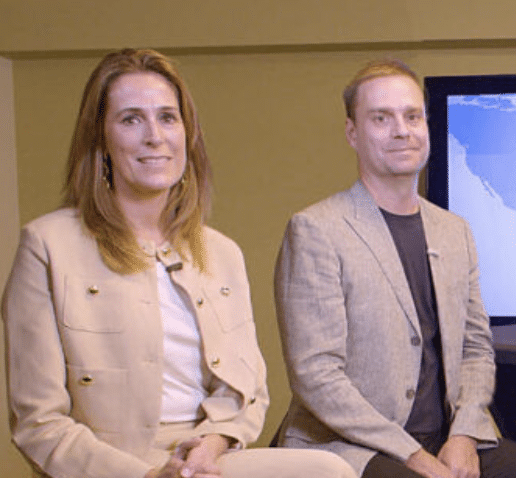
Oosterbeek said clients are increasingly interested in addressing workflow inefficiencies rather than introducing additional trading interfaces: “We are really helping them solve a workflow problem rather than just adding another trading screen,” she said.
According to Oosterbeek, interest is particularly evident in products that still involve substantial manual processing, including uncleared swaps. “We see in that market still 20% traded by voice,” she said.
She described traders managing multiple chats, collecting quotes from different sources and manually entering information into their systems afterward. “So, while it seems like a relatively small amount of volume, it’s a disproportionate amount of risk and effort for the trader,” Oosterbeek said.
She added that similar discussions are taking place around swaptions, where traders want to retain their existing workflows and dealer relationships while reducing manual processes.
Oosterbeek highlighted the number of firms and technology systems involved in processing an OTC derivatives transaction. “If you look today at the trade lifecycle from inception all the way to settlement, an OTC derivative trade goes through at least half a dozen different firms,” she said. She added that the number of technology solutions involved can be twice as large, making cooperation across the market important.
OTCX has been working with order and execution management system (OEMS) providers, including Aladdin and Charles River, while also engaging with dealers on their internal workflows.“We spend a lot of time with our dealer community to sit down, understand how their internal workflows work, and help them improve them, all the way down to the trade confirmation systems,” Oosterbeek said.
She emphasized that improvements require cooperation across the different firms involved in the trade lifecycle. “So really, we’re only going to make progress in this space if all of the participants in the ecosystem are working together to drive a better experience for the traders,” she said.
Lieb identified pre-trade data as another area of focus for OTC derivatives technology development. He explained that digitizing a workflow creates structured data that can be captured and subsequently used in pre-trade decision-making. According to Lieb, information about dealer axes and trading interest frequently remains within chat conversations rather than being incorporated into trading systems. “There’s a tremendous amount of axe data or interest data that is just lost in chat conversations, it’s trapped there,” he said.
He added that buy-side firms cannot always use that information efficiently within their request-for-quote (RFQ) workflows. “People don’t get feedback on it the buy-side doesn’t, they can’t efficiently use it in the trading workflow because there’s no way to integrate it in their request for quotes automatically,” Lieb said.
OTCX is looking to use this information to help participants direct their RFQs. “So really, on our side, we’re launching OTCX and we’re looking to use all of that pre-trade data to help the community better direct their RFQs and limit the noise that they’re making in the market when they’re trading,” Lieb said.
Oosterbeek said client discussions are increasingly focused on improving workflows across different OTC derivatives products. “This leads to discussions also about different OTC derivatives. We’re looking at Swaptions, we’re looking at OTCX, we’re also looking at FX options, CDS,” she said.
She emphasized the importance of maintaining flexibility while reducing manual procedures. “The common theme is that traders really want to use all the tools and data that is available while keeping the flexibility that it’s really needed in the OTC markets but removing the manual procedures that is causing more risk to them,” Oosterbeek said.
