








Despite the rise of electronic trading, floor brokers are regaining ground in U.S. equity markets, particularly in the NYSE Closing Auction, as institutional investors seek high-touch execution for complex orders.
In an interview with Traders Magazine, Neil M. Catania, CEO, and Michael S. Smyth, Chief Compliance Officer at Kleon Financial, discuss the resurgence of floor brokers, their role in institutional trading and the implications for liquidity and market structure.

What is driving the resurgence of floor brokers in U.S. equity markets?
Neil M. Catania: The proliferation and saturation of electronic trading has swung the pendulum a bit too far in one direction, and like many things on Wall Street, they tend to eventually come back to center.
We speak to both large and small institutions that have expressed a desire to have access to an agent in certain situations. Many of their holdings are high-priced, high-beta and high-volatility trading situations that require the attention of an experienced high-touch trader.
Why are floor brokers gaining a larger share of the NYSE Closing Auction?
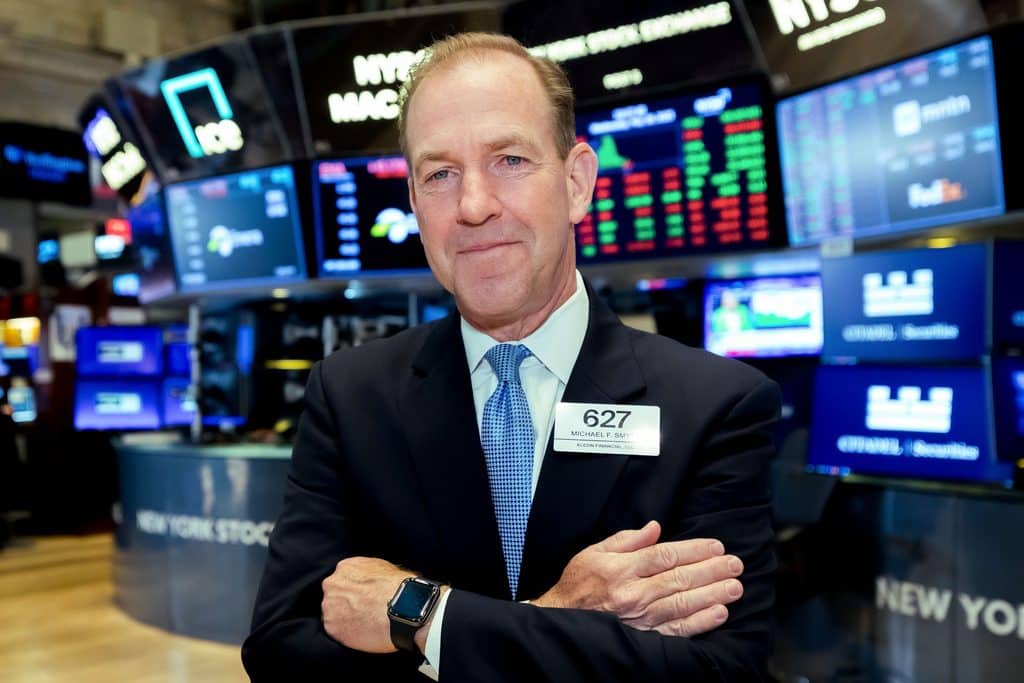
Michael S. Smyth: The New York Stock Exchange has significantly upgraded floor brokers’ order management and handheld systems. This has dramatically increased brokers’ ability to electronically route more orders for the Closing Auction in a much more efficient manner.
The orders can be electronically modified or cancelled up to the closing cutoff for D Orders of 3:59:50 p.m., which is only available to floor brokers on the NYSE. This, in turn, frees up brokers to concentrate on the high-touch orders that require more of their attention.
What advantages do floor brokers offer over electronic execution?
Michael S. Smyth: The NYSE is the only marketplace that has a parity/priority model, which gives floor brokers a share of everything that trades at their price point and rewards them for showing more size.
Additionally, New York Stock Exchange parity algorithms typically outperform third-party algorithms because they can sit on the bid or offer for longer periods of time before reaching across the bid/offer spread to catch up on volume.
There is still no substitute for having human interaction at the point of sale during unusual and volatile trading activity, such as Limit Up-Limit Down (LULD) trading halts. Floor brokers can interact with the Designated Market Makers (DMMs) at the point of sale to negotiate a fair reopening of a stock that may be driven by market conditions or company-specific news.
NYSE floor brokers have a front-row seat to the IPO process and can react quickly to pricing changes before a stock opens for trading. The opening process is more transparent than our competitors’.
Floor brokers can participate in the NYSE opening process and quickly react to changes in price and volume to ensure a fair and orderly opening.
How has their role in handling large institutional orders evolved?
Neil M. Catania: With the advent of Regulation NMS in 2005, markets have become fragmented, and some floor-based firms, including Kleon Financial, LLC, have adapted by getting properly licensed to access all markets away from the floor, as well as enjoying the advantages of being on the NYSE floor.
Institutional clients are not disadvantaged by sending the entirety of their order to the floor broker and are not concerned about missing volumes that may trade away from the NYSE floor. The floor firm can act as an outsourced trading desk from the New York Stock Exchange.
What does increased floor activity mean for liquidity and market structure?
Michael S. Smyth: We have seen a large growth in end-of-day orders due to the new technologies that are available exclusively to floor brokers. This has led to more efficient pricing on the close and offers upstairs traders access to a large pool of liquidity that is not ordinarily available intraday.
The NYSE management team and the floor community have an open dialogue regarding potential new and innovative initiatives to gain intraday market share using a mechanism to facilitate intraday block trading.
The SEC has proposed rescinding Rule 611 OPR and related rules, such as Rule 610(e) regarding locked and crossed markets, to reduce routing costs and market fragmentation. This could potentially create a pathway to allow blocks to trade more freely.
Do you expect floor brokers to gain further market share, and why?
Neil M. Catania: There has been an increase in floor firm memberships, as well as bulge-bracket firms looking to re-establish a presence on the NYSE trading floor. The NYSE pricing structure changes have also been a driver of increased volumes.
There is a new generation of upstairs traders that may have never interacted with the trading floor, and we see this as an opportunity to shine a light on some of the advantages that an NYSE floor-based firm can offer.
