BATS Global Markets said that U.S. equity average daily matched volume was 6.17 billion shares in November, plunging 21 percent from October’s level of 7.82 billion shares. September saw 1.22 billion shares, before counting Direct Edge trading volume.
However, it is up from one year ago when 5.90 billion shares changed hands. Compared to a year ago, volume is 27 percent higher.
In November matched market share of its two national stock exchanges dipped to 20.3, down from October’s 21.4 percent. September saw the exchanges grab 20.0 of the market.
A year ago, BATS’ two exchanges had a 10.0 percent shares trading in equities in the United States. That was prior to the acquisition of Direct Edge.
BATS is typically the first exchange operator to report its monthly market share and volume figures and as such can be used as an early indication of overall equities market volume.
For the month, average daily consolidated volume for the overall equities industry volume in the U.S. was 6.17 billion shares compared to 7.82 billion shares in October, according to BATS data.
In equities options, BATS Options saw its matched market share slip to 5.8 in November versus 6.5 in October and compared to 5.8 percent in September. Average daily matched volume dipped in November to 884,941 compared to 1,364,829 in October and the 983,019 contracts that were executed in September.
One year ago options volume was 424,573 contracts. This reflects pre-Direct Edge trading data.
The BATS 1000 Index, a broad based U.S. equities market benchmark, ended the month at 22,979.25 or jumping 433.03 points, or posting a 2.0 percent gain from October. The index closed one year ago at 20,281.10.
BATS operates four equities exchanges in the U.S., the EDGA, EDGX, BYX and BZX Exchanges; and the U.S. equity options market, BATS Options. In Europe, BATS operates Europe’s largest stock exchange by value traded, BATS Chi-X Europe.
Michelle Rogers has worked in fixed income for roughly 17 years, but 10 years ago she moved to a fixed income firm with a different kind of approach. Based in Weston, Fla., Community Capital Management is an institutional fixed income manager and registered investment advisor that focuses on impact investing – making investments that are intended to generate social or environmental impact along with financial returns. The new approach suited her.
“It’s more exciting because I’m actually researching things that impact people. Instead of just saying this is a fair price for this bond, I get to say, ‘Can we work with this municipality that was hit by Hurricane Sandy?’ for example,” she told Traders. “It requires a lot more innovativeness, so for me it is something additional.”
Just as the new responsibilities suited her, Rogers was well suited to them as well. Beginning as a trader in 2003, Rogers was promoted to senior portfolio manager in 2010. She is responsible for client portfolio management and for overseeing and managing trading functions for all the firm’s products. She is also involved in portfolio research and new business development, and sits on the firm’s board of directors as well as the firm’s investment management and trading committee, and valuation committee.
Deciding which projects to invest in can involve a lot of research, and selected projects undergo extensive screening. In addition to credit analysis and yield analysis, projects are weighed against a set of criteria to ensure that they will be impactful. In some cases, the firm will work with the project receiving investment to try to find extra ways to increase the investment’s impact.
“With a public housing project, for example, we may do some underlying research or work with the housing authority to get what we call bells and whistles included with the property,” she said. “That could be computer training or job placement services or something like that attached with it to try to help stop the cycle of poverty and get people out of public housing.”
The firm’s marketing department often tracks the progress of projects that have been beneficiaries of impact investing, and in some cases Rogers has had the opportunity to take property tours to witness an investment’s impact first-hand.
Investors benefit as well, according to Rogers. With a lot of impact investing going toward projects that have some form of government subsidy, investment portfolios have a good credit quality while generating market rates of return.
“I think there’s a common misperception that you can’t make responsible investment choices and get market rates of return,” she said, “but you can and we’re here to prove it.”
(Bloomberg) — HSBC Holdings Plcs head of currency trading in Europe, Stuart Scott, left the bank after it was fined $618 million to settle a probe into foreign-exchange rigging, a person familiar with the departure said.
Scott left the bank yesterday, said the person, who asked not to be identified because they arent authorized to speak publicly about the matter. Scott joined HSBC Bank in 2007, according to the Financial Conduct Authoritys register of authorized individuals, and was based in London.
Jonny Blostone, a spokesman for the London-based lender, declined to comment on the departure, which was reported by the Wall Street Journal earlier today. Calls to Scotts office were answered by a colleague who said the trader wasnt in today.
HSBC was among six banks that paid about $4.3 billion in fines last month to settle probes into allegations traders colluded with counterparts at other firms to rig benchmarks used by fund managers to determine what they pay for foreign currency. Banks including Barclays Plc, Citigroup Inc., Goldman Sachs Group Inc. and JPMorgan Chase & Co. have dismissed, suspended or placed on leave traders amid the investigations.
HSBC does not tolerate improper conduct and will take whatever action is appropriate, a spokeswoman for the bank said on Nov. 12, referring to theFXscandal.
Europes biggest bank was ordered to pay a combined $618 million to the U.S. Commodity Futures Trading Commission and Britains FCA following an investigation into failings at the banks foreign-exchange business. The other banks in the group settlement were Bank of America Corp., Citigroup, JPMorgan, Royal Bank of Scotland Group Plc and UBS Group AG.
HSBC rose 0.2 percent to 623.7 pence at 1:02 p.m. in London, trimming its loss this year to 5.9 percent. The lender has a market value of 120 billion pounds ($188 billion).
The Securities and Exchange Commission has penalized Morgan Stanley & Co. $4 million dollars for violating the market access rule when it failed to uphold credit limits for a customer firm with a rogue trader who engaged in fraudulent trading of Apple stock.
The announcement was made Wednesday via the SEC’s website.
The market access rule requires broker-dealers to have adequate risk controls in place before providing customers with access to the markets.
An SEC investigation found that Morgan Stanley, which offers institutional customers direct market access through an electronic trading desk, did not have the risk management controls necessary to prevent the rogue trader from entering orders that exceeded pre-set trading thresholds. The trader exploited the market access and, without Morgan Stanley’s knowledge, committed a fraud that eventually shuttered the firm where he worked. The SEC and criminal authorities have since charged the trader with fraud, and he has been sentenced to 30 months in prison.
“Broker-dealers become important gatekeepers when they provide customers direct access to our securities markets, and in this case Morgan Stanley did not live up to that responsibility,” said Andrew Ceresney, director of the SEC Enforcement Division. “Morgan Stanley failed to have reasonable controls in place to mitigate the risks associated with granting market access to a customer.”
According to the SEC’s order instituting a settled administrative proceeding, the rogue trader worked at Rochdale Securities LLC and routed to Morgan Stanley’s electronic trading desk a series of orders to purchase Apple stock on Oct. 25, 2012. The orders came steadily throughout the day and eventually tallied approximately $525 million worth of Apple stock, which significantly exceeded Rochdale’s pre-set aggregate daily trading limit of $200 million at Morgan Stanley. In order to execute the orders, Morgan Stanley’s electronic trading desk initially increased Rochdale’s limit to $500 million and later to $750 million without conducting adequate due diligence to ensure the credit increases were warranted.
Morgan Stanley’s written supervisory procedures did not provide reasonable guidance for electronic trading desk personnel who determine whether or not to increase customer trading thresholds.
According to the SEC’s order, the rogue trader at Rochdale was using these orders to commit a fraud. He had intentionally enlarged the amount of Apple stock an actual customer wanted to purchase from 1,625 shares to 1,625,000 shares. The trader’s scheme was to profit personally from the excess shares if Apple’s stock price increased or claim the order size was merely an error if the stock price decreased. As it turned out, Apple’s stock price began dropping later that day, so the trader falsely claimed that he had made a mistake in placing order. Rochdale was left holding the unauthorized purchase and suffered a $5.3 million loss. Rochdale subsequently fell below its net capital requirements to trade securities, and ceased all business operations last year.
The SEC’s order finds that Morgan Stanley violated Rule 15c3-5 of the Securities Exchange Act of 1934. Without admitting or denying the findings, the firm consented to the SEC’s order, which censures the firm and requires it to pay the financial penalty and cease and desist from committing or causing violations of the market access rule.
The SEC’s investigation was conducted by Eric Forni, David London, and Michele Perillo of the Market Abuse Unit with assistance from staff in the Division of Trading and Markets. The case was supervised by the Chief of the unit Daniel M. Hawke and the Co-Deputy Chief of the unit Robert Cohen. The SEC appreciates the assistance of the Financial Industry Regulatory Authority.
Wall Street once again opened its heart to St. Jude Childrens Research Hospital, raising nearly $2 million at the annual Wall Street Taste of New York
This year the event honored Cathy Rosen of Zweig DiMenna Associates and Michael Lynch of Bank of America Merrill Lynch with the St. Jude Children's Research Hospital Humanitarian Award for outstanding leadership and support of the initiative.
Here they are pictured with MSNBC's Willie Geist.
The St. Jude Wall Street Taste of NY list of co-chairs is a Who's Who from the financial world: Members hail from UBS, ClearBridge Investments, Bank of America ML, Barclays Capital, Morgan Stanley, Lazard Asset Management, JMP Securities and Zweig-DiMenna Associates.
About 700 guests attended the premier New York industry event held November 18 at Guastavinos.
The event committee of more than 60 investment professionals represents nearly every major firm in the industry.
Wall Street Taste of New York featured chefs tastings from 18 of the citys best restaurants. Attendees also were treated to a taste of St. Jude. Chef Miles McMath, St. Judes director of Culinary Operations, served the hospitals famous Cosmic Mac n Cheese to the guests.
The events Buy It Now auction raised $59,000 and included such premium items as a father/son New York Giants game and team travel experience.
The auction also included a private resort stay at the Bakers Bay Ocean Club in the Bahamas, a New York Rangers luxury box, reservations at famed Harlem eatery Raos, and suite tickets to Billy Joel at Madison Square Garden.
The Steven and Alexandra Cohen Foundation served as the events title sponsor, with Gotham Magazine as the media sponsor.
Members of 60 Wall Street firms gathered for the annual St. Jude Childrens Research Hospital "Wall Street Taste of New York" gala to raise nearly $2 million.
In its 25-year history, the event has raised more than $40 million for St. Jude.
Liquidnet is stepping up its execution ante by starting a new group focusing on growing its next generation electronic trading capabilities and quantitative strategies.
Today, the block trading network and technology provider global institutional trading network announced the launch of its new Execution & Quantitative Services (EQS) group. Global in nature, EQS is headed by up by Rob Laible, who joined Liquidnet earlier this year.
Laible told Traders in an interview that the firm is stepping up its product offerings to provide more new and efficient ways to optimally source diverse liquidity and satisfy best execution objectives. Through cutting-edge technology, a continued focus on block executions and an expanded offering that includes trade advisory and execution solutions, Liquidnet is helping to remove barriers to liquidity and more efficiently manage factors that impact performance.
“Algorithms and execution strategies are only as good as the liquidity they can access,” Laible began. “Our established suite of algorithmic, analytic and quantitative products and services are the only ones that leverage Liquidnet’s deep and diverse pool of institutional liquidity. And as an unconflicted, agency-only broker with expertise in lit, dark, and block markets, we consult with members and clients on ways to access liquidity, navigate market complexities, and access comprehensive analytics, all through an integrated trading platform.
The firm looks to update, and possibly expand, its more sophisticated algorithmic offerings such as liquidity seeking, variable aggressiveness or venue-specific tools. These algorithms offer the best opportunities as the buyside looks for more and better order management and/or smart order routing control to maximize alpha generation.
“When partnering with our clients, they’ve told us that they want a better understanding of how their algorithms work or what’s behind the smart order router’s logic,” Laible said. “They want more control over order flow now as in the past they had outsourced some of that control.”
He added that clients have seen their orders, at times, be routed by the brokers to places that are less than optimal and where trading rebate is highest rather than get the best execution and size.
To this end, Liqudinet and Laible have hired three new professionals to spearhead the New York-based EQS group. The new staff will focus on designing, implementing, and customizing Liquidnet’s suite of execution algorithms and analytics while also providing quantitative research and market microstructure insight. The new EQS team members, all based in New York, include: Scott Kartinen, Roberto Malamut and Amar Vaidya.
Kartinen joined Liquidnet as Head of Algo Development. A veteran with nearly 20 years of experience in quantitative equity portfolio construction, trading analytics and algorithmic trade execution to this role came from UBS Securities where he was Executive Director of Algorithmic Trading. Prior to that, he worked at ITG as Managing Director for Algorithmic Trading Product Management.
Malamut joined as Head of Quantitative Research. A 15 year professional, Malamut brings knowledge of algorithmic modeling, forecasting and trading to the group. Prior to joining Liquidnet, he was a Quantitative Analyst and Designer of Intraday Trading Strategies at Agoge Capital. He also worked at Tower Research Capital, SAC Capital and JPMorgan Chase in a variety of algorithmic trading roles.
Rounding out the trio is Amar Vaidya. A 13 year veteran, Vaidya joined Liquidnet to help build out its suite of algorithms and further enhance smart order routing strategies for the firm’s clients. He came from Shuban Capital where he co-founded a quant fund for equity trading in the U.S. markets. Prior to that, he held product manager roles at Nomura Securities and ITG.
Another area the firm is looking to branch out into globally is trade-cost analysis, Laible told Traders. While acknowledging that like in algorithms that basic TCA tends to be commoditized, some of the more advanced analysis is where Liquidnet hopes to branch out.
“We’re going to focus on pre-trade analysis and look upstream into the trading process,” he said. “We want to help clients answer the questions they have – ‘what do I do with this order when I get it on my desk? How should I best trade an order?'”
Laible’s group also wants to help the buyside in that it is developing trading strategy recommendation models – helping traders focus more on trading and best execution.
And the firm isn’t done yet. Looking ahead to 2015, Laible said his group and Liquidnet will focus on expanding the new offering to all the markets where the firm operates, not just in North America or Europe.
When Joan Stack was a young girl, her mother told her three things: “You can be anything you want to be, education is the key to all things, and help your little sisters.”
It is the last statement that continues to resonate with Stack, helping her fellow sisters (and brothers, too) excel on Wall Street and in financial services. While Stack’s start as a mentor began with her oversight of her three sisters, it continues to this day as she sits on the trading desk of the Ohio Public Employees Retirement System (OPERS).
“You could say that I got my leadership training taking care of my sisters,” Stack told Traders. “So many people have helped me along my way that I’m compelled to turn around and help others.”
OPERS, where Stack has spent the last 11 years, is the 11th-largest public pension fund in the U.S., with $35 billion in total public equity assets under management As such, roughly one in every 13 people in the Buckeye State relies on her and her desk to make the best trading decisions as possible.
It came from her father, a CPA, who handed her a copy of Barron’s in the seventh grade. After reading an Alan Abelson column, she was fascinated with business; that led her to attend Mount Holyoke College, majoring in economics. While there, she saw firsthand women helping women with the goal of advancing in a man’s world.
Upon graduating, she joined Manufacturers Hanover Trust, where she worked as a portfolio manager’s assistant, learning the business from the ground up. But her big break came in 1978 when she joined Bankers Trust. There, she began trading as an assistant on the municipal bond desk but soon caught the attention of Jack Guilfoyle, who ran the equity desk and was short-staffed.
“Jack asked the head of the bond department if I could come over and join him,” Stack remembered. “I can’t tell you how excited I was. It was a dream come true.”
Stack credits Guilfoyle with teaching her the market firsthand, showing her the business of trading that no book could ever do. She said he was always positive and saw the good in people. If a trade was bad, he’d tell her to forget it and move on. She’d stay with Bankers Trust for 15 years and moved steadily up the ranks.
Now at OPERS, Stack carries on her mother’s and Guilfoyle’s legacy, taking junior staffers (men and women) under her wing and helping them learn about trading in the current market structure. And she has enjoyed it. Immensely.
“There is nothing more rewarding than seeing someone you know who came from the back office and is now shining as a trader,” Stack said. “It’s a really good feeling.”
(Bloomberg) — Intercontinental Exchange Inc. sold the last of its shares in Euronext NV, completing its exit from a business that has rallied 23 percent since its initial public offering in June.
The Atlanta-based derivatives exchange raised 96.8 million euros ($119 million) by offloading 4.2 million shares, or about 6 percent of the European company, according to a statement today. Euronext gained its independence from ICE through an 845 million euro IPO in June.
Shares in the operator of stock exchanges in France, the Netherlands, Belgium and Portugal have rallied to 24.66 euros from their sale price of 20 euros. ICE offered Euronexts stock through a private placement to institutional investors, it said in the statement.
NYSE Group Inc., the then owner of the New York Stock Exchange, bought Euronext in 2007, renaming itself as NYSE Euronext. ICE spun off Euronext after taking over its parent company late last year.
Euronext has had to compete for market share with a new breed of pan-European stock exchanges, including Bats Chi-X Europe, since the European Union opened equity trading within its member states to new entrants.
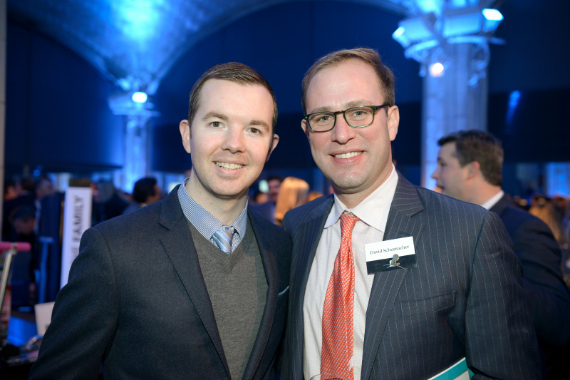
Joe Stein Jr. of Morgan Stanley; Genemarie Equolior of BAC Florida Investments; Kate Faraday of PineBridge; Della Hood-Laster of Piedmont Investment Advisors and Susan Dale of Bass Brothers / BBT.
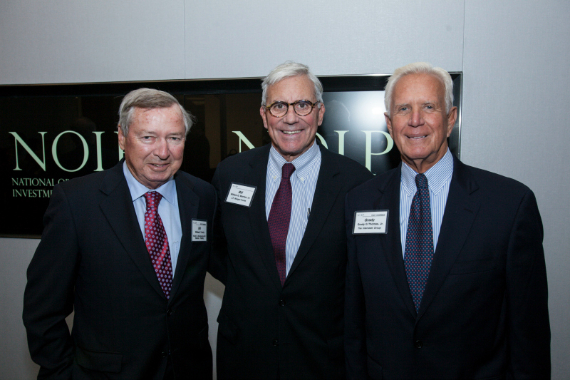
William F Devin of VALIC; William G Morton Jr. of JP Morgan and Grady G. Thomas Jr. of The Interstate Group.
Adena Friedman of NASDAQ OMX; Christina Kelerchian of Goldman Sachs Asset Management; and Lisa Utasi of ClearBridge.
Michael J Lynch of BOA Merrill Lynch, Brennan Warble of Liquidnet and Thomas Coleman of Thompson Siegel & Walmsley.
John Mancuso of Instinet; Erik Johnson of US Trust; and Andrew M. Brooks of T Rowe Price.
Nancy McLaughlin of ConvergEx Group, Kate Faraday of PineBridge Investments and Kenneth Polcari of O'Neill Securities.
William F. Devin of VALIC, Marybeth Shay of BIDS Trading and
Bill Morton Jr. of JP Morgan.
Mary McDermott Holland of iGate, Steve Brodsky of Spot Trading and David A. Herron.
William F Devin Jr. of RBC Capital Markets, Jerold Garvey of Stifel Nicolaus and John M Donahue of Fidelity Capital Markets.
Pat Armstrong, Prime Executions and president of STANY; Rebecca M Keister, Montag & Caldwell; and Dan Tandy, Prime Executions.
Holly A Stark of Lepere Analytics, Kenneth Polcari of O'Neill Securities and Joseph Gawronski of Rosenblatt Securities.
Thomas Coleman of Thompson Siegel & Walmsley, and Matthew C. Franke of Stifel Nicolaus.
Lisa Utasi of ClearBridge Investments, Grady G Thomas Jr., The Interstate Group, and Barbara McFadden of Peregrine Capital Management
Brennan Warble of Liquidnet and Mike McCauley.
Richard Parker of Sachem Head Capital, Kabir Singh of Sachem Head Capital and Eric Kirby of Kingdon Capital.
Bill Omeltchenko of Burke & Quick Partners and Stuart Gold of Cowen & Co.
Pete Jenkins of PDQ ATS and George Bodine of Markit.
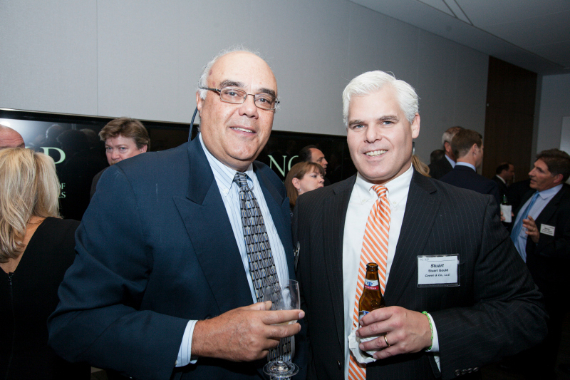
Kathy Cheevers of Cheevers & Co., Barbara McFadden of Peregrine Capital Management, and Van Hutcherson of JonesTrading.
William G Morton Jr. of JP Morgan and Todd Bertsch of BOA Merrill Lynch.