

Thursday, January 29, 2026
More
    More

      FINRA Raises Alarm on AI, Cyber Threats in 2026 Oversight Report

      0

      FINRA has released its 2026 Regulatory Oversight Report earlier than ever, a move the regulator says is meant to give firms more time to prepare for emerging risks. “We heard the industry loud and clear,” said Ornella Bergeron, acting head of member supervision. “They wanted the report out sooner so that they can leverage it as part of their compliance planning for 2026.”

      The report covers areas like Reg BI, AML, and best execution, but it also tackles newer concerns such as generative AI, cyber-enabled fraud, tokenization, and overnight trading, reflecting both the regulator’s and the industry’s growing worries about digital threats.

      The report was also the focus of a recent FINRA podcast, “Navigating the 2026 Regulatory Oversight Report: Key Insights from FINRA Leadership.” The episode featured Bergeron alongside Bill St. Louis, head of enforcement; Feral Talib, head of market oversight; and Bryan Smith, acting head of Strategic Intelligence.

      Ornella Bergeron

      They discussed takeaways from the report and practical ways firms can leverage its insights to strengthen compliance programs. “The Annual Regulatory Oversight Report is one of FINRA’s most valued resources for member firms, and this year, we’re publishing it earlier than ever in response to member feedback,” Bergeron said on the podcast.

      She added that the 2026 Report features guidance on cyber-enabled fraud, senior investor protection, generative AI, and more, reflecting FINRA Forward’s commitment to empowering firms with actionable intelligence from across regulatory operations.

      Smith emphasized that the report is meant not just to summarize past enforcement actions but to provide firms actionable insights. “It provides transparency as to what FINRA is seeing,” he said. “But perhaps more importantly, it provides insight and intelligence from across the industry, so that member firms can better understand the risks and threats those firms may be facing.”

      Market manipulation, particularly in low-priced securities, is a growing concern. Talib explained that the risk is shifting from OTC markets into listed stocks. “The primary risk we’re seeing right now is market manipulation in low-price securities,” he said. “It used to be heavily concentrated in OTC markets, but now we’re seeing the activity in listed stocks.”

      He also warned that account takeovers are becoming increasingly sophisticated. “Two-factor authentication is no longer a guarantee to hold an account safe when you’re dealing with technologies that allow you to spoof phone numbers and imitate people’s voices,” he said. Generative AI is adding another layer of risk. “We are seeing AI used to create fake news reports that look entirely authentic and coordinated social media activity designed to simulate retail enthusiasm. Investors really need to approach everything with suspicion unless they’re talking to their registered representative or a regulator.”

      Cyber-enabled fraud continues to be a major threat. Bergeron said attackers are increasingly impersonating both firms and FINRA staff to defraud customers. “Threats include account impersonation, imposter sites, attacks leveraging spoofed domains and social media profiles… all to defraud customers and firms,” she said.

      Third-party vendor risk is also rising. “Firms are relying quite a bit on third parties to support key systems and critical functions. We continue to see an increase in cyberattacks and operational issues involving third-party vendors,” she added. St. Louis emphasized the importance of testing and monitoring systems. “This all comes back to testing, testing, testing—making sure the systems are working the way we expect them to work,” he said.

      Traditional areas of enforcement remain significant. St. Louis noted that Reg BI cases have already surpassed last year’s total, with firms continuing to make fundamental errors. Best execution failures and AML deficiencies, including weak customer due diligence and inadequate independent testing, remain common. “There will be more to come on that,” he said, especially regarding pump-and-dump schemes involving foreign issuers listed in the U.S. He added that firms should not underestimate the regulatory focus on smaller or mid-sized firms, which often face the same scrutiny as larger players despite fewer resources.

      Generative AI is a central focus of the report. Bergeron said FINRA is seeing firms experiment with AI for summarization, workflow automation, and content generation. “With all the benefits,” she warned, “firms really do need to understand that this transformative technology could cause significant operational and compliance risks.” Talib described the situation as “a digital arms race. As bad actors become more sophisticated, control systems have to keep up.” He also emphasized that AI can accelerate not just fraud but human error, pointing to instances where algorithmic recommendations in trading systems caused unintended market disruptions.

      FINRA’s leaders urged firms to use the report proactively. Bergeron advised firms to “review the report and identify the areas that are most relevant. All topics contain new content.” St. Louis recommended incorporating the findings into training programs, while Talib reminded firms not to neglect existing risks: “If you have a risk that was covered historically, don’t move past it quickly. Bad actors evolve.” Smith emphasized that the report is meant as guidance, not a new regulatory requirement. “We are here listening. We are here trying to provide you with the information and intelligence you need to better protect your firms and your investors,” he said.

      For traders navigating an increasingly complex environment, the report is both a warning and a roadmap. It underscores that technology, whether AI or blockchain, is reshaping not just opportunities but vulnerabilities. Smith said: “Staying ahead requires vigilance, investment in controls, and a mindset that anticipates threats before they become crises.”


      A Variation on the Clearing Model

      DerivSource Senior Writer Lynn Strongin Dodds looks at the legal differences between the US and European models.

      The FIA-sponsored European Agent Trustee Model (EATM) has been five years in the making and while it may be designed to broadly replicate the US’ futures commission merchant (FCM) clearing model, there are distinct differences.

      The EATM was developed in collaboration with the Bank of America, Barclays, Citi, Goldman Sachs and J.P. Morgan, LCH Ltd., and Linklaters as external legal counsel. It was initially designed for use with OTC derivatives, but could be extended to exchange-traded contracts, subject to demand.

      The model, which was developed under English law, is intended to co-exist with, rather than be a substitute for other clearing models available in Europe. This means that LCH Ltd’s SwapClear service, which has gone live with its EATM, can offer the service to their clients, irrespective of their clients’ location. An equivalent structure is currently being developed under German law.

      While The EATM mirrors many features of the US FCM, the most notable difference is that under the new version, clearing members may enter trades with a central clearing counterparty (CCP) on behalf of their clients and hold those trades on trust for those clients. They in turn gain a beneficial interest in the CM’s claims against the CCP. By contrast, in the US there is no such contractual trust.  

      The EATM also diverges from Europe’s predominant principal model in which clearing members act as financial intermediaries between their clients and the CCP. The clearing member is party to two transactions – one with the CCP and one with the client – whereas in the EATM version, a CM is party to one – the client transaction with the CCP.

      According to a London Stock Exchange Group spokesperson, one of the main drivers is that reporting rules for global systemically important banks require clearing brokers to separately report activity under the European principal model versus that under US model. The volumes reported in each category are subject to different treatment, with principal model activity at a disadvantage in that it gives rise to a double counting. The US model activity does not bear this disadvantage.

      Walt Lukken, FIA president and CEO echoes these sentiments. “By effectively removing the double-counting, the EATM will help increase the capacity of clearing members offering client clearing in Europe through cost savings and efficiencies,” he adds. “The EATM provides welcome capacity for clearing services at a time of unprecedented growth in our markets.”

      One of the reasons that it took so long for the EATM to come to market was the uncertainty as to the legal basis of the US model. This needed to be resolved before Linklaters, and the FIA could proceed forward. The EATM model is also complex, requiring extensive legal analysis by each of the FIA, participating clearing members and LCH, as well as creation of a new template FIA client clearing agreement and LCH rulebook amendments. 

      Although LCH and Eurex Clearing have been involved in the project from the start, the EATM is designed to be CCP-neutral and can be offered by any European CCP. The German clearinghouse is in the process of implementing the same model and both CCPs also intend to roll it out for Germany-based clearing members in the foreseeable future.

      Citi to Launch Crypto Custody Next Year

      Citi is launching digital asset custody in 2026 and believes it has an advantage in being able to bridge traditional and digital assets on one platform.

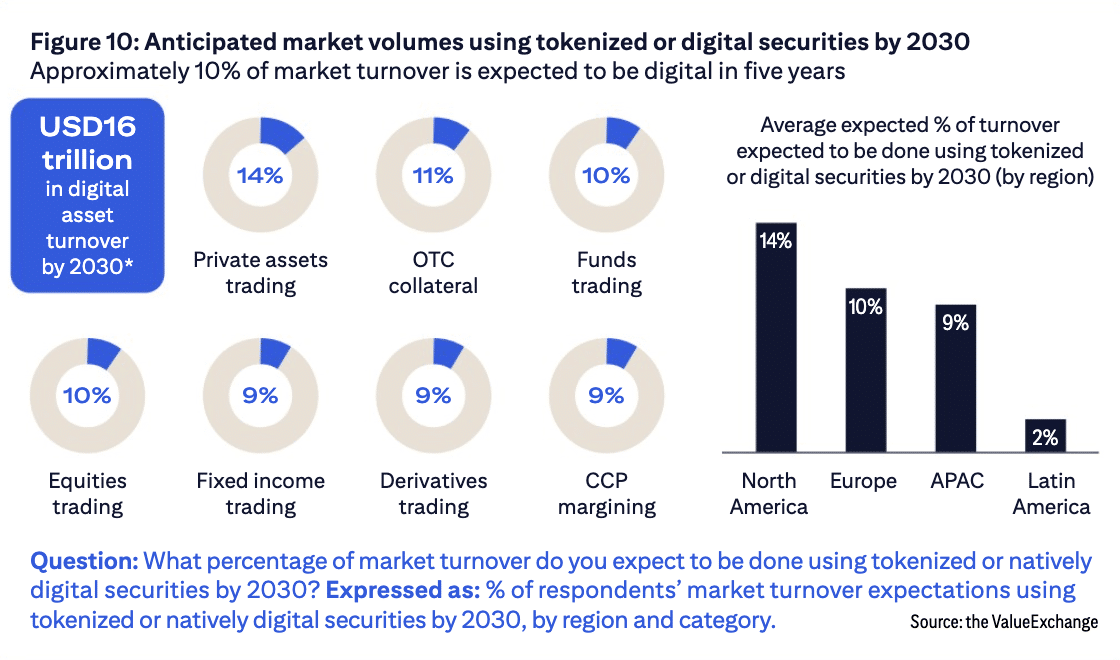
      Market participants expect about 10% of market turnover to be digital in five years according to the Citi Securities Services Evolution 2025 survey of over 500 market participants. Adoption of digital assets scored the highest positive change year-on-year and respondents said custodians are their preferred route to accessing these digital assets and markets.

       Source: Citi

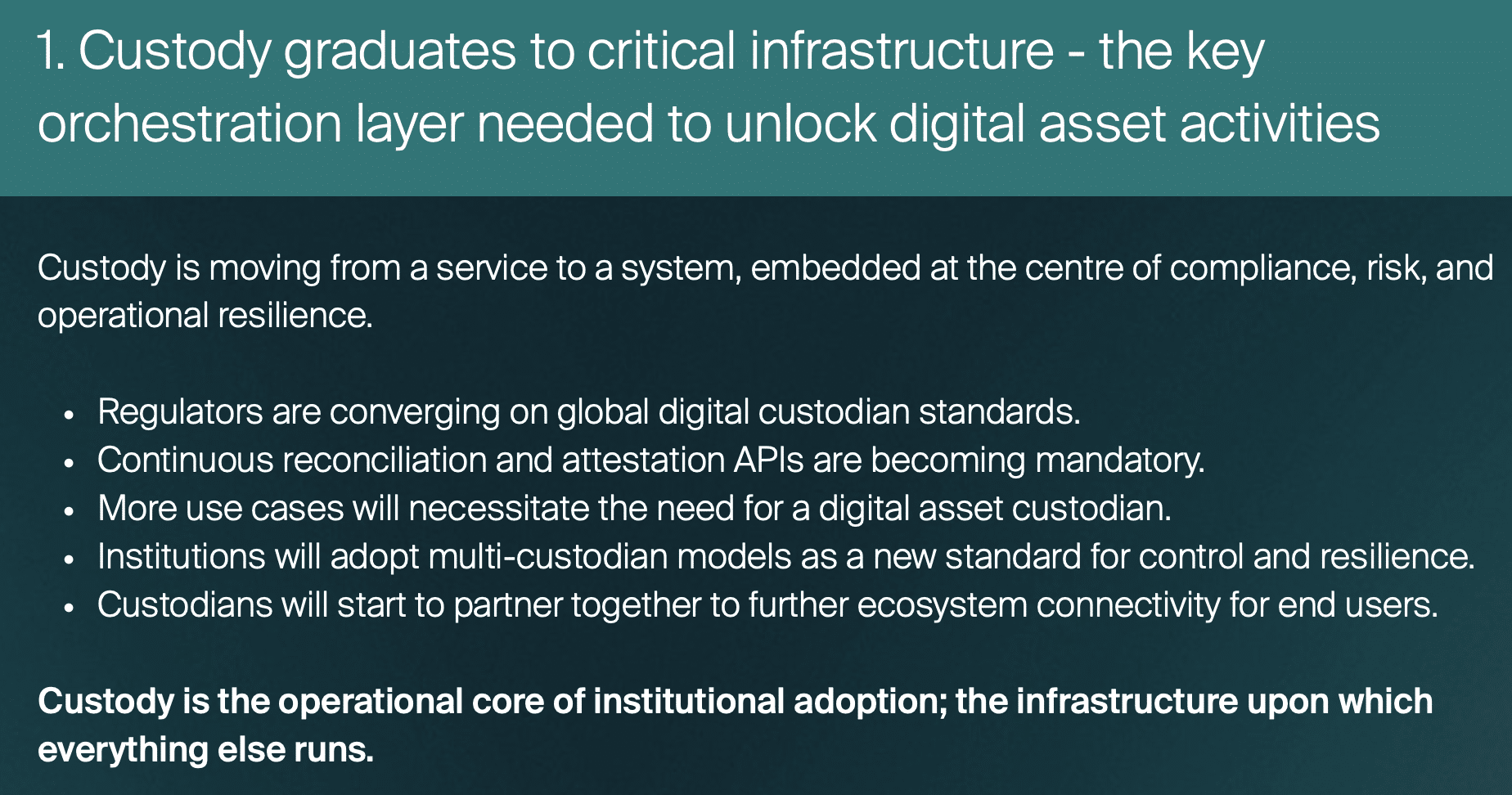
      Ryan Marsh, head of innovation & strategic partnerships at Citi Issuer Services and Investor Services, told Markets Media that regulatory clarity, maturing technology and the scaling of ecosystems are driving an increase in institutional adoption. He said: “We are launching crypto custody next year so we need to make sure we have the right key management infrastructure and have CIDAP integrated back into our traditional custody platform. All of that work has been going on for some time and is very well developed.”

      CIDAP is an enterprise platform that contains all of Citi’s digital asset and blockchain specific technologies so that the entire firm can benefit as the bank launches a wide range of use cases. For example, the platform includes an internal blockchain, connectivity to external blockchains, tokenization capabilities, custody services and a set of microservices dedicated to blockchain and digital asset capabilities. Digital asset custody needs some new capabilities that sit within CDAP such as managing and storing keys for digital asset wallets and hosting nodes on blockchains that help to maintain a network by validating and relaying transactions.

      The platform has been built at an enterprise level so that the firm only has to build once, and it becomes a bridge between traditional applications and blockchain, according to Marsh. He continued that digital assets are not a standalone area of focus but are fully integrated into Citi’s innovation strategy.

       Ryan Marsh, Citi

      “We are talking about both the assets themselves and the blockchain infrastructure, which we view as potentially the next evolution of financial infrastructure,” Marsh added.

      For example, blockchains are designed to be borderless and operate 24/7 allowing an increase in the speed of transactions, transparency and an opportunity to reengineer financial  processes to make them more efficient.

      Marsh said that in the near term the world is becoming more fragmented because traditional markets and infrastructures are not going away, but a range of new blockchain structures and asset classes are emerging.

      “We have connected our capabilities and our technologies into all of those networks to effectively stitch them together,” he added. “CIDAP is the bridge that enables us to operate across those different blockchain infrastructures.”

      Source: Zodia Custody

      Competition

      Crypto-native firms such as Coinbase have launched custody, and other firms in traditional finance have also launched digital asset custody. Marsh argued that Citi is using tokenization as a technology to move money more seamlessly in real time across clients, but a differentiator is that it is fully integrated into clients’ current experience. Clients do not need to be able to hold tokens or digital wallets, but just send Citi an instruction.

      “One of our key value propositions is that Citi clients can add digital assets to their existing platform, rather than fragmenting their operating model,” he said. “Our design abstracts the complexity of having to maintain multiple relationships and service levels for two different asset classes.”

      In addition, Citi is already modernizing its traditional financial structure as settlement cycles are being compressed globally and there is a desire to move assets, including money, faster and eventually 24×7. Marsh said Citi’s custody platform can already process asset servicing events in real time and can already move securities 24 hours a day.

      “When you stitch those two things together they become complementary and transformative in how we can serve our clients in the future,” Marsh added. “I think we have gone the extra mile in designing a model that we think is absolutely seamless.”

      He argued that another differentiator is that Citi has developed most of these technologies because the bank wanted to build something that was integrated into its existing security and compliance frameworks.

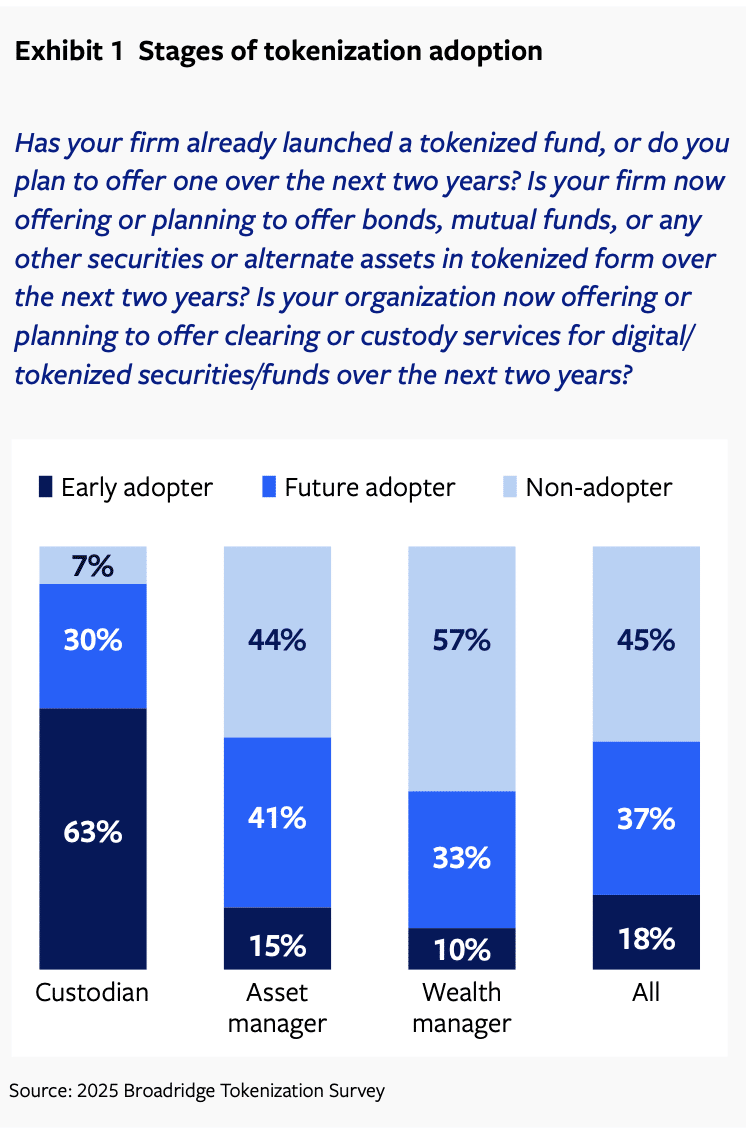
      The recent Broadridge Tokenization Survey said custodians are clearly “out front,” using their infrastructure to provide secure custody, smart contract integration, and real-time asset servicing.

      “These services are not speculative; they are foundational to how tokenized assets will be created, distributed, and managed,” said Broadridge.

       Source: Citi

      However, Broadridge added that even firms confident in tokenization’s long-term value often struggle to operationalize it as most capital markets environments run on fragmented systems, with tokenized and traditional assets operating in parallel but not in sync.

      The survey said: “Firms with more modern and modular technology stacks are far more likely to have launched tokenized offerings. This reinforces the idea that operational readiness, not just enthusiasm, enables firms to move ahead.”

      Increasing efficiency

      Marsh said: “We see our role as being a critical enabler because we are the leading subcustodian with licenses in 63 countries, and we have dealt with complexity in the traditional infrastructure through our integration.”

      For example, Citi and SDX, the digital asset arm of Switzerland’s SIX Group, said in a statement in May this year that the bank will be tokenizing, settling and safekeeping assets on SDX’s digital central securities depositary and will bring late-stage pre-IPO equities to institutional and eligible investors on the SDX platform. 

       Marni McManus, Citi

      Marni McManus, Citi country officer & head of banking for Switzerland, Monaco & Liechtenstein, said in a statement that private markets is a major and growing opportunity and the partnership will simplify and digitize what is essentially a manual and paper-driven industry.

      In June this year Citi was dealer and issuing and paying agent when Türkiye İş Bankası A.Ş. (İşbank) issued the first digitally native note in the market using the Euroclear D-FMI platform. Citi Services connected issuers, investors and the Euroclear platform, resulting in quicker issuance and settlement processes, as well as faster communication and data sharing.

      In October this year Citi and Coinbase said in a statement that they intend to collaborate on digital asset payment capabilities for the bank’s institutional clients. The initial phase of their collaboration focuses on fiat pay-ins/pay-outs, supporting Coinbase’s on/off-ramps as the bridge between traditional fiat and digital asset ecosystems, along with payments orchestration

      Marsh also highlighted that in traditional finance you can only move collateral when markets are open, it takes longer to move securities than it does money and you cannot move an asset versus an asset. Citi’s ultimate vision is to be a custodian holding traditional assets, tokenized securities, tokenized forms of money, crypto, and eventually using that portfolio more efficiently for collateral management purposes.

      “Redesigning these flows on our infrastructure to operate in real time, 24×7, with the ability to program assets, resolves these issues and that is what we are working on,” he added.

      BNY Partners with Google Cloud for Eliza AI Platform

      BNY and Google Cloud announced the integration of Gemini Enterprise – Google Cloud’s agentic AI platform powered by its most advanced models – into BNY’s enterprise AI platform, Eliza.

      This strategic integration is helping advance Eliza’s agentic deep research capabilities for market analysis and equipping the company’s global workforce with access to multimodal features.

      BNY’s employees can now build AI agents to quickly process, synthesize, and analyze extensive financial reports, relevant data, and historical trends to extract insights and navigate complex financial information more efficiently. The integration is also helping automate routine, data-intensive tasks.

      “At BNY, our AI strategy is clear: AI for everyone, everywhere and everything,” said Sarthak Pattanaik, chief data & AI officer, BNY. “By integrating with Gemini Enterprise, we continue to advance the capabilities embedded into Eliza, deepening the platform’s agentic research, integrating data sources more seamlessly and securely and elevating the user experience. The integration underscores our goal to create capacity for our people to embed deeper analysis and strategic insights, adding value in their everyday delivery for clients.”

      “Our collaboration with BNY is at the forefront of the agentic era in finance,” said Rohit Bhat, general manager and managing director of Financial Services, Google Cloud. “By combining the powerful reasoning of Gemini Enterprise with BNY’s deep financial markets expertise, BNY is proving that the future of banking lies in the seamless integration of human expertise and advanced computational agents.”

      BNY has been a long-time user of Google Cloud’s AI capabilities and continues to leverage Google’s newest models, including Gemini 3 and Veo 3, to enable diverse AI capabilities across its enterprise AI platform.

      Source: Google

      UBS ATS Adds Adaptive Cross to Elevate Long-Term Trading Strategies

      UBS is launching UBS ATS Adaptive Cross, a new approach to matching orders that prioritizes like-minded trading flows within its alternative trading system, Traders Magazine can reveal.

      Adaptive Cross uses a proprietary algorithm powered by machine learning to match participants with similar trading patterns. The system assigns priority based on how orders behave across three dimensions: which side of the market they’re on, their size, and how aggressively they’re priced – measured across multiple orders for each participant.

      The system is designed to reduce market impact for participants with longer-term strategies. By prioritizing orders based on demonstrated behavior rather than timestamp alone, Adaptive Cross aims to help clients achieve their trading objectives while maintaining market integrity.

      In an exclusive interview with Traders Magazine, Seth Slomiak, Head of UBS ATS, explained the rationale behind the launch.

      Seth Slomiak

      Why have you decided to launch Adaptive Cross, and how does it enhance the functionality of UBS ATS?

      At the UBS ATS, we are always looking to enhance our participants’ trading experience. In this case, we focused on promoting a superior quality of execution for long-term participants of the ATS. We defined this as participants that are likely running an algo and/or executing a larger order over time. We do this by giving a higher matching priority for participants that display a long-term trading style.

      How does the proprietary machine-learning algorithm determine order priority within Adaptive Cross?

      Participants achieve this enhanced matching priority when their executions and orders display a profile of a long-term trader. Specifically we determine the probability that a participant is a long-term trader (for a specific stock and side).

      Why do clients with longer-term trading horizons receive enhanced matching priority under this system?

      Clients with longer-term trading horizons generally have more balanced mark-outs, as they are less focused on short-term price fluctuations but are rather looking to access long-term liquidity. Our goal is to promote as much like-for-like matching. One way to do this is via enhanced matching priority: when two participants have opposing long-term trading horizons, the enhanced matching priority (for both sides) will ensure that they can first and foremost consume each other’s liquidity ahead of other participants’ flow.

      How does Adaptive Cross aim to reduce market impact while supporting clients’ trading objectives?

      By promoting matching between like-for-like (long term) participants, when they have opposing flow, we can foster a trading environment where liquidity is matched for similarity in trading horizon. In other words, when we think of liquidity, we want to move beyond measuring it in shares (or Dollars, etc.) but rather as shares per expected horizon: i.e. for a long-term participant, finding 100 shares of liquidity that are likely going to be recycled in the market within a few minutes may be less valuable than finding 100 shares from a counterparty that is unlikely to recycle the position in the market for the rest of the day.

      IC360, Eventus Partner on Prediction Market Surveillance and Integrity

      0

      IC360 and Eventus Announce Strategic Partnership to Establish Industry-Wide Standards for Prediction Market Surveillance and Integrity

      LAS VEGAS, NV / AUSTIN, Texas – (December 8, 2025) – Integrity Compliance 360 (IC360), a global technology and advisory platform for integrity and regulatory solutions in sports, sports betting, and iGaming, and Eventus, a leading global provider of comprehensive multi-asset class trade surveillance and market risk technology, today announced a strategic partnership to enhance security and uphold integrity across the rapidly expanding prediction market industry.

      Both organizations recognize the significance of integrity monitoring and trade surveillance in supporting the rapid maturation of the prediction market vertical. One of the core initiatives of this partnership will be the development of best practices, compliance standards, and regulatory frameworks for prediction market operators. Additionally, both IC360 and Eventus will collaborate to deliver innovative and comprehensive integrity- and surveillance-focused products to the ecosystem.

      IC360’s products provide a comprehensive, 360-degree approach to ensuring prediction market integrity by utilizing both technology and advisory solutions to address event-based trading risks. Key technical features include an Integrity Monitoring dashboard with real-time alerts for detecting suspicious behavior like manipulation and fraud related to event outcomes. The ProhiTrade platform enforces prohibited trading compliance by preventing individuals with potential insider knowledge from trading, ensuring market fairness. Furthermore, IC360 provides essential Advisory Services for establishing regulatory frameworks, internal controls, and managing anti-money laundering (AML) risks specific to prediction market transactions.

      Eventus delivers institutional-grade post-trade market surveillance—the same capabilities trusted by global exchanges, designated contract markets (DCMs), broker-dealers, leading digital asset venues and other financial institutions—to help prediction markets scale with credibility and regulatory readiness. Its Validus platform provides comprehensive detection of abusive trading patterns, manipulation, insider-driven activity, and cross-account behaviors across full order-book, trade, and position data, supported by mature alerting, case management, and audit-trail tools aligned with regulatory expectations.

      For prediction market operators, Eventus tailors this infrastructure to the mechanics of event-based trading. Validus can be configured to flag insider or influence-based trading around key information windows, abnormal position-taking, coordinated social-driven activity, and cross-venue behavioral patterns. The platform supports integration of diverse data inputs—market, participant, funding, and external signal data—to unify fragmented environments and establish defensible surveillance practices as regulatory frameworks evolve.

      “Prediction markets create unique integrity challenges that demand a new level of sophistication,” said Scott Sadin, Co-CEO of IC360. “We strongly believe that integrity in sport can be achieved through innovative, technology-driven solutions and collaborative stakeholder engagement. Our partnership with Eventus is a terrific embodiment of these principles, and we’re looking forward to working closely with them to foster a compliant, transparent, and ethical prediction market ecosystem.”

      Eventus CEO Travis Schwab said: “Prediction markets sit at the intersection of financial market structure and real-world event integrity, and that combination creates a new class of surveillance and compliance risk. Operators need to protect against trade-based manipulation and abusive strategies while also staying ahead of pre-trade insider risk, information advantages, and event or settlement vulnerabilities. Partnering with IC360 lets clients build a full-lifecycle integrity approach—pairing Validus’s real-time, 24/7 trade surveillance, alerting, and case management with IC360’s event-integrity and insider-risk capabilities. Together, we’re helping prediction market venues build trust with participants and regulators and establish the standards that will support responsible growth worldwide.”

      About IC360

      Integrity Compliance 360 (IC360) is a global technology and consultancy firm specializing in comprehensive integrity and compliance solutions for sports, sports betting, gaming, and iGaming. IC360’s mission is to set robust standards by providing unparalleled services that ensure integrity, transparency, and compliance at the intersection of the rapidly evolving global sports betting market and sports integrity. For more information, visit ic360.io.

      About Eventus

      Eventus provides state-of-the-art, at-scale trade surveillance software across all lines of defense. Its powerful, award-winning Validus platform is easy to deploy, customize and operate across equities, options, futures, foreign exchange (FX), fixed income and digital asset markets. Validus is proven in the most complex, high-volume, and real time environments of Eventus’ rapidly growing client base, including tier-1 banks, broker-dealers, futures commission merchants (FCMs), proprietary trading groups, market centers, buy-side institutions, energy and commodity trading firms, and regulators. Clients rely on the platform, coupled with the firm’s responsive support and product development, to overcome their most pressing trade surveillance regulatory challenges. For more, visit www.eventus.com.

      SEC Amends Global Research Analyst Settlement

      0

      Dec. 5, 2025

      Today, the Commission took an important step toward eliminating outdated and costly requirements on firms and improving the availability of equity research in our markets by agreeing to amend the Global Research Analyst Settlement (the “Global Research Settlement”).[1]

      The history behind the Global Research Settlement dates back to the dot-com bubble of the late-1990s that eventually burst. During that time, concerns were raised about the role played by sell-side investment research. Specifically, investment bankers were alleged to have influenced research analysts, biasing their work product to attract investment banking business based on favorable company reports. The SEC, the then-NASD (now FINRA), the NYSE, the North American Securities Administrators Association, and the New York State Attorney General settled with 12 major broker-dealer firms for failing to manage conflicts of interest between their research analysts and investment bankers.[2]

      The Global Research Settlement was the result. It required these broker-dealers to wall off research analysts from investment banking by undertaking several prescriptive measures. Being a product of an enforcement action, however, these undertakings never went through a notice-and-comment rulemaking process. The very terms of the settlement itself contemplated that future rulemakings in this area would follow, and that the Commission should reevaluate its application over time.

      Since 2004, the regulatory framework in this area has developed dramatically. The SEC adopted Regulation AC, which generally requires research analysts to certify the truthfulness of the views they express in research reports and public appearances, and to disclose whether they have received any compensation related to the specific recommendations or views expressed in those reports and appearances.[3] Additionally, in 2015, FINRA adopted Rule 2241, which sought to address the same conflicts of interest targeted by the Global Research Settlement, but in a more principles-based manner.

      It’s worth noting that additional regulation has come from outside the United States. Following the actions of regulators in the European Union and United Kingdom, U.S. broker-dealers that sell research to E.U. and U.K. asset managers are now subject to myriad, and sometimes conflicting, regulations.[4]

      It’s not a coincidence that since 2004, there has been a lot less research out of Wall Street, particularly for small and medium-sized companies. The result has been a chilling effect on research coverage in precisely the segments—emerging growth and smaller public companies—where investors most need high‑quality analysis. In 2017, the U.S. Department of the Treasury recommended that the SEC conduct a holistic review of the Global Research Settlement and the research analyst rules to determine which provisions should be retained, amended, or removed, with the objective of harmonizing a single set of rules for all financial institutions.[5]

      Today, the Commission moved toward more thoughtfully regulating some of the most important providers of sell-side equity research. It seems hard to argue that the requirements of the Global Research Settlement still hold their relevance. FINRA Rule 2241 now provides a robust framework for managing research analyst conflicts, disclosures, and supervision, but does so through a principles-based SRO rule that can be updated through notice-and-comment and interpreted consistently across member firms. These are not weaker protections; rather, they are conflict‑mitigation tools that are targeted, transparent, and aligned with how research is actually produced, paid for, and consumed. The Commission’s action will lower compliance friction, promote more consistent interpretations, and, ultimately, expand the availability of research coverage that helps investors make better decisions.

      In short, this is the kind of good government reform that will better serve investors, issuers, and the integrity of our U.S. capital markets.


      [1]See SEC Consents to Termination of Undertakings in Global Research Analyst Settlement, Litigation Release No. 26434 (Dec. 5, 2025), available at https://www.sec.gov/enforcement-litigation/litigation-releases/lr-26434.

      [2]The twelve firms were Bear, Stearns & Co., Inc.; Credit Suisse First Boston LLC; Deutsche Bank Securities Inc.; Goldman, Sachs & Co.; Lehman Brothers, Inc.; J.P. Morgan Securities Inc.; Merrill Lynch, Pierce, Fenner & Smith, Inc.; Morgan Stanley & Co.; Citigroup Global Markets Inc. (f/k/a Salomon Smith Barney Inc.); Thomas Weisel Partners LLC; UBS Warburg LLC; and U.S. Bancorp Piper Jaffray Inc. See U.S. Securities and Exchange Commission, Press Release No. 2003-54 (Apr. 28, 2003), available at: https://www.sec.gov/news/press/2003-54.htm; U.S. Securities and Exchange Commission, Press Release No. 2004-120 (Aug. 26, 2004), available at: https://www.sec.gov/news/press/2004-120.htm.

      [3]Regulation Analyst Certification, Securities Act Release No. 8193 (Feb. 20, 2003) [68 FR 9482 (Feb. 27, 2003)], available at https://www.sec.gov/rules/2003/02/regulation-analyst-certification#33-8193.

      [4]See Commissioner Mark T. Uyeda, “Statement on the Expiration of the SEC Staff No-Action Letter re: MiFID II” (July 5, 2023), https://www.sec.gov/newsroom/speeches-statements/uyeda-statement-staff-no-action-letter-07-05-2023.

      [5]See, e.g., U.S. Department of the Treasury, A Financial System that Creates Economic Opportunities (Oct. 2017), available at https://home.treasury.gov/system/files/136/A-Financial-System-Capital-Markets-FINAL-FINAL.pdf

      ON THE MOVE: GIE Names Maria Mähl; State Street Promotes Chris Pizzotti

      Maria Mähl

      Green Impact Exchange (GIE) has appointed Maria Mähl as Chief Product Officer and Executive Vice President, according to a press release. As a member of the GIX Executive Team, Mähl will report directly to Daniel Labovitz, CEO of GIX. Mähl is a sustainability executive and technology business builder who has focused the past 15 years of her career on driving the sustainability transition and scaling growth companies. Most recently, Mähl served as Partner and Head of ESG Solutions USA at ESG Book. She previously held leadership roles at Arabesque AI Asset Management and the Clinton Global Initiative.

      Chris Pizzotti

      State Street has promoted Chris Pizzotti to Executive Vice President, Global Head of FX Sales and Trading at State Street, according to his LinkedIn. He is responsible for the strategic direction and execution of the FX Sales and Trading franchise within State Street Markets, overseeing all trading functions and client engagement. Prior to that, he was Senior Managing Director, Global Head of FX Voice Trading, a role he had for over five years.

      ING has appointed Maarten Koning as global head of Private Markets, effective February 1, 2026. Koning will transition from his current role as global head of Trade & Commodities Finance (TCF). In this role he was responsible for the global TCF activities with teams in Amsterdam, Geneva, New York, Houston, Singapore, Hong Kong and Shanghai. His strong track record in the Commodities, Food and Agribusiness and the Wholesale Bank’s cross-border and cross-functional expertise has helped grow the business area substantially over the past years. The search for a successor of the role of global head of TCF is ongoing.

      Northern Trust has appointed Eric Freedman as Chief Investment Officer for the Wealth Management business, according to a press statement. Freedman succeeds Katie Nixon, who served with distinction as Chief Investment Officer since 2012. Freedman most recently served as U.S. Bank’s Chief Investment Officer and oversaw the firm’s Asset Management Group. His career includes additional senior roles at asset managers and advisory firms including Goldman Sachs.

      Ashish Varshneya has joined Evercore as a senior managing director in the healthcare investment banking group, focused on healthcare technology. According to a press release, he will be based in New York. Varshneya joins Evercore with nearly two decades of healthcare technology investment banking experience. Most recently, he served as a managing director at TripleTree.

      Trading Technologies International, a global capital markets technology platform services provider, has expanded its sales team in London with the hiring of Rajiv Shah as Head of Sales, EMEA. Shah, who will lead sales in Europe, the Middle East and Africa (EMEA), has over 25 years of experience in financial technology, TT said in a press release.

      SOLVE, a provider of pre-trade data and predictive pricing for fixed income securities markets, has appointed Chris Fogarty as Senior Vice President, Strategic Account Management, according to a press release. Fogarty brings more than two decades of experience in credit markets and institutional sales leadership. Before joining SOLVE, he served as Managing Director and Head of U.S. Credit & Municipal Sales at UBS Securities.

      Bullish, an institutionally focused global digital asset platform that provides market infrastructure and information services, has hired Jay Yarow as President, CoinDesk Insights. According to a press statement, he joins Bullish after nine years at CNBC, where he served as SVP, Executive Editor Digital, responsible for the vision, strategy and execution of digital business.

      If you have a new job or promotion to report, let me know at alyudvig@marketsmedia.com

      Gen Z Is Rewriting the Rules of Investing — And Wall Street Is Paying Attention

      By Brandon Tepper, SVP, Global Head of Data, Nasdaq

      Gen Z investors aren’t waiting their turn; they’re reshaping how markets operate. As the first generation of true digital natives, their preferences are driving structural changes in how financial products are designed, transacted, and communicated. From crypto to AI-powered portfolios, their influence is forcing legacy institutions to rethink everything from access to execution.

      A New Investment Playbook

      Gen Z investors are rewriting the rules. Research shows 42% of Gen Z investors hold cryptocurrency, while just 11% maintain traditional retirement accounts, a reversal of conventional investing priorities. This cohort favors fractional shares, thematic ETFs, and alternative assets, often before building foundational portfolios.

      Their approach to education is equally unconventional. Nearly half (48%) rely on platforms like YouTube and TikTok for investment research, compared to 32% who consult financial advisors. This shift reflects a preference for immediacy, relatability, and peer-driven insights over institutional guidance, often in the palm of their hand.

      Technology as the Catalyst

      Gen Z’s demand for “always-on” access is accelerating the push toward 24-hour trading. Once considered fringe, overnight retail activity now contributes meaningfully to volume and price discovery.

      Mobile-first platforms are no longer optional. Brokers are rebuilding tech stacks to deliver real-time analytics, seamless UX, and instant execution. APIs and AI are central to this transformation: 41% of Gen Z investors say they would trust AI to manage their portfolios, compared to just 14% of Baby Boomers. Asset managers are responding with hyper-personalized, automated solutions.

      Industry Response

      Asset managers are adapting with digitally native products and new communication strategies. Dense research reports are giving way to interactive tools, interactive education, and social-first content. Product innovation is accelerating around themes Gen Z cares about: meme stocks, tech disruption, and social impact, often delivered in low-minimum, high-access formats.

      Regional brokers face a steeper climb. Many are partnering with fintechs or acquiring digital platforms to leapfrog legacy infrastructure. The traditional branch model is being replaced by mobile-first experiences that prioritize speed, transparency, and control.

      Structural Implications and the Road Ahead

      The Great Wealth Transfer, an estimated $70 trillion shifting from Baby Boomers to younger generations, will amplify these trends. Gen Z’s expectations for customization, low-cost access, and digital fluency aren’t temporary; they’re shaping the future of market engagement.

      From Seoul to San Francisco, Gen Z investors expect seamless access to U.S. markets. For exchanges, asset managers, and brokers, the message is clear: evolve or risk irrelevance.

      T. Rowe Price Migrates to Charles River Multi-Asset Platform ​

      Charles River Development, a State Street Company, announced the expansion of its relationship with T. Rowe Price through the migration to the SaaS-deployed Charles River Investment Management Solution (Charles River IMS).

      A Charles River client since 2002, T Rowe Price continues to deepen its engagement with Charles River Development to modernize front-office operations and streamline management of global equity, fixed income, and multi-asset portfolios. This latest milestone marks the transition from proprietary infrastructure to Charles River’s cloud-based platform, delivering enhanced efficiency and scalability.

      “The collaboration, constant communication, and enhanced transparency between Charles River and T. Rowe Price made this significant project highly manageable,” said Glen Eads, Charles River product owner at T. Rowe Price. “It was a huge initiative that involved deep work on both sides, and in the end, it was a big success.”

      “We are thrilled to expand our long running strategic partnership with T. Rowe Price to support their growth and innovation strategy,” said Dean Landis, Head of the Americas at Charles River. “Our platform affords T. Rowe Price the flexibility to modernize their operating model while keeping pace with rapidly changing investor preferences and emerging regulatory frameworks.

      Source: T. Rowe Price