


Thursday, January 29, 2026
More
    More

      Schwab Announces Latest Enhancements to Trading Experience

      12/15/2025

      Schwab continues its momentum delivering updates, new features, and increased branch support for clients across the Charles Schwab trading platform, rounding out a year of record trading activity

      WESTLAKE, Texas–(BUSINESS WIRE)– Charles Schwab, the retail trading leader facilitating the most trades of any publicly traded financial services firm, today announced the latest enhancements to the Charles Schwab trading platform, including updates to Schwab.com, Schwab Mobile, and thinkorswim®. These enhancements are designed to meet the needs of the many clients driving a surge in retail trading – which at Schwab has exceeded seven million daily average trades for three consecutive quarters – and Schwab’s commitment to offering a comprehensive trading ecosystem including Schwab’s wide array of products and award-winning platforms, expansive education and specialized 24-hour support.

      “Schwab is a leader in the retail trading space, serving a diverse range of clients, thanks to the best-in-class trading experience we offer,” said James Kostulias, Managing Director and Head of Trading Services, Charles Schwab. “We’re always listening and seeking feedback from our clients, and we’re passionate about delivering what they need to pursue their goals. As the world of retail trading continues to evolve, we continuously add new features and resources that serve our clients, expand our offer and make the Schwab experience even more irresistible to those seeking to trade.”

      New Features and Updates on Schwab’s Trading Platforms

      Schwab has introduced the following enhancements and new features on its trading platforms in response to client demand.

      Now available on both Schwab.com and Schwab Mobile:

      • Positions Extended Hours Valuation Toggle / Modernization: The positions page is now more responsive and customizable than ever, with comprehensive streaming quotes and data, and the new Extended Hours Valuation toggleallows clients to view position-level Gain/Loss, Day Change and Market Value based on the regular market close valuations or extended hours valuations.
      • Fundamentals & Research Ratings: Stay informed on a position’s financial health and profitability with over 15 new data points like EPS Growth, Revenue Growth, Return on Equity and more in addition to independent research ratings from CFRA, Morningstar, Reuters and Argus.

      Now available on Schwab.com:

      • Saved Orders: The Saved Orders action now supports multi-leg options in addition to stocks, ETFs, and single leg options. Save orders for later and place them on our SnapTicket® and All-in-One Trade Ticket.
      • Option Chains enhancements:
        • Sortable columns: Sort any column on the Calls Chain, Puts Chain and any Complex Option Chain.
        • Custom Intervals: Enter Custom Strike Intervals for Verticals/Diagonals/Strangles.
      • Historical Quotes Table View: In the Research Stock, ETF or Indices profile pages, charts will now have a corresponding Table View for clients who prefer a table format of the historical prices. Export functionality has also been added.

      New to the thinkorswim Platform Suite:

      • Account Display: Manage the display and order of the display of multiple accounts within their household view, with the ability on thinkorswim desktop to hide or unhide accounts from the All Accounts view and reorder the account list in custom order.
      • Custom column sets: Create, save, and apply column settings across watchlists and Positions Statement.
      • Portfolio Management: View individual tax lots under the Lot Detail tab, with the ability to review their holdings by tax lots and fine tune their positions and positions off-sets by customizing the tax lot treatment with multiple options.
      • Cash and Sweep Vehicle History (Account History): Track transactions and money movement directly on thinkorswim mobile, with a ledger of the impact on overall cash balance and the ability to filter by time period as well as transaction type.
      • Filtering: Filter news sources in the Live News gadget to include or exclude sources and zero in on the information that matters most to them.

      Additionally, clients trading futures with Schwab now have access to 17 new futures products, including 1 OZ Gold (/1OZ), Solana (/SOL) and Micro Solana (/MSL).

      Expanded Support for Traders in Retail Branches

      In keeping with its holistic ecosystem approach, Schwab recognizes the power of professional support in a trader’s journey. Schwab continues to maintain – and grow – its network of nearly 400 retail branches across the U.S. and has expanded its in-branch support for active trader clients by introducing two new roles: Regional Trading Consultants, who focus on education, trading expertise and provide direct support to Schwab’s Financial Consultants, and Senior Engagement Managers, who supply clients with advanced trading education, platform expertise, and broader investment consultations.

      For more information about trading tools at Schwab, visit www.schwab.com/trading.

      Disclosures

      Investing involves risk, including loss of principal, and for some products and strategies, loss of more than your initial investment.

      Options carry a high level of risk and are not suitable for all investors. Certain requirements must be met to trade options through Schwab. Please read the Options Disclosure Document titled “Characteristics and Risks of Standardized Options” before considering any option transaction.

      Futures and futures options trading involves substantial risk and is not suitable for all investors. Please read theRisk Disclosure Statement for Futures and Optionsprior to trading futures products.
      Futures accounts are not protected by the Securities Investor Protection Corporation (SIPC).

      Read additionalCFTC and NFA futures and forex public disclosures for Charles Schwab Futures and Forex LLC.

      Futures and futures options trading services provided by Charles Schwab Futures and Forex LLC. Trading privileges subject to review and approval. Not all clients will qualify.

      Charles Schwab Futures and Forex LLC is a CFTC-registered Futures Commission Merchant and NFA Forex Dealer Member.

      Charles Schwab Futures and Forex LLC (NFA Member) and Charles Schwab & Co., Inc. (Member SIPC) are separate but affiliated companies and subsidiaries of The Charles Schwab Corporation.

      © 2025 Charles Schwab & Co., Inc. All rights reserved. Member SIPC.

      About Charles Schwab

      At Charles Schwab, we believe in the power of investing to help individuals create a better tomorrow. We have a history of challenging the status quo in our industry, innovating in ways that benefit investors and the advisors and employers who serve them, and championing our clients’ goals with passion and integrity.

      More information is available at aboutschwab.com. Follow us on XFacebookYouTube, and LinkedIn.

      ON THE MOVE: Steven Meier to Neuberger Berman; Iyan Adewuya to SimCorp

      Steven Meier

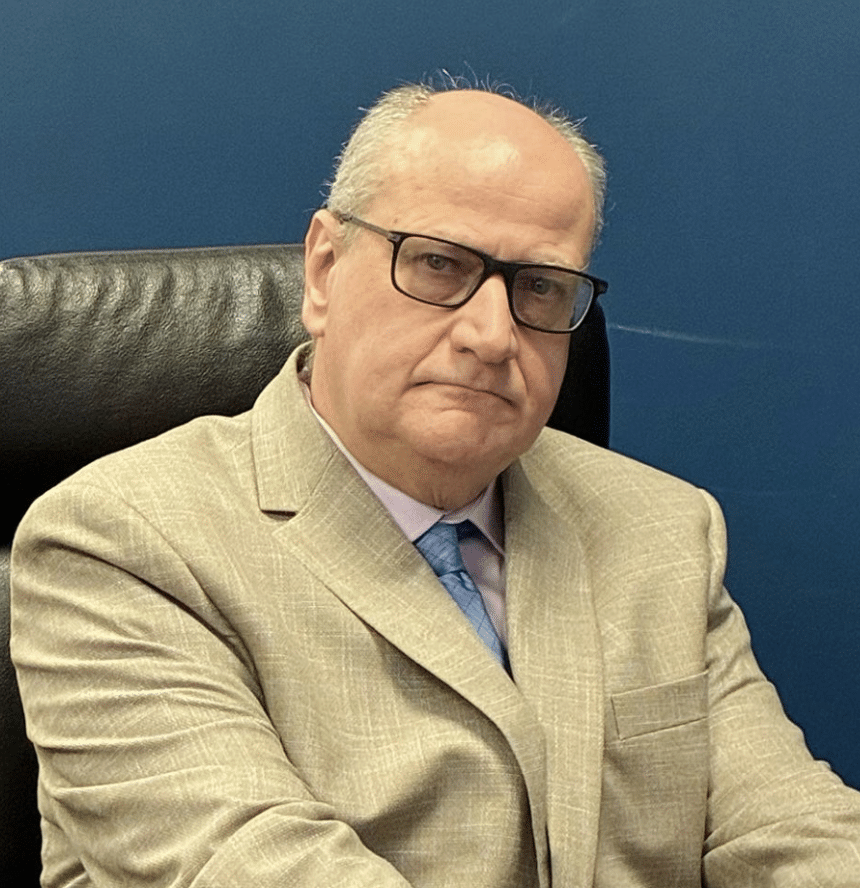
      Neuberger Berman has hired Steven Meier, former Chief Investment Officer for the New York City Bureau of Asset Management and Deputy Comptroller, as Vice Chair, Institutional. According to a press release, Meier brings over 40 years of investment experience in both the public and private sectors to his new role. He was previously the CIO of the New York City Bureau of Asset Management, overseeing over $300 billion of assets across the five pension funds of the New York City retirement system and prior to that, he was the interim CIO for the Connecticut Retirement Plans & Trust Fund Management.

      Iyan Adewuya

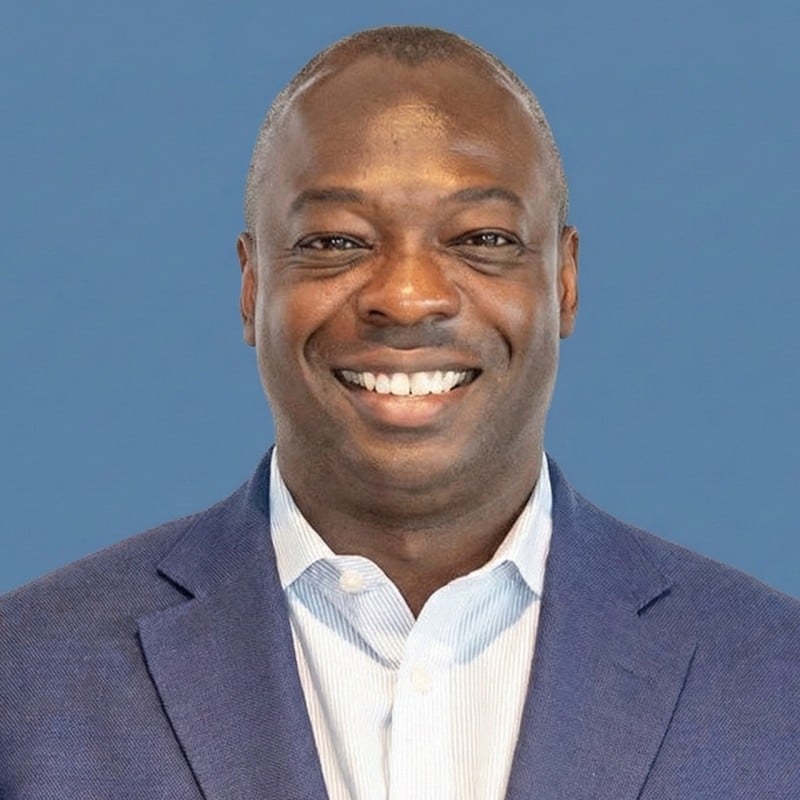
      SimCorp, has announced the appointment of Iyan Adewuya in the newly-created role of Chief Product Officer (CPO). According to a press release, Adewuya is a seasoned product leader with more than two decades of experience in product strategy and innovation. His career spans both public and private markets, uniquely positioning him to lead SimCorp’s product vision into the future. He will be based in New York and report to Chief Product & Technology Officer Marc Schröter. Most recently, he served as Head of Product for Enterprise and Private Markets Solutions within S&P Global Market Intelligence.

      Benjamin Pouly has started a new role as Trader at Trium Capital, joining the Khartes team, a global event driven strategy focused on Merger Arbitrage and Equity Events, he shared on his LinkedIn. He joins from Boussard & Gavaudan, where he began in 2007 in the middle office before moving into an execution trader role and leaving in 2010.

      JPMorganChase has announced that Todd Combs, Investment Manager of Berkshire Hathaway, Chief Executive Officer of GEICO and a former member of JPMorganChase’s Board of Directors, will head the $10bn Strategic Investment Group of the firm’s new Security and Resiliency Initiative (SRI). Combs will join the company in January 2026. He stepped off the JPMorganChase Board, effective immediately, according to a press statement.

      The California State Teachers’ Retirement System has appointed Nick Abel as Sustainable Investment and Stewardship Strategies investment director, according to a company statement. Abel replaces Kirsty Jenkinson, who was appointed to senior investment director of Private Markets and SISS in August 2025. Abel reports to Jenkinson. Before joining CalSTRS in 2020, he held positions at private-sector firms, such as Wespath Investment Management, RVK, Inc. and Saturna Capital, Inc.

      Capitolis has appointed Okan Pekin as President, based in London and reporting to Gil Mandelzis, Chief Executive Officer and Founder. Okan brings over 35 years of global financial services experience, including senior leadership roles at Citi (NYSE: C) until his retirement in April. Most recently, he served as Global Head of Securities Services, a $5 billion global business where he drove significant client growth.

      The Securities and Exchange Commission has announced that Lori J. Schock, who has served as the Director of the Office of Investor Education and Assistance (OIEA) since 2009, will retire from the agency at the end of December. Schock previously was Associate Director at the Financial Industry Regulatory Authority’s Investor Education Foundation and Office of Investor Education, and before that, was Director of Outreach at the Center for Audit Quality.

      If you have a new job or promotion to report, let me know at alyudvig@marketsmedia.com

      SEC’s Crenshaw Warns on Markets Turning into Casinos

      0

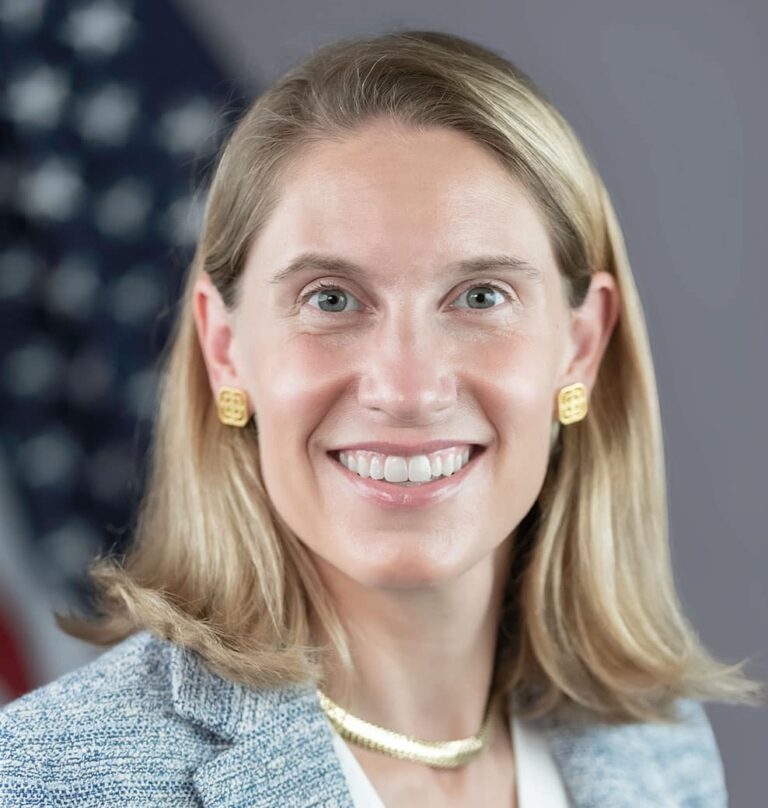
      Caroline Crenshaw, commissioner at the U.S. Securities and Exchange Commission, spoke about the future of financial regulation at The Brookings Institution in Washington, DC on 11 December 2025. She is the only commissioner who is a Democrat and said her voice has become one of “ubiquitous dissent.”

      “It’s been unsettling to see how precipitously one commission is willing to undo the work of the commission that came before, all without a single notice and comment rule making to date,” she said. “The commission has also been shrouding its policy making in darkness shunning public comment, and instead relying on hidden voices to drive its agenda in a mad dash to implement its policy preferences.”

      She described the regulator’s approach as treating investors like “silly children to be ignored” rather than fully formed persons with ideas and concerns worth hearing.

      The fundamental precepts upon which U.S  markets are built are being eroded and that the core the country’s intricate market structure is under attack, according to Crenshaw.

      “Instead of safeguarding our markets for investors to fund their retirements in safe and sustainable ways, we are moving in a direction where markets start to look like casinos,” she said. “The problem with casinos is that in the long run, the house always wins.”

      Crenshaw continued that there is a trend towards devaluing investor rights which is “pervasive and already worn deep.”

      She gave the examples of the SEC making it harder for investors to communicate their preferences to issuer management, showing hostility to investor proxy proposals, and dismantling private rights of action by allowing public issuers to force their shareholders into arbitration.

      Caroline Crenshaw, SEC

      “These actions seem fuelled by the fictitious notion that we need to punish investors in order to revitalize public markets, or purportedly to make IPOs great again, but IPOs can only be revitalized with investor money,” she said.

      The SEC is also reducing transparency by reducing the cadence of public issuer filings which she argued will give investors less access to timely information, including audited financial statements; less analysis from management; fewer disclosures about evolving risk and less analyst coverage making it easier to smooth earnings shortfalls.

      As a result, Crenshaw said investment decisions will be based on either stale data, data voluntarily released by companies that lack uniformity at best or are cherry picked at worst, or on information other than company metrics, such as social media posts.

      In addition, the SEC has made clear that it intends to roll back the universe of people who must register and what information must be disclosed.

      She also expressed concern that the budget for The Public Company Accounting Oversight Board, that oversees the audits of public companies and SEC-registered brokers and dealers and reports to the SEC, may be reduced. 

      Decline in lit trading

      In addition, Crenshaw highlighted the shift of market activity away from lit trading on exchanges to dark markets which Crenshaw claimed obscures the true prices of stocks, raises the cost of trading and damages investor confidence.

      “For this reason, it’s fundamentally important to support displayed liquidity and carefully consider any interventions that might impact transparency in our equity market structure, such as limiting or rescinding the order protection rule, which this commission seems poised to do,” she said.

      Private markets

      Crenshaw also objects to opening private markets to retail investors, especially their retirement assets. She said this was a “harmful policy choice” because it undermines the safer, more transparent and more efficient public markets.

      “Private markets expose retail investors to more risky investments,” she added. “My colleagues use lots of buzz words like freedom, diversification, democratization but it’s risky and reckless.”

      She argued that private markets do not offer a level playing field for retail investors as there is limited transparency, a lack of standardized disclosures and regulatory tools to detect fraud. Investors are kept in the dark about certain fees and expenses, and valuations are opaque and inconsistent.

      “Smaller investors almost certainly will be subject to higher fees and therefore lower returns than large investors with the power to negotiate,” she added. “Unleashing the private markets’ insatiable hunger for capital on retail investors’ wallets will come back to bite regulators, but not before Main Street American savings have been looted.”

      Crenshaw compared the trend toward deregulation in the current environment to the period prior to the stock market crash of 1929. She said: “I fear that the darkest depths of winter still lie ahead for America’s capital markets.”

      Crypto

      She recommended a return to market fundamentals and the promotion of policies that encourage trading based on actual fundamentals, issuer operations, cash flows and real financial metrics of companies, not tweets, and that policies should favor long-term buy and hold investing.

      “One thing that consistently puzzles me about crypto is, what are cryptocurrency prices based on,” she added. “Many, but not all, crypto purchasers are not trading based on economic fundamentals but are speculating, reacting to hysteria from promoters feeding a desire to gamble wash trading to push up prices.”

      Crenshaw expressed worries that loosening the basic fundamentals of the securities laws so that crypto can operate, but without any guardrails, could lead to significant market contagion. However, she believes there are ways to support this type of innovation, with the guardrails in place that are necessary to protect retirement assets.

      “A lot of this exposure is coming through ETFs and ETPs,” she added. “I think there are ways to build those bridges, but they are going to have to accept a different regulatory regime.”

      She concluded that the country should pursue policies that promote and ensure that the American economy works for everybody, not just those able to buy political influence.

      SIFMA Applauds U.S. House Passage of the INVEST Act

      Washington, D.C., December 11, 2025 – SIFMA today praised the U.S. House of Representatives for passing the bipartisan INVEST Act, comprehensive legislation that modernizes elements of U.S. securities laws.

      “SIFMA applauds the House for passing the INVEST Act and taking an important step to ensure that our securities laws evolve alongside today’s dynamic markets,” Kenneth E. Bentsen, Jr., SIFMA President and CEO.  “We appreciate the bipartisan leadership of the House Financial Services Committee and House leadership in advancing commonsense, market-enhancing reforms that promote access, growth, and innovation across the U.S. capital markets. We look forward to continuing to work with Congress and regulators to further strengthen our markets and protect investors.”

      SIFMA has long supported efforts to responsibly broaden opportunities for retail and sophisticated investors, strengthen entrepreneurial financing options, and sustain the competitiveness of U.S. markets.

      The INVEST Act includes provisions that would:

      • Modernize e-delivery rules while preserving paper delivery options
      • Provide retirement plan parity for 403(b) plans by permitting investment in CITs and insurance separate accounts
      • Expand pathways to qualify as accredited investors based on professional expertise or SEC-created examinations
      • Enhance investor protection through a Senior Investor Taskforce at the SEC
      • Support IPO activity and public-company entry through JOBS Act-style provisions
      • Expand eligibility for Well-Known Seasoned Issuers (WKSIs) to strengthen public capital markets

      These reforms further the objectives first advanced by the JOBS Act of 2012 and reflect a continued bipartisan commitment to efficient, competitive, and innovative U.S. capital markets.

      SIFMA submitted a letter of support earlier this week that expands on these views and can be found here: https://www.sifma.org/advocacy/letters/the-invest-act

      -30-

      SIFMA is the leading trade association for broker-dealers, investment banks and asset managers operating in the U.S. and global capital markets. On behalf of our industry’s nearly 1 million employees, we advocate for legislation, regulation and business policy, affecting retail and institutional investors, equity and fixed income markets and related products and services. We serve as an industry coordinating body to promote fair and orderly markets, informed regulatory compliance, and efficient market operations and resiliency. We also provide a forum for industry policy and professional development. SIFMA, with offices in New York and Washington, D.C., is the U.S. regional member of the Global Financial Markets Association (GFMA). For more information, visit http://www.sifma.org.

      FLASH FRIDAY: Meet Kevin Skarbek, Incoming STA Chair

      (FLASH FRIDAY is a weekly content series looking at the past, present and future of capital markets trading and technology. FLASH FRIDAY is sponsored by Instinet, a Nomura company.)

      T-minus three weeks until Kevin Skarbek, Managing Director of Order Routing, Relationship Management & Market Structure at Charles Schwab, steps into the role of Security Traders Association Chair.

      He will take the reins from 2025 STA Chair Julie Andress, who succeeded Jim Hyde, who followed Ryan Kwiatkowski.

      Skarbek brings over 20 years of trade desk experience and a deep understanding of how retail execution has evolved. His background spans roles at G1X/SIG and nearly two decades of active STA involvement through STA Chicago, where he served as President in 2020 and currently leads the affiliate’s scholarship initiatives.

      Now, as he prepares to transition from Vice Chair of the STA Executive Committee to Chair, Skarbek is focused on navigating the organization through a period marked by extended trading hours, regulatory evolution around transparency and best execution, and emerging technologies like AI and tokenization. In this conversation with Traders Magazine, he discusses STA’s 2026 priorities, the importance of education in an increasingly complex market, and how the organization’s grassroots structure positions it to help members adapt to what’s next.

      What’s your vision for STA’s priorities in the year ahead, particularly as market structure and regulatory discussions continue to evolve?

      Kevin Skarbek

      Our 2026 priorities fall into two core areas: how we engage with Washington, D.C. – including the SEC, FINRA, and Congress – and how we interact with STA members, our advisory committees, and the broader financial services community.

      STA is a grassroots organization that relies heavily on the dedication of volunteers. Whether it’s service on an Affiliate board or participation in one of STA’s four Advisory Committees, it’s critical that volunteers feel their time is well spent and that any perspective we put forward is accurate, thoughtful, and reflective of our diverse membership.

      On the regulatory front, our agenda spans equities, listed options, and ETFs. Key areas of focus include extended trading hours, potential updates to Regulation NMS, the delisting of U.S. securities due to Executive Orders or government sanctions, and the ongoing discussion around ETF share class structures. These issues continue to evolve, and STA will remain committed to providing balanced, informed input that helps policymakers and industry participants navigate the changing landscape.

      Given your deep experience in order routing and execution at Schwab, how do you see the current U.S. equity market structure adapting to the growing retail participation and ongoing regulatory proposals around best execution and transparency?

      As retail participation continues to grow and as regulatory proposals around transparency and order handling move toward implementation, education will remain at the center of the industry’s response. Whether it’s explaining how new products work, how order-routing decisions are made, or how evolving rules may affect execution quality, the focus will be on ensuring that investors have clear, accurate information. U.S. equity market structure is highly adaptive, and as it continues to evolve, the combination of robust education and thoughtful regulation will play a key role in maintaining investor trust and market integrity.

      Providing educational resources for self-directed investors is a key factor in obtaining new investors and maintaining existing ones. Broker-dealers invest heavily in this area and investors benefit. As new products come to market and regulatory proposals advance toward implementation, education will be at the core of the industry’s response.

      How do you think STA can help members navigate innovation while maintaining fairness and efficiency in the markets?

      Navigating innovation while preserving fairness and efficiency in the markets is not a new challenge for our industry. Financial services has always been highly competitive, and that competition ultimately benefits investors by giving them choice among broker-dealers and driving firms to improve their technology, execution quality, and resiliency.

      STA’s role is to help members understand how new legislative and regulatory initiatives will change market structure. Through education, open dialogue, and sharing best practices, we help professionals stay informed, adapt to innovation, and remain committed to a market structure that is fair, efficient, and resilient for all participants.

      How do you see STA’s advocacy efforts evolving under your leadership to ensure members’ perspectives are well represented in policy discussions?

      STA’s advocacy efforts will continue to follow the same disciplined and effective approach that has defined our work for decades. First, we focus on identifying and engaging with congressional leaders and staff who are true thought leaders on issues affecting our industry – the individuals who are drafting legislation and shaping regulatory priorities. Establishing productive dialogue with them ensures that our members’ perspectives are understood early in the policymaking process.

      Second, we work to build and maintain relationships with congressional members who serve on financial services committees and represent districts where STA has an Affiliate presence. This local connection is a powerful asset. It allows us to bring real-world perspectives from practitioners directly to policymakers and helps ensure that our advocacy remains grounded, credible, and representative of our national grassroots network.

      You’ve been very involved with STAC’s scholarship initiatives. How do you envision STA expanding efforts to attract, educate, and support the next generation of finance and trading professionals?

      Attracting and supporting the next generation of professionals is essential to the long-term health of any organization. Networking, education, and relationship-building have long been the pillars of career development, and STA’s 93-year history is rooted in providing exactly these types of opportunities across the financial services industry.

      Our focus is on building a strong and welcoming community – one that brings people together through high-quality educational content and meaningful networking events. For STA, this work begins at the local level.

      Our existing members and Affiliate networks play a vital role in inviting new professionals into the organization, introducing them to peers, and helping them form the connections that will support their growth throughout their careers.

      Having led at both the local (STAC) and national levels, what do you think STA can do to strengthen collaboration between local affiliates and the national organization?

      The affiliate structure is central to STA’s identity and defines us as a true grassroots organization. Strong affiliates – those that are well recognized in their local communities and on solid financial footing – are essential to the strength of the broader association.

      At the national level, our first priority is ensuring that every affiliate has a meaningful and consistent point of contact with the STA Board. From there, we focus on establishing open and reliable lines of communication so we can identify needs early and provide timely support. That support includes helping affiliates promote their events on a national platform, offering content ideas and speaker resources for educational programs, and providing guidance on day-to-day operational challenges.

      Strengthening these connections will ensure that both the national organization and our affiliates continue to grow together.

      What do you see as the biggest opportunities and challenges facing market participants and how can STA help the trading community prepare for what’s next?

      Two of the biggest challenges and opportunities facing the industry today are the increasing use of AI and the potential tokenization of Reg NMS securities.

      AI is already demonstrating meaningful value across the financial markets, helping financial professionals at our member companies serve their clients faster and more efficiently. As these capabilities expand, the industry will need to balance innovation with responsible implementation and appropriate oversight. We believe it is vital to combine these great technological advances with the expertise of financial services professionals to serve clients.

      Tokenization presents a different but equally significant frontier. Our industry has always been focused on innovation and on embracing technologies that benefit its clients. While much remains unknown about how tokenized securities will be structured or how they will trade in secondary markets, it is certainly an innovation that could have great potential as a form of asset ownership. There is clear momentum in Congress and among the major regulators – the SEC, CFTC, and Treasury – to develop a regulatory framework that would allow tokenized securities to evolve. Integrating tokenized assets into the existing market infrastructure will present challenges, but it will also create meaningful opportunities for firms that can adapt quickly and thoughtfully.

      STA supports innovation in securities trading. A new framework for tokenization must adhere to the same regulatory principles that help to ensure the U.S. securities markets remain the envy of the world.

      STA can help the trading community prepare by facilitating education, fostering dialogue between practitioners and policymakers, and ensuring that market participants have a forum to share insights as these technologies and regulatory frameworks continue to develop.

      Hedge Funds Move Into New Investment Vehicles

      Once the province solely of institutions with considerable heft, hedge funds are evolving to address new investor dynamics as they face continued scrutiny, according to The Cerulli Edge—The Americas Asset and Wealth Management Edition.

      Hedge funds have experienced a rebound following a poor exit market in 2022 and 2023. The global hedge fund ecosystem grew 9.3% in 2024, mainly as a result of performance, given the $2.7 billion of inflows driven by credit and multistrategy funds.1

      Hedge fund managers historically have found success working with institutional investors and ultra-high-net-worth (UHNW)/high-net-worth (HNW) investors. As a result, they have delivered their strategies through limited partnerships and other structures that offer greater customization (e.g., separately managed accounts, funds of one). According to Cerulli, the key objectives of hedge fund investment strategies are overwhelmingly focused on volatility dampening (79%) and diversification (71%), followed by growth/enhanced returns (50%).

      However, the fees of such strategies remain a point of concern, as investors can earn close to a 4% yield on cash. Cerulli believes hedge funds provide an important value proposition, but it is evident that a significant component is the ability to deliver unique client outcomes at an attractive price.

      “The key question is whether the largest funds can maintain performance to justify the fees and whether their strategies can support more assets, as some return capital to investors,” says Daniil Shapiro, director. “The concern is not new for hedge funds, whose trading activities often have drawn scrutiny, but they hint at the importance of investor oversight and monitoring of the strategies to ensure understanding of the exposures, to confirm that they deliver value,” he adds.

      Vehicle innovation will be critical to future flows.

      “The limited partnership structure and other structures that offer advanced customization may require closer consideration as investors seek greater liquidity and fee transparency,” adds Shapiro.

      The research cites the entrance of two of the largest hedge fund firms entering the exchange-traded fund (ETF) as a point of reference.

      “The distribution landscape is changing. Hedge fund managers should carefully evaluate the opportunity to offer more liquid strategies—if not via the ETF structure, then via the semi-liquid structures. Brand name hedge funds are likely to have an opportunity to offer their strategies through structures with easier reach to financial advisors,” he concludes.

      Source: Cerulli

      Interactive Brokers Expands Market Access with United Arab Emirates Equities

      0

      GREENWICH, CT, December 9, 2025 – Interactive Brokers (Nasdaq: IBKR), an automated global electronic broker, today announced the introduction of United Arab Emirates (UAE) equities through two leading exchanges in one of the world’s fastest-growing economic regions. Clients of Interactive Brokers worldwide can now access the Abu Dhabi Securities Exchange (ADX) and the Dubai Financial Market (DFM). This enables investors in the region to trade both local and international markets from a single platform while investors worldwide can build diversified portfolios across asset classes and geographies, including countries in the growing Gulf Cooperation Council (GCC).

      Interactive Brokers serves a global client base and is uniquely equipped to advance the financial goals of individual and institutional investors worldwide, including those in the Middle East. Adding UAE stocks further expands Interactive Brokers’ market access and enhances the investment opportunities available to local and global investors. Interactive Brokers supports account funding and trading in up to 28 currencies, including AED. International clients can deposit funds in their local currency and convert them to AED at low FX conversion rates to trade.

      “As market participants seek to uncover new investment opportunities around the world, adding UAE equities offers both local and international investors access to the economic growth afforded by this dynamic region, alongside products from over 160 other global markets on the same platform,” said Milan Galik, Chief Executive Officer of Interactive Brokers. “This announcement, coupled with our new office in Dubai International Financial Center (DIFC), reflects our strengthening foothold in the Middle East and a continued expansion of unparalleled market access for active traders and institutional investors worldwide. We’re honored to have been recently voted Best Investing Account in the UAE by the 2025 Good Money Guide Awards.” 

      Current clients can begin trading UAE equities immediately through their existing Interactive Brokers accounts. Prospective clients can open an account in minutes to unlock 160+ global exchanges from one unified platform.

      For additional information, please visit:

      ADX Exchange Abu Dhabi

      US – Stocks (and countries served by IB LLC)
      Canada – Stocks
      United Kingdom – Stocks
      Europe – Stocks
      Hong Kong – Stocks
      Singapore – Stocks
      Australia – Stocks

      DFM Exchange Dubai

      US – Stocks (and countries served by IB LLC)
      Canada – Stocks
      United Kingdom – Stocks
      Europe – Stocks
      Hong Kong – Stocks
      Singapore – Stocks
      Australia – Stocks

      The best-informed investors choose Interactive Brokers

      About Interactive Brokers Group, Inc.: 
      Interactive Brokers Group, Inc. (NASDAQ: IBKR) is a member of the S&P 500. Its affiliates provide automated trade execution and custody of securities, commodities, foreign exchange, and forecast contracts around the clock on over 160 markets in numerous countries and currencies from a single unified platform to clients worldwide. We serve individual investors, hedge funds, proprietary trading groups, financial advisors and introducing brokers. Our four decades of focus on technology and automation have enabled us to equip our clients with a uniquely sophisticated platform to manage their investment portfolios. We strive to provide our clients with advantageous execution prices and trading, risk and portfolio management tools, research facilities and investment products, all at low or no cost, positioning them to achieve superior returns on investments. Interactive Brokers has consistently earned recognition as a top broker, garnering multiple awards and accolades from respected industry sources such as Barron’s, Investopedia, Stockbrokers.com, and many others.

      Follow Interactive Brokers on social media: 

      US and World (except Europe): FacebookInstagramLinkedInXYouTubeTikTok
      UK and Europe:  FacebookInstagramXTikTok

      Firstrade Rolls Out Invest 3.0 Platform Upgrade

      On December 10, 2025 Firstrade launched Invest 3.0, a comprehensive redesign of its web trading platform that introduces one-click trading capabilities and enhanced tools for the growing number of retail investors participating in options markets.

      The commission-free online brokerage’s latest platform upgrade centers on Quick Trade, a floating order panel accessible from anywhere on the site, a feature that addresses one of the most requested capabilities among active traders.

      The enhancement allows users to place orders instantly from positions, stock overview pages, watchlists, research tools, and option chains without navigating away from their current view.

      Stephen Callahan

      Stephen Callahan, Trading Behavior Specialist at Firstrade, explained the philosophy behind the redesign: “Our goal is, as always, to continually improve the Firstrade experience for our clients. The Firstrade mission has not changed but, how we implement it is always evolving.”

      “Long time clients and newcomers will benefit from the advanced high-tech upgrade making trading, and the info needed for smart trading more simple and accessible,” he told Traders Magazine.

      “Quick Trade will allow clients to seamlessly trade based on market info, research and the clients personal portfolio. There’s no cumbersome toggling between pages. You’re able to view and act instantly,” Callahan added.

      A significant portion of the redesign focuses on options trading, reflecting broader market trends. The platform features a completely redesigned option chain with clearer layouts and improved data visualization to support multi-leg options strategies.

      Callahan noted that Firstrade’s client base mirrors industry-wide shifts toward options. “All indicators point to retail investors becoming more involved in option trading. Firstrade clients are no different. A large part of our trading volume is from options,” he said.

      “Our Redesigned Option Chain can assist conservative clients to make more informative decisions when hedging positions and the growing number of sophisticated traders will be able to place multi leg trades as part of their regular strategy,” he said.

      The timing aligns with explosive growth in retail options participation across the industry, particularly in short-dated contracts and complex strategies that were once primarily the domain of institutional traders.

      Beyond trading execution, Invest 3.0 introduces sharper visuals and improved portfolio analytics through an advanced dashboard and charting system. The upgrades aim to make it easier to connect what’s happening in your portfolio with broader market movements, according to Callahan.

      “The enhancements we’ve made to our Dashboard & Charts is another example of how lifting the vail between a client’s portfolio and overall market trends allow easy and timely trades based on the clients positions and what’s going on in the markets at large,” Callahan explained.

      The platform also includes light and dark mode options, allowing users to switch themes based on viewing preferences and trading environments. Callahan emphasized that even small details matter: “Sometimes enhanced technology can lead to simple conclusions. The ability for clients to easily switch between Light/Dark Mode makes a simple preference more user friendly, whether for trading purposes or merely viewing to stay informed.

      “No enhancement is too big or small to satisfy our clients. Our mission is a continuing process,” he stressed.

      Invest 3.0 maintains Firstrade’s pricing structure, including zero-commission trading and zero options contract fees.

      The platform is now available to all Firstrade clients, with the company indicating that Invest 3.0 will continue expanding its capabilities and tools as it evolves.

      Why the Next Wave of Tokenization Will be the Silent Standard

      By Justin Barlow, Executive Director, Sei Development Foundation

      When ETFs first appeared in the early 1990s, few professionals on Wall Street recognized their significance. ETFs were treated as an odd experiment, a unique way to trade baskets of stocks. At the time, many investors dismissed them as a fun innovation with unclear value, uncertain regulation, and limited liquidity. Yet, as adoption grew, skepticism gave way to the realization of their full potential. Suddenly, ETFs became the standard and are now a key element of nearly all investors’ portfolios. ETFs reshaped the investing landscape not through disruption, but through integration.

      The same pattern of innovation is now unfolding with tokenization. After years of experimentation and exaggerated promises, tokenization has finally entered its utility phase. The technology is no longer a proof of concept or an innovative talking point at conferences, but rather the next major financial innovation being actively adopted by some of the largest financial institutions in the world. While tokenization is now working quietly, efficiently, and often unnoticed beneath the surface of modern finance, standardization is the next step toward full integration with the financial system.

      The first phase of tokenization was experimental. Between 2017 and 2022, the focus was on demonstrating what could be tokenized, ranging from art and collectibles to theoretical financial products. Those experiments had value; they revealed what the technology was capable of and framed tokenization as something novel and separate from the broader financial system.

      This separation was short-lived, however. Traditional financial institutions, seeing the results of this experimentation, soon began their own internal proof of concepts, ultimately leading to the latest phase of tokenization – the reinvention of payment rails, the mass adoption of stablecoins, and a flood of real world assets of all kinds onchain. Today, major institutions are focused on how blockchain technology can make markets faster, more transparent, and more interoperable. What was once an idea is now usable infrastructure that is quietly integrating into traditional systems rather than competing with them.

      Banks, fund managers, and custodians are modernizing their operations to interact with blockchain rails because efficiency demands it. Settlement, reconciliation, and compliance can all be improved through tokenized systems. Recent examples include BlackRock’s and Apollo’s tokenized fund initiatives and Brevan Howard’s expansion into tokenized strategies. Even large custodians like BNY Mellon and Citi are experimenting with tokenized settlement systems. These aren’t flashy announcements – they’re important upgrades that redefine how the financial system works.

      This quiet adoption is precisely what signals progress. When a technology becomes an assumed element within a broader system instead of a front-page topic, it’s a leading indicator of true institutional adoption. Every transformative technology goes through the cycle of hype, skepticism, and then normalization. Tokenization is entering its final stage, the point where it becomes the silent standard powering financial infrastructure.

      The reason is simple, tokenization succeeds when it disappears from the spotlight. Not because it is unimportant, but because it is ubiquitous. Investors won’t say they “use tokenized assets,” just as no one specifies “mobile phone” today, it’s simply assumed that all phones are mobile. In the same way, the tokenization of assets will be obvious. It will be built into the system by default, enabling instant settlement, composability, and transparency under the hood, all working 24/7/365.

      The next wave of tokenization will arrive when this standardization becomes universal, when systems, protocols, and infrastructure align around shared frameworks for speed, compliance, and interoperability. We are not quite there yet, but the foundations are being laid. Just as earlier financial innovations evolved from novelty to necessity, tokenization will mature into the silent architecture of finance.

      The most meaningful innovations in finance do not announce themselves; they integrate so deeply that they stop needing explanation. The real story of tokenization isn’t about new products. It’s about new infrastructure that quietly powers liquidity, transparency, and market access across every asset class. In the years to come, the most successful financial products will likely be powered by tokenization. It will live behind the scenes, embedded in everything from fund management systems to payment rails.

      Purpose-built blockchains that prioritize performance, cost efficiency, and interoperability represent this next stage. They are optimized for real-world trading, low latency, and composability between assets, the properties that make tokenized markets functional rather than theoretical. The end goal is not to reinvent finance, but to rebuild its technical foundation for a digital-first world.

      Justin Barlow is Executive Director of the Sei Development Foundation, which is dedicated to the advancement and adoption of Sei, the layer 1 blockchain purpose-built for fast, cheap financial transactions and to bring institutional finance onchain. Justin was formerly an investor at Solana Ventures and a partner at Faction VC.

      Geopolitical Risk and Trade Tensions, Cyber Risk, and U.S. Economic Slowdown Named Top 2026 Risks

      Entering 2026, Geopolitical Risk and Trade Tensions, Cyber Risk, and U.S. Economic Slowdown Named Top Risks Facing Global Finance, According to New DTCC Survey

      Respondents to DTCC’s annual Systemic Risk Barometer also highlighted concerns about the industry’s growing reliance on AI

      New York/London/Hong Kong/Singapore/Sydney, December 9, 2025 ‒ The Depository Trust & Clearing Corporation (DTCC), the premier post-trade market infrastructure for the global financial services industry, today announced the results of its annual survey on the top risks facing financial markets. Conducted every year since 2013, DTCC’s Systemic Risk Barometer offers important insights into the evolving risks that are top of mind for financial services professionals around the globe.

      Key highlights on the top risks entering 2026:

      • Geopolitical Risks and Trade Tensions ranked as the top overall risk to global finance for the fourth straight year (78% of respondents called it a top five risk).
      • Cyber Risk was the second overall top risk, with 63% of respondents ranking it as a top five risk.
      • U.S. Economic Slowdown (41%), Market Volatility / Sudden Dislocation in Financial Markets (38%), and U.S. Monetary / Fiscal Policy Uncertainty (38%) rounded out the remainder of the top 5 overall risks.

      Amid the financial services industry’s growing reliance on AI solutions, FinTech was ranked a top 5 risk by 33% of respondents, following Excessive Global Public/Corporate Debt (34%) and Inflation (34%).

      Respondents named cybersecurity and data protection vulnerabilities the top risk associated with adoption of artificial intelligence (41% of respondents). AI-generated misinformation, such as false outputs or hallucinations, was cited next by 38% of respondents. Respondents also said that insufficient governance, controls and oversight was a concern (37% of respondents), followed by overreliance on AI solutions (34%).

      “A common theme across the survey responses was concern over uncertainty—whether economic, geopolitical, or tied to emerging technologies like AI,” said Tim Cuddihy, DTCC Group Chief Risk Officer. “Respondents also flagged concentration risks, such as heavy reliance on a few technology providers or platforms, warning that new technologies like AI and quantum computing could introduce fresh pathways for contagion and systemic events.”

      Cuddihy continued, “The most effective tool to navigate uncertainty is industry-wide communication and collaboration. DTCC remains committed to fostering open dialogue and engagement to strengthen resilience and mitigate systemic risks.”

      New to the survey this year was a question on quantum computing. Only 29% of respondents confirmed that their firm was currently actively planning for the cybersecurity risks associated with the technology. 25% said their firm acknowledges quantum computing as a risk but did not have any current plans to address it.

      -# # #-

      About DTCC
      With over 50 years of experience, DTCC is the premier post-trade market infrastructure for the global financial services industry. From 20 locations around the world, DTCC, through its subsidiaries, automates, centralizes, and standardizes the processing of financial transactions, mitigating risk, increasing transparency, enhancing performance and driving efficiency for thousands of broker/dealers, custodian banks and asset managers. Industry owned and governed, the firm innovates purposefully, simplifying the complexities of clearing, settlement, asset servicing, transaction processing, trade reporting and data services across asset classes, bringing enhanced resilience and soundness to existing financial markets while advancing the digital asset ecosystem. In 2024, DTCC’s subsidiaries processed securities transactions valued at U.S. $3.7 quadrillion and its depository subsidiary provided custody and asset servicing for securities issues from over 150 countries and territories valued at U.S. $99 trillion. DTCC’s Global Trade Repository service, through locally registered, licensed, or approved trade repositories, processes more than 25 billion messages annually. To learn more, please visit us at www.dtcc.com or connect with us on LinkedInXYouTubeFacebook and Instagram.