








In a recent episode of Goldman Sachs Exchanges, Katie Koch, CEO of TCW Group and former CIO of Public Equity at Goldman Sachs Asset Management, shared her thoughts on leadership, personal growth, and the evolving world of asset management. Her story is one of gratitude, resilience, and a deep commitment to purpose-driven leadership.
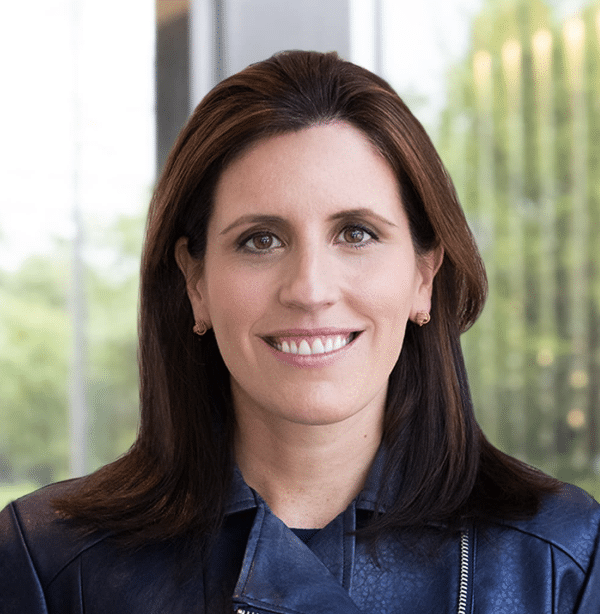
Koch’s decision to leave Goldman Sachs after two decades was not made lightly. Describing herself as the “lucky one,” she reflects on Goldman not just as a career incubator, but as a crucible of growth. “I was probably one of the least qualified people ever hired by Goldman Sachs… but they took a chance on me,” she said. Over 20 years, she rose through the ranks, holding senior roles in asset management and eventually becoming CIO of Public Equity. Yet despite her deep roots at Goldman, the opportunity to lead TCW offered something she couldn’t pass up: “I love investing, and I wanted to try it in a different context… I really love to set strategy and build teams and build cultures. And this was a great opportunity to do that.”
The leap from investor to CEO came with new dimensions of responsibility. Some parts of the transition were intuitive; others required real adaptation. “If you have been in the investing seat, you bring a lot of empathy and understanding to the job,” she said. “You’re trying to predict the future under circumstances of extreme uncertainty… and prosecute a philosophy and process that, by definition, is not going to work every day.” That firsthand experience, she explained, helps her lead with perspective and patience. But being CEO also means “you have to execute.” Koch reflected on sitting across from CEOs as an investor and acknowledged, “I don’t think I fully appreciated how hard it was to take the vision and the strategy to execution.”
At TCW, a firm founded in 1971 with a deep legacy in fixed income, Koch found a platform rich in tradition—but also in need of thoughtful evolution. “There’s actually just not that many asset management companies in the world that have that long of a tenure… and continue to be independent,” she noted. The firm’s founder, Robert Day, offered her a powerful message before he passed: “Remember, you’re in the investing business, and allow it to compound over time.” Koch, a believer in compounding not just capital but values, took that message seriously. “Let’s respect these great, incredible attributes of this company… but evolve the platform for the fact that the future is changing.”
That evolution involves expanding TCW’s capabilities into areas like exchange-traded funds, liquid markets, and private credit. The landscape is shifting, and institutional investors are seeking more holistic solutions. “I’ve just seen a pickup in the last couple of months, both of sovereign clients and pension funds… giving us a return target and saying, ‘You guys do that.’” Rather than asking for a menu of isolated investment products, clients now expect asset managers to construct integrated portfolios that meet return and quality goals. “They’re asking us to come up with more holistic solutions versus just approaching that with individual products.”
Koch credits much of her approach to leadership to the foundation she built at Goldman Sachs. “What I take from that is that Goldman Sachs is a place that manufactures talent.” She entered the firm as a literature major, with what she describes as no technical expertise—only “hard work and diligence.” But what followed was a 20-year masterclass in asset management, business leadership, and culture. “I got to move around a lot, run different businesses, and learn about different asset classes and how clients approach problems. That mobility really prepared me for this job.”
Relationships were central to that journey. Koch believes in contributing first before asking anything of others. Among the most lasting lessons from her time at Goldman was the importance of framing ambition in terms of value creation. “One of my mentors gave me the advice: ‘What is the industrial logic of what you’re asking for?’ Think about why it’s good for the company and the clients.” That advice not only helped her thrive at Goldman but has guided her leadership at TCW.
Feedback, too, plays a central role in her vision for the firm. “We had an amazing feedback culture [at Goldman], where people are willing to give feedback because you want them to win. That’s something I’ve worked hard to bring to TCW.” Building that kind of culture starts with core values, she says. “Number one at the top of the list is integrity. We’re going to get investment decisions wrong… What is not tolerated at all is any sacrifice of the values or the morals or the way we show up for clients.”
She also emphasizes humility—“In this industry, you’re either humble or about to get run over”—as well as intellectual curiosity and collaboration. These ingredients create psychological safety: “That is when you get to a feedback culture, where people are really willing to tell each other what they feel… to push each other to be better for our clients.”
Koch’s grounding in values comes from her upbringing in suburban New Jersey, where she was raised in a close-knit family. From her father, who passed away a decade ago, she learned that “we do the right thing here… not the expedient thing, not the popular thing.” From her mother, she gained the courage to take risks. “She asked me a question that I think about before I make any big decision: ‘What would you do if you knew you wouldn’t fail?’”
Those lessons now shape how she raises her four children, all under ten. “The number one thing my husband and I talk about is resilience,” she said. “We want them to be able to persist through the setbacks.” That value was tested in January, when her family’s community in Pacific Palisades burned down. “I wouldn’t wish that upon anybody… but my husband said, ‘We’re here, and they’ll get to go through this tough thing. We’ll make sure they’re okay.’” For Koch, the experience became a lens for teaching her children the value of perseverance. “Winning is easy. Losing is not. But losing is the most important thing, right? In investing or in life.”
Even in smaller moments, she looks for those lessons. When her daughter wanted to try out for a club soccer team she wasn’t likely to make, Koch hesitated. “Let’s protect her from this experience,” she said to her husband. But he disagreed. “He said, ‘It’s okay. We’re going to let her do it… She’ll either make it or she won’t, and we’ll help her through it.’” Her daughter didn’t make the team. “But she survived. And it hasn’t stopped her from wanting to try again.”
Koch likens parenting to long-term investing—full of risk, uncertainty, and delayed payoffs. “It takes extra work to help your kids learn how to lose and go through hardship. But I think it’ll pay off… It’s the longest form of investing.”
As she leads TCW into its next era, Koch continues to blend deep investing expertise with human-centered leadership. Her message is clear: Be guided by integrity, stay curious, think long term—and never underestimate the power of resilience.
