








The U.S. Securities and Exchange Commission has recently launched a new podcast, Material Matters, featuring conversations with senior officials on the agency’s policy agenda and rulemaking priorities.
In the inaugural episode, Chairman Paul Atkins interviewed Commissioners Mark Uyeda and Hester Peirce, focusing on their backgrounds, regulatory perspectives, and current areas of work.
Atkins said the initiative was intended to make the agency more accessible, noting that the SEC has “a profound impact on the American financial system” but “remains something of a mystery” to many.
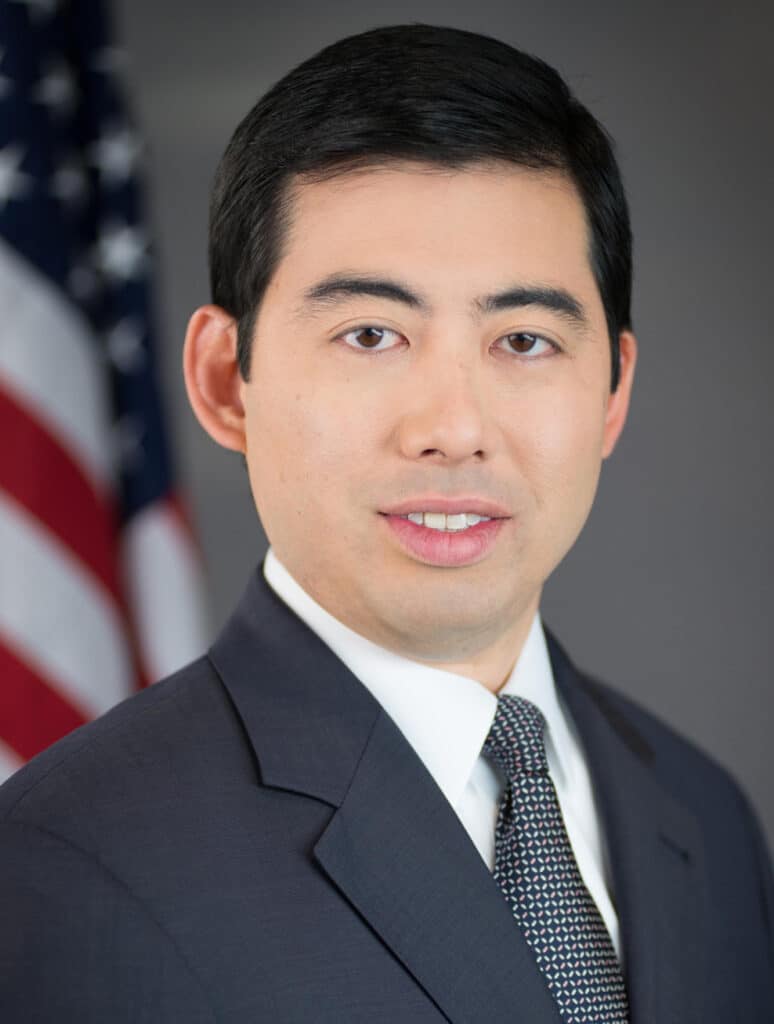
Uyeda, a nearly 20-year veteran of the SEC, pointed to historical market cycles, including the dot-com era and accounting scandals involving firms such as Enron, as shaping his regulatory approach. Reflecting on more recent policy direction, he said: “The last four years were a complete outlier to anything I’ve seen in…over three decades of time as a corporate securities lawyer.”
He added that the agency had shifted away from its traditional role, saying: “We became instead of a regulator…to more of a business conduct regulator,” and in some cases had gone “even beyond that.” Uyeda said there had been no clear legislative mandate for many of those actions and emphasized a return to fundamentals: “We’re supposed to be a disclosure agency.” He also linked that approach to broader economic principles, stating: “When you look at the history of America, it is about opportunity. It is about free enterprise.”
The discussion also addressed long-term changes in public markets. Atkins noted that the number of public companies had declined over the past three decades. Uyeda said both public and private markets “can thrive together,” but suggested the role of IPOs had shifted. “One of my big fears is… the IPO is now considered a liquidity event for employees and for early-stage investors,” he said, contrasting that with earlier periods when public markets were more widely used to raise capital and allowed “any person…in the public” to invest in growth-stage companies.
Peirce’s remarks focused on digital assets and regulatory clarity. She described crypto as enabling the transfer of value digitally without duplication, stating: “Cryptography solves that problem.” She said a clearer regulatory framework was needed, adding: “We need to have financial regulation that is open to innovators,” and that a structure that is “understandable” and “fit for purpose” would allow regulators to address risks while supporting development.
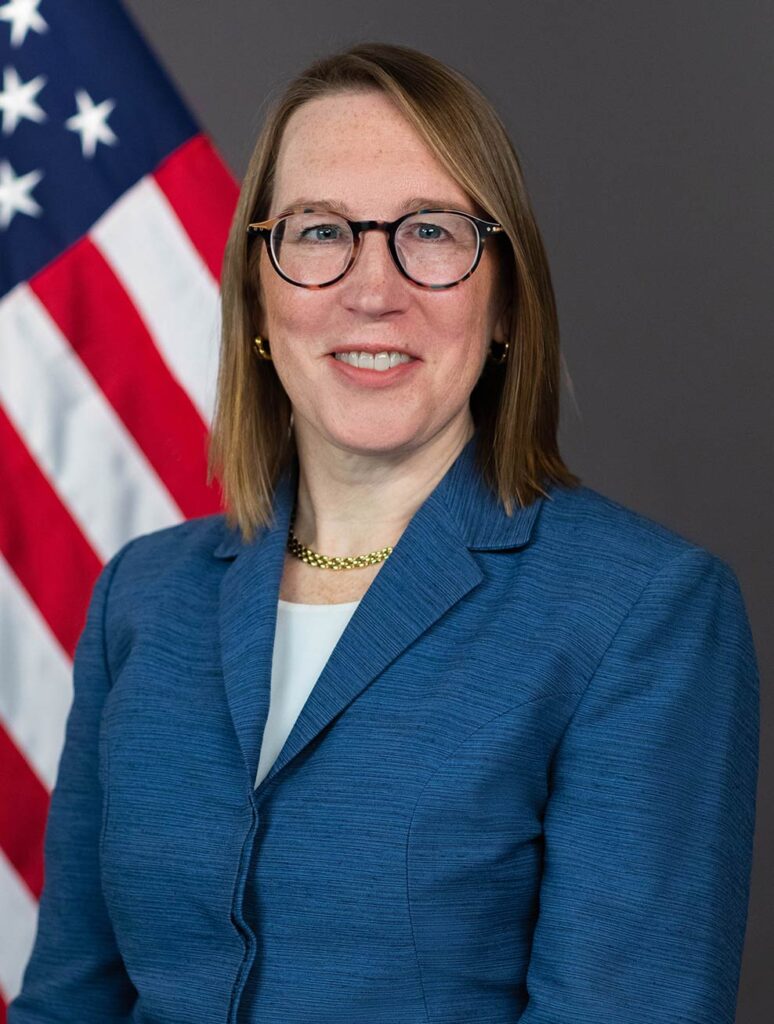
Peirce said the SEC was working on approaches to assets within its jurisdiction, including tokenized securities and certain token-based transactions, and highlighted coordination with other regulators and lawmakers. Atkins noted that policymakers had discussed making the U.S. “the crypto capital of the world” and described the current period as “a very important inflection point in American markets.”
Peirce also discussed the potential impact of blockchain on market structure. “The beauty of the technology is that it allows you to disintermediate,” she said, noting that participants could transact directly or through automated systems.
She added that “you can program assets” using smart contracts to automate processes such as collateral management or compliance functions, while acknowledging that intermediaries would remain but that “their roles may change as this technology takes hold.”
On investor protection, Peirce said digital channels had increased the reach of fraudulent activity. “The fraudsters are really able to reach investors very easily these days,” she said, emphasizing the need for skepticism. “If someone’s pushing me to make a decision today, I can wait,” she added, encouraging investors to question opportunities that appear unusually attractive.
She also called for earlier financial education, stating: “I want elementary school kids to be immersed in it,” so that investors are better prepared to make decisions later.
