










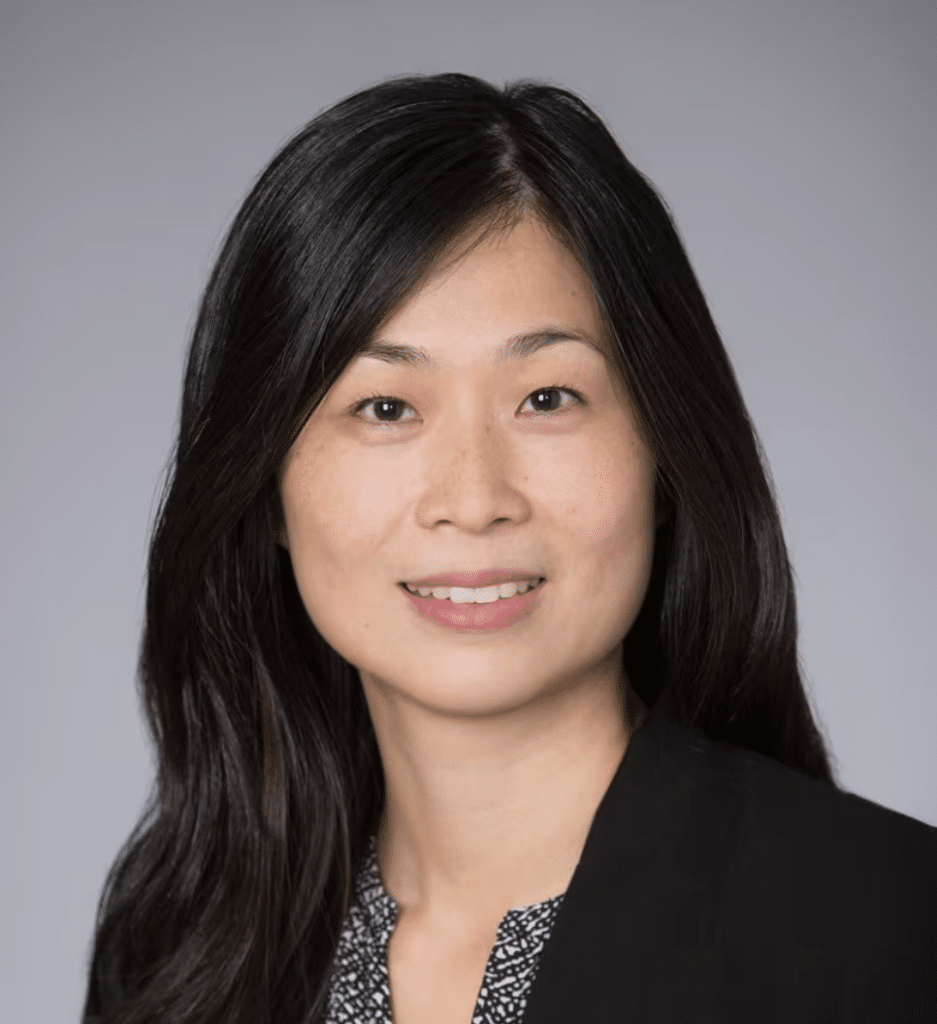
Last week, Nomura Asset Management International appointed Linda Galsim as Global Head of Product, a newly created role focused on leading the firm’s global product strategy across its institutional and wealth businesses. Traders Magazine spoke with Galsim about the convergence of public and private markets, and what the industry can do to support the next generation of women leaders.
You’re coming into this new role at a time when institutional investors’ needs are changing quickly. What are you hearing most from clients right now, and what has changed most in recent years?
First, the traditional boundaries between asset classes and investment vehicles are blurring. Institutional clients are looking at their portfolio holistically across public and private markets, liquidity profile, and investment structures, rather than starting with a particular product or vehicle. They’re focused on outcomes they are trying to achieve and how different capacities can work together to get them there.
Second, clients want their asset managers to be more anticipatory. They want us to understand where their needs are headed and help them get there, not just respond to what they’re asking for today. That means having conversations about portfolio construction and bringing together different capabilities to work together to solve specific investment challenges.
Third, there is a significant shift in how clients want to access investment expertise. In the private markets, we are seeing continued innovation in semi-liquid and interval structures that can broaden access. In the public markets, active ETFs are creating new ways to deliver investment strategies efficiently and at scale. At the same time, institutional clients continue to value customization through separate accounts and tailored mandates.
What makes a product successful with institutional investors today?
Three things: clarity of purpose, consistency of execution, and flexibility of delivery.
Clarity of purpose starts with solving a real client need. A product should have a clearly defined role in a portfolio, and investors should be able to understand what the strategy is designed to do, where it fits, and how it complements the exposures they already have.
Consistency of execution means delivering what you said you would deliver. Performance matters, but institutional clients are equally focused on whether a strategy is behaving as expected. They are looking for discipline in the investment process, strong risk management, and transparency through different market environments.
And flexibility of delivery is increasingly important. The investment strategies may be the same, but the optimal structure can differ based on client’s portfolio objectives, liquidity needs, regulatory requirements, and operating constraints. For one client that may mean a separate account; for another, a commingled fund, ETF or semi-liquid structure.
How much more tailored are institutional investors expecting their asset managers to be, and what does that mean for how products are built?
Institutional investors have always expected customization, but what’s changed is the scale and breadth of that expectation. Clients increasingly want solutions tailored to their specific objectives without sacrificing the operational efficiency and economic advantages that come with scale.
That requires us to think differently about how products are built. Rather than creating one-off solutions for every client, the opportunity is to build scalable investment capabilities that can be delivered and customized in different ways. I think of it as mass customization: the investment expertise and process remain consistent, but the vehicle, liquidity profile, guidelines or combination of strategies can be tailored to meet different client needs.
It also changes how product development happens. Product teams can’t operate in isolation. We need an ongoing dialogue among investment teams, distribution and clients to understand the problem we’re trying to solve and then work backward to determine the right investment offering and delivery structure.
You’re bringing Nomura’s product capabilities together under one group. What do you want to do differently in the way the firm develops and brings products to institutional clients?
The biggest opportunity is creating a truly global view of our investment expertise and client needs, and then connecting the two more systematically. Nomura Asset Management International has tremendous investment expertise across regions and asset classes. The opportunity is to make those capabilities more visible across the organization and identify where they can address client needs beyond the markets in which they were originally developed.
I see the product organization as a bridge between our investment teams, distribution teams and clients across all regions. With a more unified view of our capabilities, product pipeline and client demand, we can be more deliberate about where we invest, where we see investment opportunities, and where we can bring existing capabilities to new markets or through different vehicles.
It is particularly exciting when we think of bringing together public and private market capabilities to develop more holistic solutions for clients. The goal is to make the full breadth of our investment expertise work harder for our clients globally.
Looking ahead, what trends do you think could have the biggest impact on institutional asset management over the next few years?
First, the traditional lines between public and private markets will continue to blur. Investors are increasingly thinking about exposures and outcome across the full capital structure rather than treating public and private assets as separate allocations. This creates opportunities for managers with capabilities across both markets to develop portfolio solutions.
Second, technology, data and AI will continue to reshape the industry. Institutional investors are becoming more sophisticated in how they evaluate managers, construct portfolios and monitor risk. While asset managers have more tools to analyze markets, understand client needs. I think that will raise expectations on both sides.
Third, we are seeing an evolution in how investment strategies are accessed. Institutional strategies are being delivered through a broader range of vehicles, while wealth investors are gaining access to capabilities that historically were primary available to institutions. Active ETFs, SMAs, and semi-liquid structures are all part of the evolution.
You’ve spent more than 25 years in asset management, including senior product roles. What has changed most for women trying to build a career and move into leadership in the industry?
There has been meaningful progress. When I started in the industry, there were far fewer women in senior investment and leadership roles, and there weren’t as many visible paths to leadership. What I think has changed most is that women are encouraged to build careers around their strengths rather than fit a predefined model of leadership. You don’t have to lead the same way as the person who came before you.
At the same time, advancement still requires being willing to take on opportunities before you feel completely ready. Some of the most important steps in my own career came from taking on broader responsibilities, moving beyond my immediate areas of expertise, and continuing to learn along the way.
My advice for women building their careers is to develop deep expertise, stay curious, build relationships across the organization, and don’t wait until you check every box before raising your hand.
What would make the biggest difference for the next generation of women in institutional asset management?
I think the biggest difference will come from access to opportunities, relationships, and people who are willing to invest in your success.
I’ve been fortunate throughout my career to have a strong support system. I’ve had mentors who shared their experience with me, colleagues and managers who challenged me and helped me grow, and sponsors who gave me opportunities and advocated for me. I learned something different from each of them, and those relationships played an important role in helping me develop as both a professional and a leader.
That’s something I want to help create for the next generation. Mentorship is important, but sponsorship can be transformative. A mentor gives you advice; a sponsor gives you an opportunity. We need senior leaders who are willing to develop and recognize talent, provide meaningful opportunities, and advocate for those individuals.
I also believe in giving people stretch opportunities beyond what they already know. Some of the most valuable experiences in my career came from being exposed to different parts of the business, taking on new challenges, and learning from people with different expertise and perspectives.
I benefited from people who invested in me throughout my career. I think one of our responsibilities as leaders is to pay that forward, to create opportunities, open doors and invest in the next generation.
The image for this article was generated using AI.
