










Asset managers and wealth managers are proceeding cautiously with tokenization adoption, while custodians have emerged as clear early leaders, according to the 2025 Broadridge Tokenization Survey.
The whitepaper Next-gen markets: The rise and reality of tokenization reveals that 15% of asset managers have launched tokenized offerings, and another 41% expect to follow suit.
Among wealth managers, 10% offer tokenized products today, while 33% are planning future launches. Meanwhile, 63% of custodians already offer tokenized asset services,
with another 30% planning to enter within two years, according to the findings.
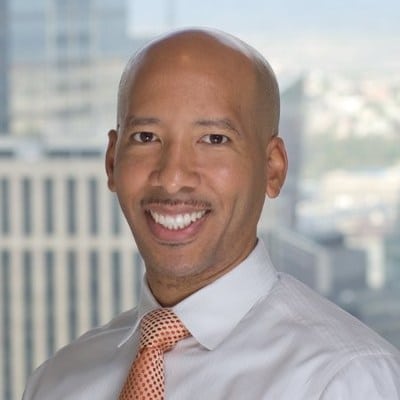
Meeting the custody needs of tokenized assets represents infrastructure modernization for custodians – given that such modernization enables greater efficiency, transparency & auditability, said Germán Soto Sanchez, Chief Product and Strategy Officer, at Broadridge.
“Specifically, the custody services required for tokenized assets are quite similar to the core services custodians already provide; so these are natural extensions of their current business models, while providing opportunities for growth through DeFi,” he said.
Conversely, for asset managers and wealth managers, he said, tokenization represents a fundamental change in how investment products are created, distributed, and managed.
“As such, tokenization requires these providers to rethink their products/offerings – which in turn brings structural, regulatory, and business-model uncertainties,” Sanchez told Traders Magazine.
For example, he said, asset managers are using tokenization to develop new types of funds – for which it may be perceived that there is a higher governance burden (e.g. need to coordinate with regulators, distributors and investors); additionally, asset managers need to upskill in regards to tokenization mechanics.
Sanchez added that wealth managers face the same need to upskill but are also impeded by needing downstream infrastructure to support tokenized holdings (without it, they cannot offer tokenized products). “They also need to be empowered by platforms that support wealth manager / investor shared wallets, something that is not commonplace today.”
The survey also found that early adopters report an average of four to five tangible benefits from tokenization, while non-adopters reported fewer than three perceived positives.
Among early adopters, the most widely cited benefits include: improved transparency and data tracking (66%); greater liquidity and investor accessibility (61%); and lower operational costs (57%).
According to Sanchez, early adopters are proving that tokenization delivers tangible, multi-dimensional value.
By embedding blockchain infrastructure directly into fund operations, they’re realizing gains; for example, leaders have suggested that their tokenized Money Market Funds operate significantly more efficient than their traditional money market funds. Industry data shows tokenized programs generate four to five distinct benefits on average, far exceeding non-adopters, he said.
According to Sanchez, global consultancies such as EY and PwC have highlighted the same trend: tokenization is evolving from pilot to practice, unlocking earlier operational payback through faster settlement, reduced reconciliation, and expanded investor access.
“Major asset managers like Janus Henderson, Hamilton Lane, and KKR are now issuing tokenized feeder funds and private-credit vehicles that lower investment minimums, while BNY Mellon and Franklin Templeton have embedded blockchain into accounting and mutual-fund recordkeeping,” he noted.
“For asset managers looking to follow, start with operational wins where tokenization naturally enhances servicing and liquidity; we’ve seen many firms start with asset classes such as private assets or short-duration funds,” he said.
“Additionally integrating with the correct custodial and compliance partners early in the process and treating governance as a core component of infrastructure are principles we’ve seen in successful firms. Lastly, those who lead now will shape investor expectations for transparency and access in the future,” he added.
While, tokenization offers improved transparency and data tracking, liquidity and accessibility, lower costs and innovation, adoption barriers remain an influence on asset and wealth managers slower uptake, according to the report.
The majority (73%) of institutions surveyed said that regulatory uncertainty is the biggest challenge for tokenization adoption. Similarly, security concerns, infrastructure gaps, and a lack of common standards impact adoption plans.
Sanchez said that buy-side firms can overcome tokenization’s governance and operational barriers by revamping operational workflows, policies, and partnerships so that tokenized assets can be managed with the same rigor and compliance as traditional investments – which in turn can be reframed as a competitive advantage.
“On the operational side, instead of force-fitting blockchain into legacy architectures, a more advantageous goal would be to allow for fluid interoperability,” he said.
“Creating modular data architectures, automating KYC/AML processes through smart contracts, and establishing on-chain audit capabilities helps redefine how governance works in a more automated fashion,” he added.
“As regulation continues to be clarified, buy-side firms are well positioned to scale extremely fast; tokenization inherently allows these firms to combine product innovation, distribution reach and investor transparency in ways legacy systems haven’t been able to. The firms building in this space are defining the next chapter of capital markets,” he said.
According to Sanchez, buy-side firms should focus on enacting the right governance framework, building institutional grade infrastructure, redefining the client experience and partnering to achieve the needed scale and interoperability.
“They should engage, even if they start small. For example, actively develop roadmaps that are iterated as they learn more about the space,” he said.
“The leaders today often started with an initial use case – for example a Money Market Fund or a sleeve of a Private Credit Offering and used that product to educate themselves, identify partners that could assist and measure the impact,” he said.
“From there gauging market response strategies can be developed which define a product roadmap built around the scope of the change, the complexity of implementation and the impact / opportunity unlocked,” he concluded.
