









Don Wilson, founder and CEO of DRW, a diversified trading firm, said the shift toward 24/7 markets is already underway, but the existing infrastructure needs practical updates to keep pace.
From digital collateral mobility to AI-driven surveillance, he believes market structure is entering a phase where technological readiness will directly influence market efficiency and risk.
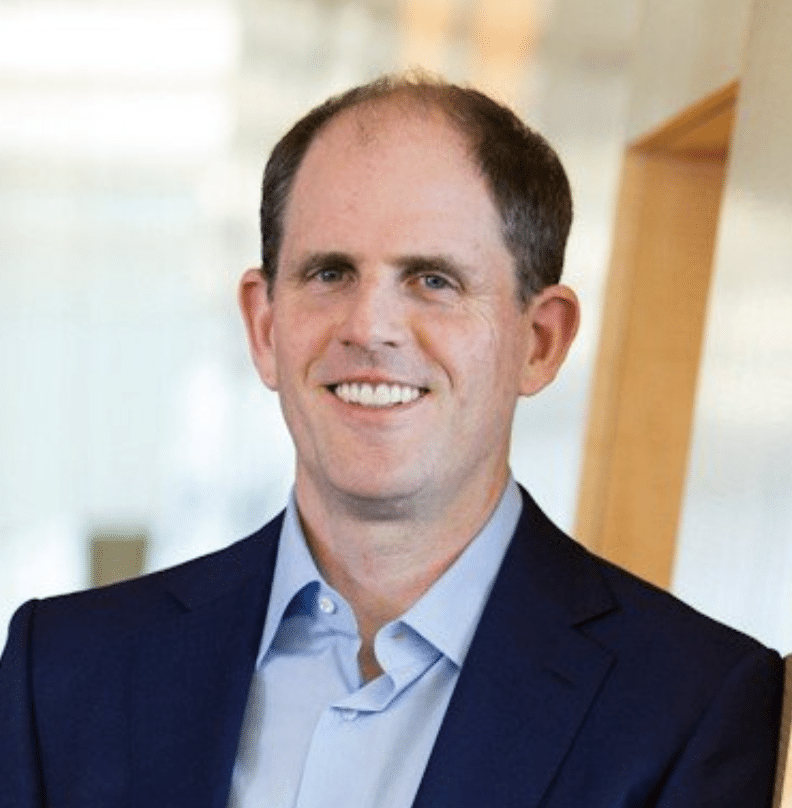
Speaking on a recent ISDA’s The Swap podcast (Episode 52: Innovative Thinking) with CEO Scott O’Malia, Wilson explained that DRW’s early involvement in crypto via its desk Cumberland in 2014 forced the firm to operate in a constant trading environment. That meant not just round-the-clock trading, but also 24/7 collateral movement, margin calls, and settlement. In his view, traditional markets are now following the same path, but lag behind in operational capability.
The biggest gap, Wilson argued, is not in market access, but in post-trade infrastructure. Without the ability to move margin and settle trades at any hour, participants are forced to over-collateralize positions, which creates inefficiencies and reduces overall resilience. “If we can’t move variation margin or assets on a Saturday, the system becomes more fragile, not less,” he said.
To address this, Wilson helped launch Digital Asset Holdings, which built the Canton Network, an institutional-grade blockchain designed for real-time, secure movement of financial instruments. He cited a recent live repo transaction conducted on a Saturday as an example of what’s possible: a U.S. Treasury, held at DTCC, was moved onto the Canton chain and exchanged for USDC with Virtu. The trade was fully settled, then unwound later the same day—no delay, no credit exposure.
This type of workflow, Wilson said, is necessary if markets are going to operate continuously and remain stable.
O’Malia then asked about the SEC’s upcoming rules requiring clearing for certain Treasury and repo transactions. Wilson agreed with the objective, clearing tends to reduce systemic risk, but warned that if it’s implemented without proper coordination, it could produce unintended consequences. He pointed specifically to the absence of cross-margining between FICC and CME. Without this, firms will have to post duplicate margin, creating capital inefficiencies and increasing the likelihood of pricing dislocations, he said.
He also raised concerns about banks and FCMs pressuring clients to link clearing and financing, a practice he says undermines competition. Finally, he noted that none of these reforms accounted for blockchain-based workflows, despite their potential to improve settlement speed and reduce risk.
The conversation shifted to the growing role of AI in financial services. O’Malia observed that nearly every discussion in the industry now includes AI, and asked whether it could fundamentally reshape market behavior.
Wilson’s view is straightforward: the impact is already being felt. “The rate at which these tools are becoming more useful is faster than most people expected,” he said. “You either figure out how to use them, or you fall behind.” At DRW, he said, AI is already influencing how trades are made and how decisions are structured.
When asked whether regulators are keeping up, Wilson pointed to past concerns over high-frequency trading as a relevant comparison. He rejected the idea that new rules are needed just because machines are involved. “The same rules should apply, whether a person is clicking a button or a model is generating the trade,” he said. “But the surveillance tools have to be modernized.”
He encouraged regulators to invest in AI-driven oversight systems, which are better suited to monitor high-volume, high-speed markets. “Manual review is no longer feasible,” he said. “AI should be part of the regulatory toolkit.”
On blockchain infrastructure, Wilson pushed back against the idea that private permissioned chains will dominate institutional finance. In his view, these networks lack the openness and interoperability needed for broader market adoption. Canton, which now has more than 500 validators participating and over 1,000 queued, was designed to offer privacy and control while still operating as a public, decentralized infrastructure. He said the network has already attracted key market participants, including Goldman Sachs, Broadridge, and Tradeweb.
The discussion closed with a focus on tokenized assets. Wilson warned that not all tokenized instruments are the same and that some introduce hidden risks. He compared two examples: one where DTCC simply transfers the ledger of a Treasury to a blockchain—leaving the credit risk unchanged—and another where a crypto firm issues a token backed by a Treasury held in its custody. In the latter case, the asset functions more like an IOU, exposing the holder to counterparty risk in the event of insolvency.
He urged ISDA to take a leading role in defining clear classifications for tokenized collateral. “Same asset, different structure, different risk,” he said. “That needs to be made explicit.”
