By Liz Collegio, Head of Product Management, Meritsoft (a Cognizant company)
Liz Collegio
Banks scrutinise every fraction of a basis point on the trading desk, yet millions can still leak away through brokerage fees.
These fees are the cost of doing business, but few have a clear view of what they should be paying across the business. That blind spot allows errors, missed discounts and incorrect fees to go undetected. At its worst, firms can end up making overpayments running into the millions.
We recently conducted a review with several banks to understand the scale of the problem. We found that firms were overpaying brokerage fees by at least 3–5%. There was no single weak link but pockets of inefficiency across the trading floor. Most overpayments arose because firms lacked timely access to the critical information needed by the right decision makers.
One bank could have saved around $200,000 annually in interest-rate derivative trading fees simply by routing trades to brokers with more favourable rates. Additionally, almost $400,000 a year was lost to leakages caused by poor data and zero automation. Over $10,000 of discounts were left on the table because a broker failed to apply them at the end of the month.
In one sample IRD portfolio, the error rate for accruals was more than 25%, leading to inaccurate cashflow and avoidable reconciliation breaks.
Taken together these costs quickly add up. A firm with annual brokerage fees around $30 million is typically overpaying between $1 million and $1.5 million.
The brokerage fee bugbear
Brokerage fees have been a perennial problem for firms because it’s often hard to quantify the losses. Before we started this study, the banks we looked at believed they had a strong handle on their brokerage expenses. As we have discovered, these errors can become pervasive, even for the firms that thought they had a solid grasp.
For many banks a large portion of overpayments stem from the complexity of trading fee schedules. They are carefully negotiated with each broker relationship, but afterwards the specific terms are not well disseminated. All too often they sit in inboxes and excel spreadsheets or with different departments that don’t handle the day-to-day trading. This causes a lack of transparency and poor oversight into spending.
The route to measurable savings
There are many areas where basic changes could produce immediate improvements in both efficiency and real substantive savings.
Brokerage rate cards are not being kept in a central, digital and readily accessible location. The fee schedules are often hidden or forgotten. Missing, aged or unsigned rate agreements exacerbate the problem. Without a validated rate card in place, a firm’s ability to dispute a broker’s charge is limited. This can grow to become a compliance and governance issue. Agreed rates should be easily accessible to everyone, especially for those on the execution desks.
Reconciliation also happens at the invoice level rather than the trade level, leading to discounts not being applied and trade mismatches being overlooked. When those leakages and discrepancies are finally discovered, it happens too late.
The solution is to move towards intraday accrual, with dashboards that give traders and management a view of brokerage spending as it happens.
Across the trading floor, in front- and middle-office functions, there is often no systematic capability to compare rates across a single asset class, region and broker legal entities. This lack of transparency needs to be addressed.
For large firms, the potential savings are counted in millions of dollars, while for smaller firms, building an efficient brokerage fee review process today ensures operations can scale as activity grows, with the added benefit of transparency baked in.
This study proves that unchecked costs can lead to sizeable overages. The bumper profits from trading have so far taken the sting out of overpaying brokerage fees. When the trading desk is doing so well, there is some leeway for inefficiency.
But trading is all about increments. Traders care about tick sizes a tenth of a basis point, one one-thousandth of a percent.
The scrutiny of brokerage fees should be no different.
Asset manager Invesco has offered the first internationally focused strategy in its QQQ innovation suite with an exchange-traded fund that invests in companies outside the U.S.
Brian Hartigan, Invesco
On 23 September the U.S. fund manager said in a statement that it is launching the Invesco Nasdaq International Innovators 100 ETF (QQI). Brian Hartigan, global head of ETFs & index investments at Invesco, said in a statement: “This launch reinforces our commitment to providing investors with a comprehensive view of innovation across geographies, market capitalizations and investment objectives through the largest suite of Nasdaq index-tracking ETFs, with more than $500bn in assets under management.”
In 1999 Invesco pioneered investing in the Nasdaq-100 with its QQQ ETF, tracking this index which includes the largest non-financial companies listed on Nasdaq. In 2020 QQQ reached $100bn in assets under management, and had $475bn on 22 October 2026 according to YCharts. When QQQ celebrated its 25th anniversary in March 2024, Invesco said the ETF had a total cumulative return of 839.54% compared with 489.24% for the S&P 500. The launch of QQI has taken the number of ETFs in the QQQ suite to 11.
Paul Schroeder, director & QQQ product strategist at Invesco, told Markets Media that he has been at Invesco for nearly 12 years and the asset manager has grown its ETF suite to “one of the most well-rounded ETF lineups in the industry globally,” and the firm is the fourth largest ETF provider in the world. He added: “That being said, having a Nasdaq-based international ETF was the one wish list item that I did have, which has been successfully fulfilled this year. It’s a fantastic ETF and I am really happy we were able to add it to our lineup as it fills a gap in the market.”
Schroeder said there has been a “lot of interest” in QQI since the ETF launched. He said international markets have performed well over the past 12 to 18 months, particularly emerging markets, so there has been interest in non-U.S. equities from clients. For example, before QQI launched Invesco had seen more interest in its S&P International Developed Momentum ETF.
“However, the primary reason we launched QQI was to fill a gap in the innovation suite,” Schroeder added. “The suite was U.S. equity focused with just a small amount of international exposure within QQQ, but primarily through ADRs.”
American depository receipts (ADRs) are U.S. dollar-denominated certificates issued by a U.S. depositary bank to represent shares of non-U.S. companies. They are listed on U.S. exchanges and allow overseas equities to be traded in the same way as U.S. domestic shares.
Paul Schroeder, Invesco
Schroeder added that Invesco wanted to launch an international ETF with the same pedigree and methodology as QQQ so that it includes strong, fundamentally sound companies that are tilted towards innovation and growth focused. He added that the ETF focuses on large and mid-cap companies and is reviewed quarterly.
One difference in the methodology is that many international companies do not use Nasdaq as their primary listing so Schroeder added that Invesco wanted to ensure that the ETF was not restricted by this listing requirement. He continued that the primary criteria for the selection of the 100 companies in QQI are research and development as a percentage of annual sales, two metrics for gross margin, two metrics for revenue and the innovator score. QQI has the ability to move between international developed and emerging markets and there are no country restrictions. Tech companies currently have the heaviest weighting of between 40% and 45%, with Taiwan, China, Korea as the largest country exposures.
“The thing I like most about QQI is that when an advisor allocates to international, they typically have to choose between international developed versus emerging markets, or take single country or single sector risk if they want a more targeted exposure,” said Schroeder. “QQI allows investors to invest internationally under one ticker symbol in both emerging markets and developed, and have sector exposures, while still having a focus on newer economy firms.”
ETF growth
Invesco has had inflows of more than $75bn across its ETF line up so far this year, which is a record according to Schroeder. He expects the industry to have another year of record inflows.
At the end of September, U.S.-listed ETFs had assets of $16.2 trillion according to a report from ETFGI, an independent ETF research and consultancy firm. Year-to-date net inflows of $1.56 trillion were beating the full-year net inflow record of $1.5 trillion last year. ETFGI said: “Investor demand for ETFs remains unprecedented, with the industry already establishing a new annual net inflow record before the end of the third quarter.”
The US ETF industry continues to exhibit a high degree of concentration, with the three largest providers, iShares, Vanguard, and State Street SPDR, collectively accounting for 70% of industry assets, according to ETFGI.
“The breadth of inflows across equity, fixed income, and active ETFs demonstrates that investors continue to use ETFs as core portfolio building blocks across a wide range of asset classes and investment strategies,” added ETFGI. “The continued acceleration in flows to active ETFs suggests investors increasingly value the combination of active management and the tax efficiency, transparency, and liquidity offered by the ETF structure.”
Active ETFs were the fastest growing sector in the market in 2025 and Schroeder expects that this trend is not going away. For example, Invesco has been moving a lot of active strategies into an ETF wrapper, particularly in fixed income. ETFGI said active ETFs accounted for nearly 39% of all industry net inflows in the U.S. in the year to date.
🌎 The active ETF revolution just hit another record. At end of August
💰 Global active ETF assets reached $2.72 trillion 📈 Assets have grown 42.6% in just 8 months 🚀 Investors have added a record $663.6 Bn YTD 🔥 77 consecutive months of net inflowshttps://t.co/oisUAVok0L
“The most interesting trend has been in the fixed income market as U.S. yields continue to rise,” said Schroeder. “We have seen a lot of people move into longer duration fixed income ETFs.”
ETF share classes
Dimensional Fund Advisors launched the first actively managed share class ETF in the U.S. in March this year. Financial services group BBH said in its 2026 Global ETF Investor Survey that the U.S. Securities and Exchange Commission’s approval of Dimensional adding ETF share classes broke a long-running market impasse. Previously, only Vanguard had been able to create ETF share classes from its mutual funds via a unique patent which lapsed in 2023, according to the report.
BBH expected the decision to trigger the creation of a wave of new ETF share classes of mutual funds. The Investment Company Institute said in a blog that ETF share class adoption is gaining traction across the industry.
The ICI added that in early September, 14 new ETF share classes of existing mutual funds were being offered pursuant to new relief by six asset managers, with assets already reaching roughly $500m.
“Perhaps more notable than the numbers themselves is the range of strategies involved,” added ICI. “Early offerings span areas including microcap equities, short-term and municipal bonds, developed international equities, and thematic strategies.”
However, the blog also noted that many firms remain in the early stages of determining whether an ETF share class makes sense for their business and, if so, which funds are best suited to the structure.
The U.S. retail derivatives market is evolving as investors seek greater access to sophisticated trading products, including crypto derivatives, perpetual futures and prediction markets. On October 20, Webull announced plans to introduce perpetual futures to eligible U.S. customers beginning in November, initially offering contracts linked to Bitcoin and other crypto assets. The products will be listed on CFTC-regulated exchange KalshiEX and cleared through Kalshi Klear, with broader availability expected before year-end.
In an interview with Traders Magazine, Tanmay Sheth,Webull’s FCM Product Head for Futures and Prediction Markets, discusses the drivers behind the company’s perpetual futures launch, evolving retail trader demand and the opportunities and challenges shaping the next phase of the U.S. derivatives market.
Tanmay Sheth
What is behind Webull’s decision to launch perpetual futures, and how does the offering fit into its broader strategy?
This launch reflects Webull’s commitment to expanding access to sophisticated financial products through a technology-driven platform. Perpetual futures have become a significant part of global derivatives markets, and we believe eligible U.S. investors should be able to trade them within a regulated, onshore framework. It gives our customers more ways to engage with markets on a platform they already know. More broadly, it is part of our long-term strategy to evolve our product suite, deliver advanced trading capabilities, and give self-directed investors greater choice, while staying focused on transparency and responsible access to financial markets.
What is driving global demand for perpetual futures, and how much potential do you see in the U.S. market?
Global demand reflects several factors: exposure that never expires, the flexibility to go long or short, and the ability to manage exposure to market movements without holding the underlying asset. Together, these features have made perpetual futures central to global derivatives markets. U.S. investors are increasingly looking for more sophisticated tools to engage with digital asset markets. We see an opportunity to meet that interest by pairing innovative products like perpetual futures with the technology, customer experience, and safeguards investors expect from a U.S.-based platform.
How are crypto derivatives and prediction markets reshaping the retail trading landscape?
Crypto derivatives give traders tools to express views on price movements and manage market exposure. Prediction markets let participants trade on the outcomes of specific events, and their strength is simplicity: a clear question with a defined outcome is intuitive in a way many financial products are not. That lowers the barrier to entry and can introduce a broader audience to the core mechanics of trading, such as pricing, probability, and risk, building a foundation to progress to more complex asset classes over time.
How can platforms balance wider access to leveraged derivatives with investor protection and risk management?
Leveraged derivatives offer greater flexibility, but they also add complexity and can magnify losses, so customers must understand these products before they trade. We believe the right approach includes appropriate eligibility requirements, clear and transparent risk disclosures, sophisticated margin and risk-management controls, knowledgeable team members and support, and accessible investor education. Platforms offering leveraged derivatives should help customers understand how leverage works, how positions can be liquidated, and how quickly losses can accumulate in volatile markets.
Where do you see the biggest growth opportunities in retail derivatives, and what could shape the market over the next few years?
We see the biggest opportunities in crypto derivatives, including perpetual futures; in single-stock futures; in perpetuals expanding across a wider range of underlying assets; and in prediction market contracts. Regulatory clarity will be critical to how these markets develop: clear rules and regulated, onshore frameworks give investors confidence and bring more activity into U.S. markets. Transparency matters just as much, from plain-language risk disclosures to clear information on fees, margin, and how positions are liquidated. So do sophisticated trading and risk systems that can keep pace with growth and novel products. Together, these will determine which platforms earn lasting trust as products evolve.
What are the key trends shaping the U.S. retail derivatives market, and how is trader demand evolving?
The U.S. retail derivatives market is evolving quickly, driven by greater digital access to advanced products and growing interest in new ways to engage with markets. Traders are looking beyond traditional stock trading for tools that offer more flexibility to express a market view, manage risk, or respond to short-term developments. Three trends stand out. First, demand for short-dated contracts continues to grow. Second, crypto derivatives are expanding, and perpetual futures are bringing a widely used global model onshore: contracts with no expiration date, so traders don’t have to roll positions, offered within a regulated U.S. framework. Third, prediction markets are rising, and their easily understood format gives participants a simple way to take positions on specific outcomes and a natural entry point to more advanced products. At Webull, we see investors expecting more intuitive technology, real-time market information, and a wider range of products within a single platform.
By Dorothy DeWitt, Founder and CEO, Tölt Strategies, and Renato Mariotti, Partner, Paul Hastings
The Senate’s failure to advance the CLARITY Act has put a major congressional effort to establish a comprehensive U.S. digital asset market structure framework on hold. On September 15, the Senate voted 49-50 against invoking cloture on the motion to proceed, leaving the legislation stalled for the time being.
That does not mean the regulatory agenda has stopped. The Securities and Exchange Commission (SEC) and Commodity Futures Trading Commission (CFTC) were already moving on digital asset regulation before the vote. On October 5, the CFTC issued its Advance Notice of Proposed Rulemaking (ANPRM) titled “Regulation Crypto Asset Transactions and Regulation Crypto Asset Markets.” Comments are due December 14.
What changes when the immediate path shifts from legislation to agency action? And how should firms build when the direction of regulation may be getting clearer, even as the legal framework remains unsettled?
Dorothy DeWitt and Renato Mariotti discuss what comes next and what digital asset market participants should be thinking about now. DeWitt is founder and CEO of Tölt Strategies, former Director of the CFTC’s Division of Market Oversight and former General Counsel of Coinbase. Mariotti is a partner at Paul Hastings.
The following conversation has been edited for length and clarity.
At a high level, what changes now that the CLARITY Act has stalled?
Renato Mariotti: I think it changes the instrument through which change is going to occur more than it changes the direction. The commissions were already moving. The immediate implication is that they now have to carry much more of the load. At this point, I don’t think firms should be building their business plans around the assumption that Congress is going to solve this anytime soon. They need to be watching what the SEC and CFTC are actually putting forward and planning around that. The CFTC’s new advance notice under Chairman Selig gives the industry its first concrete look at a federal crypto exchange subcategory, the Crypto Asset Market, or CAM. It is not a proposed rule yet. The next step is a formal proposal, and I don’t expect a final rule before late 2027.
Dorothy DeWitt: I agree with that. But there’s also an important difference between an agency implementing a new law and an agency trying to make use of the authority it already has. If CLARITY had passed, the CFTC and SEC would have had a new statutory framework to implement. Without it, they still have to tie whatever they do back to the current Commodity Exchange Act (CEA) and the federal securities laws. So the agencies can provide more rules of the road, but they can’t simply create new and expanded jurisdiction that CLARITY would have done legislatively. The advance notice cleverly re-interprets certain provisions of the CEA.
How far can the CFTC go under its existing authority?
DeWitt: There is historical precedent for trying to regulate around a gap. Retail foreign exchange is a good example. In the late 1990s and early 2000s, those markets grew very quickly, and there were significant problems with fraud and manipulation. The CFTC tried to assert jurisdiction over parts of that activity, but courts pushed back where the transactions looked like spot products rather than futures, options or swaps. What developed after that was more of an entity-based approach. The National Futures Association (NFA) imposed requirements on its members who transacted in those spot markets, even where the CFTC’s and NFA’s jurisdiction over the underlying spot products was less straightforward. Only the firms opting into NFA membership followed those requirements.
What does the CFTC’s advance notice actually do?
DeWitt: Now, under the new proposal, the CFTC is aggressively re-interpreting Section 2(c)(2)(D) of the CEA—originally a fix for foreign exchange fraud. That section provides that an exchange that offers or transacts in any commodity involving retail participants on a leveraged, margined or financed basis must treat those transactions as if they were futures, unless the exchange satisfies the “actual delivery” exception by actually delivering the commodity to the buyer within 28 days of the transaction. That has historically meant that the exchange must register with the CFTC as a Designated Contract Market (DCM) to offer leverage, unless it meets the actual delivery requirement on all transactions. The advance notice suggests that a spot crypto exchange that offers leveraged, margined or financed transactions, even if none is entered into, to retail market participants without satisfying the actual delivery requirement must register as a DCM or the new CAM registration subcategory. The CFTC’s preliminary view is that actual delivery means the customer gets real possession and control, such as moving the token to the customer’s own non-custodial wallet. The notice refers to these transactions as Crypto Asset Transactions, or “CTXs.”
One might ask if the CFTC can create a new registration category, here a CAM, out of whole cloth. The CEA – not the agency – defines the registration categories. But also cleverly, the rule proposal provides that a CAM registration is a subcategory of the existing DCM registration. There is precedent for subcategories of registrations created by rulemaking, including Section 4(c) Commodity Pool Operators, which operate with lighter standards than full CPOs. But to the extent an agency is creating a new registration (sub)category, one can wonder about the proposed rule’s consistency with the USSC’s 2024 decision in Loper Bright, eliminating Chevron deference to agencies in matters of statutory interpretation under the Administrative Procedures Act.
Mariotti: The forex history is useful because it shows both sides of this. There are things the regulator can potentially do through registrants, membership requirements and interpretations of its existing statute. But it also shows you what happens when the statutory authority doesn’t quite match what the regulator is trying to accomplish. Eventually, Congress had to step in. And I think we see a version of that tension again here. The advance notice also contemplates routing customer-facing CTX trading through futures commission merchants—the brokers that hold customer accounts in futures markets. That’s an ambitious use of existing authority, and I expect it to draw a lot of comment.
DeWitt: One thing I would add is that the question goes beyond whether you can create requirements. Whether you can actually examine the firms subject to them also matters. Spot crypto exchanges that don’t offer CTXs can opt-in to CFTC regulation by offering them. Spot crypto exchanges that prefer not to offer CTX’s will remain regulated by the states.
Mariotti: I think that gets to one of the big questions in the CFTC’s advance notice. CFTC leadership has already taken the position that the CEA permits leveraged spot crypto on a CFTC-registered exchange. But non-leveraged spot is much harder. The advance notice answers that by using leverage as the hook. A platform that never offers leverage can stay with state regulators, though the CFTC’s anti-fraud and anti-manipulation authority still reaches it. The legal question I’d watch is the other side of that line. Once a platform offers leverage, the CFTC’s preliminary view is that the offer can bring its other trades into the framework, even those no customer bought on margin. Whether the statute stretches that far is where I’d expect the first fight.
Registration also cuts both ways. A CAM would be a type of DCM, so the federal anti-spoofing law and the exchange’s own surveillance would apply to everyone trading there.
For firms watching this process, is the message to start building now or wait for more certainty?
Mariotti: I would stop waiting for a congressional solution. But that doesn’t mean I would launch a business tomorrow based purely on a proposed rule. If the proposal affects your business model, participate in the process. Comment. Comments on the CFTC’s advance notice are due December 14. Engage with the Commission. Understand what legal interpretation or relief you’re relying on. Time to market matters, but there can be meaningful changes between a proposal and a final rule.
DeWitt: Exactly right. The notice-and-comment process is going to tell us a lot. Market participants will look at the ANPRM and identify where they think the Commission is on firm ground and where it may be more vulnerable, and what changes are in order. The CFTC then has to address those comments when it moves toward a proposed rule and then a final rule. So firms can start planning, but they need to preserve flexibility.
Are there areas where firms can move ahead with more confidence?
DeWitt: It’s a difficult question to answer, but in general, yes. I would start with systems and controls that support transparency, market integrity and customer protection that underlie the Core Principles for DCMs provided by the CFTC. As former Division of Market Oversight Director, I am familiar with how to innovate under core principles, which are fortunately flexible, and the ins and outs of the process of filing comment letters and rulemaking. Renato and I have advised clients for years on how to implement the core principles. Some specific requirements may change, but you are unlikely to regret building strong controls around those basic objectives. Luckily for the industry, the proposed CAM Core Principles are closely mapped to traditional DCM Core Principles, so areas that will likely carry over to the next administration include Bank Secrecy Act / Anti-Money Laundering (BSA/AML) programs, Office of Foreign Assets Control (OFAC) sanctions screening, trade practice surveillance, customer asset segregation for intermediaries, system safeguards and conflicts of interest.
Mariotti: I agree with Dorothy on that. But even then, it’s hard to draw a circle around a product or business model and say, “This is safe. Go ahead.” Things like strong controls, good governance and documenting the basis for your compliance decisions are useful regardless of where the final line gets drawn. But firms should still be ready to engage with the process and stay adaptable. And practically, I would also be checking your state licensing position. The absence of CLARITY means you don’t have the broad federal preemption that legislation could have provided. The SEC’s token-offering proposal would preempt some state securities registration requirements, but it’s still a proposal, and it doesn’t touch state money transmitter licensing.
Does that also mean the post-CLARITY picture is broader than just the SEC and CFTC?
Mariotti: Absolutely. That’s part of what makes this more complicated than simply shifting the conversation from Congress to the SEC and CFTC. There are issues CLARITY addressed that those commissions can’t simply resolve themselves. Software developers and money transmitter laws bring Treasury and DOJ into the picture. Stablecoins can implicate other regulators. Decentralized protocols still have open questions. And protecting customers’ crypto if an exchange fails would take changes to the Bankruptcy Code that only Congress can make.
DeWitt: And the same is true at the state level. Unless federal law clearly preempts state authority, state regulators may be able to continue to regulate, imposing their own requirements. We’ve seen some of those dynamics play out around prediction markets. There’s no reason to assume financial regulators at the state level won’t look at similar approaches elsewhere in crypto. The ANPRM posits that the current patchwork of state money transmitter laws is inadequate for financial market risks. The CFTC’s preliminary view is that federal regulation of CTXs would preempt conflicting state laws, potentially including some state money transmission requirements. How far that reaches is uncertain. Under current regulations, FCMs perform Know Your Customer (KYC) and AML functions. The good news is that exchanges listing futures enjoy preemption; only time (and possibly the courts) will tell if preemption exists for those exchanges insofar as they also list their non-leveraged spot transactions.
Mariotti: That’s why I’m a little more measured than some of the excitement I’m hearing from the industry right now. People are eager to build, and I understand why. But a welcoming environment today doesn’t mean the risk disappears two or four years from now.
So what does a durable strategy look like in an environment that could continue to change?
DeWitt: Again, I would focus first on the things that tend to survive changes in administrations: customer protection, market integrity, transparency, strong governance and sound risk management. There’s plenty of precedent for industries developing durable standards before the law fully catches up. Insurers in New York, for example, helped develop fire-safety standards by deciding what they would and would not insure. Over time, those practices became broadly accepted and were adopted into law. That doesn’t mean industry should replace regulation, obviously. But regulators, advisors, market participants and other gatekeepers can help establish practices that make sense regardless of exactly where the statutory lines and policymakers end up.
Mariotti: That’s a great point. And to me, that’s why the CFTC side of this is particularly interesting right now. There is going to be plenty written about the SEC. But for firms that were expecting broader CFTC spot-market authority under CLARITY, the next few months could force some very practical decisions. That doesn’t mean firms can’t move forward. The important thing is understanding which parts of that path rest on clear statutory authority as opposed to agency interpretation, and where the legal and regulatory risk still remains.
SIFMA has issued the following statement from Charles DeSimone, SIFMA managing director, technology and operations, on SIFMA’s October 24, 2026 industry-wide business continuity test:
“Operational resilience remains a top priority for SIFMA and its members as we work to protect clients, data, networks and operations from a growing range of cyber threats, including theft, disruption and destruction. This past weekend, we conducted the 2026 SIFMA Industry Test, in which securities firms, market infrastructure providers and key third parties exercised their business continuity and disaster recovery plans, confirming their ability to operate from backup sites and recovery facilities and over backup communications. More than 90 entities participated, including equities and options exchanges, fixed income markets, market data providers, clearing agencies, payments platforms and service bureaus, along with a simulated Treasury auction.
“Alongside the Industry Test, Regulation SCI entities met their annual requirement to have designated members and participants test their business continuity and disaster recovery plans. SIFMA coordinates this testing for the industry as part of its broader business continuity work. This year’s Reg SCI testing included simulated trading days for all Reg SCI exchanges and ATSs, simulated post-trade activity for clearing utilities and simulated regulatory trade reporting.
“The test’s success shows once again that the securities industry is prepared to keep operating through adverse conditions. We thank every organization that took part.”
Implied volatilities rose across asset classes last week as oil prices gained on rising geopolitical tensions and investors pulled back from Tech stocks ahead of key earnings. Oil volatility jumped the most, with the OVX Index up over 9 pts wk/wk as Brent oil prices ended the week near a 1-year high. Credit and rates volatility all gained ahead of this week’s FOMC meeting. SPX® options are currently implying a one-day move of ~1.3% for Wednesday’s Fed meeting, the same as next week’s US midterm elections.
While the VIX® Index ended last week mostly unch’d at 19.5%, it masked significant sector rotation underneath the index surface (e.g. Comm Svc down 6.2% vs. Energy up 1.6%). Concerns over the AI trade can be seen in the rising volatility premium for Tech stocks, with the QQQ-SPX 1M implied vol spread widening to ~10%, over 2 standard deviations above its long-term average and trading just below the July extremes. Retail investor positioning in the Tech stocks has also turned more cautious, with call demand in the mega-cap Tech names falling to a 6-month low while put demand jumped to a 1-year high.
Sentiment in SPX options swung sharply last week as the initial market rebound saw investors chasing with upside calls before the sell-off at the end of the week led to renewed hedging demand. SPX downside convexity ended the week in the 99th percentile high.
Chart: QQQ-SPX Implied Volatility Spread Widening Ahead of Tech Earnings
The FIX Trading Community’s Americas Trading Conference 2026 will take place on Thursday, October 29, at @Ease 605 in New York, bringing together market participants, trading venues and technology providers to discuss the latest developments in trading and market structure.
This year’s agenda covers a range of topics, including 24-hour trading, prediction markets, artificial intelligence, tokenization and the growing links between traditional finance and digital assets. Discussions will also focus on the industry standards and workflows needed to support these developments.
Ahead of the conference, Scott Govoni, Regional Director, Americas at FIX Trading Community, spoke with Traders Magazine about this year’s program, the topics generating the most interest among FIX members and what attendees can expect from the event.
What are the main themes shaping this year’s Americas Trading Conference, and how does the program differ from last year?
Scott Govoni,
This year’s program is focused on how rapidly changing market structures and technologies are creating new challenges for the industry, from 24-hour trading and prediction markets to AI and tokenization. Compared with last year, the conversation has moved from “is this going to happen?” to “how do we build the standards and workflows needed to support these changes?”
How has the Conference evolved in recent years, in terms of attendance, audience and the issues the industry wants to discuss?
The conference has become a broader gathering of market participants, technology providers and venues, reflecting how interconnected the industry has become. The topics have also evolved from traditional electronic trading and market connectivity to emerging areas where the industry needs to establish common approaches.
Who are some of the speakers you are particularly excited to have this year?
I’m particularly excited about our fireside chats. We have Larry Tabb sitting down with Frank Troise to discuss the next decade of financial markets which will set the tone for the day. Then we’ll hear from Emiko Kamoda who will reflect on her remarkable 8-year tenure as regional co-chair. Lastly, Alex Jadin from the SEC will talk about what next for US market structure. In between these fireside chats throughout the day, there is a lot of content that is directly correlated to the FIX Trading Community initiatives.
If you had to pick one panel or session you are most looking forward to, which would it be and why?
I’m particularly looking forward to the discussion on prediction markets and event contracts because this is an area where market structure, technology and regulation are all evolving at the same time. It is also a great example of where FIX needs to understand what the industry will need next rather than simply react after the fact.
The program covers 24-hour trading, prediction markets, AI, tokenization and the connection between traditional finance and DeFi. Which of these topics is generating the most discussion among FIX members right now?
Tokenization and the broader connection between traditional finance and digital assets are generating significant discussion, particularly around how existing market infrastructure can support new forms of assets and settlement. At the same time, 24-hour trading and prediction markets are generating a lot of interest because they introduce new workflows and market structures that the industry needs to understand.
What do you hope attendees will take away from this year’s event, and what conversations do you expect to continue well beyond the conference?
I hope attendees leave with a better understanding of where markets are heading and, just as importantly, with new relationships that help them navigate those changes. The conversations around common standards, interoperability and how the industry can work together on emerging market structures will continue long after AM26.
OTC Markets Group has named Meighan McGowan Executive Vice President, Corporate Services. According to a press release, McGowan joins from Computershare, where she was Head of Business Development, Investor Engagement North America, a division that includes Georgeson Advisory, Investor Intelligence and IR Suite. Prior to that, she held a senior business development role at Morrow Sodali, where she advised public companies, their in-house counsel and investor relations teams on corporate governance, proxy solicitation, capital markets intelligence, and M&A and activism defense.
Meaghan Dugan
Meaghan Duganhas joined IMC as Managing Director – U.S. Market Structure Strategy Lead. Based in IMC’s Chicago office, Dugan will lead the firm’s U.S. market structure strategy and its engagement with exchanges, regulators, clearing organizations and industry bodies. Dugan joins IMC from Cboe Global Markets, where she most recently served as Senior Vice President, Head of U.S. Derivatives. At Cboe, Dugan’s responsibilities included business strategy, competitive positioning, market structure and market development for Cboe’s U.S. Options and Futures businesses. She brings more than 20 years of experience across listed options trading, market making, electronic trading and exchange leadership. Cboe has not named a successor, although the company told Traders it is undergoing a search and Rob Hocking is serving as interim.
Northern Trust has appointed Rima Qureshi, former executive vice president and chief strategy officer of Verizon Communications Inc., to its board of directors, according to a press release. Qureshi brings nearly four decades of experience shaping strategy, leading transformation and building businesses across global telecommunications and payments companies. At Verizon, which Qureshi joined in 2017, she helped set the company’s strategic direction amid significant industry change. Prior to Verizon, Qureshi spent 23 years at global telecommunications company Ericsson
Meyer “Micky” Malka, founder and managing partner of Ribbit Capital, has been appointed to the Board of Directors of Apollo Global Management, effective January 1, 2027. According to a press release, Malka has more than 30 years of experience building and investing in technology and financial services businesses across the US, Europe, Asia, and Latin America. Malka currently serves on the board of directors of Robinhood Markets, Inc., and several private companies.
The Bank of America Corporation Board of Directors has appointed Jim Fitterling and Bill Thomas as directors, according to a press release. Fitterling is Executive Chairman of the Board of Directors of Dow Inc., a global materials science company. From 2018 to 2026, Mr. Fitterling served as Chief Executive Officer of Dow, and he was elected Board Chair in 2020. Thomas served as Global Chairman and Chief Executive Officer of KPMG International, a global organization of independent professional services firms providing audit, tax and advisory services, from 2017 to 2026.
Fnality has hired Roger Nolan as Group COO based in London, reporting into Michelle Neal, Group CEO. According to a press release, Nolan was previously the COO of LCH, the UK clearing house subsidiary of the London Stock Exchange Group. He has more than 30 years’ experience in investment banking and financial market infrastructure, with considerable expertise managing rapid business expansion at heavily regulatory financial market infrastructure providers.
If you have a new job or promotion to report, let me know at alyudvig@marketsmedia.com
Adena Friedman, chair and chief executive of Nasdaq, said on the third quarter results call on 22 October 2026 that the group achieved new milestones across all three divisions, including record index net inflows, record fintech ARR (annualized recurring revenue) growth, and the establishment of Nasdaq Digital Liquidity Networks within Market Services.
Friedman added: “The shift towards more connected and always-on markets is gaining momentum, and Nasdaq is shaping the next generation of market infrastructure.”
Nasdaq executed several strategic actions to advance this evolution. Digital Liquidity Networks (DLN) was formed to unify the capabilities, investments, and solutions the firm has been developing to advance tokenization and always-on markets under one strategy.
Roland Chai, Nasdaq
Within DLN, Nasdaq completed the acquisition of LeveL Markets, the third largest Alternative Trading System (ATS) in the U.S. by trading volume, on 15 October 2026. LeveL is expected to contribute revenue of between $7m and $8m in the fourth quarter.
Roland Chai, head of Digital Liquidity Networks, said in a statement: “LeveL Markets advances Nasdaq’s vision for more connected, always-on markets by adding a scaled off-exchange liquidity platform and execution expertise to Nasdaq’s technology, market capabilities, and client relationships.”
Friedman continued that the LeveL Markets acquisition strengthens the ability to deliver institutional-grade liquidity and execution solutions to clients with more flexibility through an off-exchange venue. She added: “We also have the ability to expand Level ATS to new markets and to connect its 2,500 institutional and retail brokerage clients to multiple global markets and asset classes.”
In another new capability, HSBC is extending its 15-year partnership with Nasdaq, adding Calypso’s exchange-traded derivatives (ETD) clearing capabilities. This brings clearing across over-the-counter (OTC), exchange-traded derivatives, and repos into a unified platform, helping HSBC manage margin, collateral, and risk more efficiently according to Friedman. She said Nasdaq had very narrow capabilities in ETD clearing and described HSBC as a “great partner” to work with to build out that capability.
“This allows us to go to market with a new module in Calypso and be much more comprehensive in allowing people to manage risk,“ Friedman added.
Her view is that always-on markets and AI will lead to the convergence of markets, asset classes and geographies, so risk management needs to be multi-asset class, global and real time.
“You have to use agentic capabilities to manage risk in real time and take action in real time and all the capabilities we are building in Calypso are related to that,” she said. “In addition to tokenization, it’s been a big investment year for us and we see it unlocking durable demand.”
Adena Friedman, Nasdaq
Friedman described Calypso as the “premier” provider of collateral management capabilities. In March this year Calypso announced an integration with Baton Systems to provide clients with advanced collateral workflow automation and fast, efficient asset mobilization capabilities. Baton Systems operates a real-time network connecting major global banks and futures clearing merchants (FCMs) directly to clearing houses.
“All forms of collateral are moving into a tokenized state, and that allows banks to think about moving from one collateral pool to another in a much more seamless way,” she added.
Nasdaq has completed a proof of concept with two major investment management firms, Vanguard and Wellington, to use Canton, the privacy-enabled blockchain, to move collateral. Friedman said the pilot worked “instantly and perfectly.”
Equities trading
Nasdaq remains on track to go live with 23/5 trading of U.S. equities on 6 December 2026, which will expand global access to the stocks.
“This launch of expanded, nearly continuous weekday trading hours is an important step in the journey to always-on markets, enabling broader investor access and greater transparency for all market participants,” said Friedman.
Nasdaq has also signed a deal with Eqlipse Trading technology to power the 24/7 U.S. equities trading ecosystem. In market technology, Nasdaq said there growing demand for always-on markets. In the third quarter Bruce ATS signed an agreement to use Nasdaq’s trading technology to power the first 24/7 U.S. equities trading ecosystem.
“Expanding continuous U.S. equities trading over the weekends through an institutional-grade ATS is a significant development for the markets,” added Friedman.
Other markets are also using Nasdaq for managed services, to help them modernize their platforms and move to cloud. She said: “It’s a really good demand environment right now.”
In addition, Nasdaq is working with DTCC as the post-trade market infrastructure prepares to launch its tokenization service in October 2026. Nasdaq is on track to launch the Nasdaq equity token in the first half of 2027, which Friedman said will put issuers at the center of tokenization.
In September this year the U.S Securities and Exchange Commission announced an innovation exemption allowing new markets called Tokenized Securities Venues (TSVs) to trade NMS stocks with certain limitations, including market share thresholds. Friedman said: “They are not going to have a huge impact on our business.”
If NMS stock is tokenized by a third party unaffiliated with the issuer, the TSV must provide a written notice to the issuer allowing them to object. A number of companies have already objected to tokens representing their stock being traded on a TSV set up by OKXICE. Nasdaq has said it will not allow its own stock to be traded on TSVs.
In contrast, Nasdaq is working with crypto firm Kraken to deliver a tokenized equity that is fungible with traditional shares and offers real-time settlement. In September 2026 Nasdaq announced an expansion of its relationship with Payward, the parent company of Kraken, including an agreement by Nasdaq Ventures to invest $100m, the continued advancement of the companies’ work on the Nasdaq equity token framework, and a new market surveillance agreement. Nasdaq equity tokens will be designed to connect with Payward’s xStocks ecosystem.
Arjun Sethi, Kraken
Arjun Sethi, co-chief executive of Payward, said in a statement that more than $2 trillion of stock trades run through the U.S. clearing system every day.
“Buys and sells net down by about 98%, and the clearing house holds $10bn to $20bn of collateral against what is left while it waits a day to settle,” Sethi added. “Cutting that wait from two days to one in 2024 released $3 bn. Onchain settlement removes the wait.”
Friedman said Nasdaq will be able to use Level ATS to distribute tokenized equities through Kraken. The Nasdaq equity tokens will settle through a “very innovative” custodian according to Friedman.
“It’s a really nice, elegant solution,” she added. “We will have instantaneous settlements and it also allows the issuer to have line of sight into investors.”
Some clients have said they will be an early adopter of the Nasdaq equity token, which is slated to launch in the first half of next year.
Nasdaq has commented to the SEC that TSVs sit outside the general rules that govern U.S. equities trading and are not transparent today as trades do not get reported to the tape.
“Our view is that tokenization should be focused on all trading and not try to create this sidecar kind of experimentation,” Friedman added. “The good news is the SEC did limit the extent to which these innovation exemptions can have an impact on equities.”
AI
Sarah Youngwood, chief financial officer of Nasdaq, said on the call: “The move towards always-on markets and expanding AI use cases are supporting client demand for the data franchise, which will be durable trends for years ahead.”
Sarah Youngwood, Nasdaq
The data business reported a 34% year-over-year increase in the number of enterprise licenses. Friedman said this is due to Nasdaq focussing on delivering data that is AI-ready, and delivering capabilities that drive agentic capabilities for clients. The group has created MCP connectors to allow clients to absorb and ingest the data in a flexible way and integrate it into agentic workflows.
Friedman said: “Artificial intelligence is becoming increasingly foundational to how institutions make decisions, manage risk, and allocate capital and Nasdaq is extending its leadership through solutions embedded across our platform.”
For example, so far this year 25% of bookings for eVestment, Nasdaq’s cloud-based institutional investment data, analytics, and market intelligence platform, were related to AI use cases.
In Data Link, the cloud-based financial, economic, and alternative data platform, Nasdaq continues to expand distribution as clients develop AI-native workflows. Friedman gave the example of partnering with retail broker Robinhood to embed a new proprietary dataset into its agentic trading platform. She added: “This gives investors access to sophisticated market sentiment and institutional-grade investor insights to power agentic decision making.”
She continued that Nasdaq expanded client adoption of its AI capabilities. For example, the firm signed new clients for calibration copilot, an AI-powered tool built into Nasdaq’s market surveillance and compliance platform.
Nasdaq Verafin, a cloud-based financial crime management software platform, has an agentic AI workforce that is used by more than 850 clients. In the third quarter Verafin announced the general availability of two new AI workers, the agentic AML (anti-money laundering) analyst and the agentic fraud analyst.
The group also launched a new operating environment which enables clients to connect their own AI infrastructure and serve as an access point for the agentic capabilities of Calypso, Nasdaq’s capital markets and treasury management platform.
As clients are thinking about deploying AI, they are moving more of their own infrastructure into the cloud. As a result, Nasdaq is seeing an uptick in cloud signings within fintech solutions. Friedman said: “We had 85% of bookings in cloud, and that allows us to be more of a managed service provider.”
Source: Nasdaq
Index business
The index business reached new records for exchange-traded product (ETP) assets under management and net inflow records.
Index had $14bn in net inflows over the trailing twelve months, including $49bn in the third quarter of this year. At the end of the third quarter, ETP assets under management was a record $1.16 trillion, with the average of $1.1 trillion, both new records.
Nasdaq launched 32 new index products in the third quarter, including 10 in the institutional annuity space. Half of the new products launched in the third quarter were outside the U.S. Approximately one third, 35%, of the trailing 12-month net inflows have been driven by products launched over the last five years.
“We continue to experience early momentum from our partnerships with BlackRock and State Street, with combined assets under management exceeding $1bn,” added Friedman. “We also continue to grow our long standing partnership with Invesco, expanding the Invesco QQQ innovation suite through the launch of the Invesco Nasdaq International Innovators 100 ETF.”
Financial results
Third quarter 2026 net revenue was $1.5bn, an increase of 13% over the third quarter of 2025. Youngwood said Nasdaq delivered “excellent” third quarter results, headlined by outstanding solutions revenue growth, continued operating leverage, and strong EPS (earnings per share) growth.
The Market Services division set a record in third quarter net revenue of $309m, up 2% versus the prior year period. Nasdaq said the business benefited from higher industry volumes across U.S. options and European equities with robust performance in U.S. cash equities, which achieved higher market share and near record capture.
Source: Nasdaq
Solutions revenue was $1.2bn in the third quarter, an increase of 17% versus the prior year period, due to strong growth across capital access platforms and financial technology.
The listings franchise continued its strong momentum from the first half of the year, according to Friedman. She said there has been a modest softening in the IPO environment in recent weeks, with some companies in certain sectors re-evaluating the timing of their IPOs. However, the listings pipeline remains robust, and she said Nasdaq is well positioned to support companies preparing to enter the public markets across a wide range of sectors.
Youngwood said: “Our durable business model and disciplined execution underpin our capital allocation strategy that prioritizes funding investments in long-term growth while returning more than $1.7 bn to shareholders year to date through share repurchases and dividends.”
Artificial intelligence could be one of the most significant developments in hedge fund investing since the emergence of quantitative trading.
What makes the current AI revolution different is that it is no longer limited to quantitative hedge funds employing teams of PhDs and programmers. Generative AI and increasingly sophisticated machine-learning tools are making advanced investment research capabilities accessible to discretionary fundamental managers, credit specialists, macro traders, and even relatively small hedge funds. The biggest change is that AI can dramatically increase the amount of information an investment professional can analyze, while reducing the time and cost required to do it. There are six major areas where AI is transforming the investment process.
1. Fundamental investment research
Traditionally, an equity analyst might spend days reviewing annual reports, quarterly earnings releases, conference call transcripts, industry publications, and competitor filings before forming even a preliminary view on a company. Much of that time is spent locating, extracting, and organizing information rather than analyzing it. AI can now accelerate many of these tasks dramatically.
For example, an analyst researching a publicly traded industrial company could use AI to:
A. Analyze 10 years of SEC filings and earnings transcripts, extracting key financial data, segment results, and management guidance into a structured format in minutes rather than days.
B. Identify changes in management’s language regarding demand, pricing, and margins. Subtle shifts in tone, such as moving from “strong demand” to “stable demand,” or a sudden increase in hedging language, can be early signals that fundamentals are changing before it shows up in reported numbers.
C. Compare financial metrics with 20 competitors, including growth rates, margins, return on capital, working capital trends, and capital allocation decisions, to see whether a company’s performance reflects company-specific strengths or simply industry-wide conditions.
D. Identify inconsistencies between management commentary and reported financial results, such as optimistic statements about pricing power while gross margins are declining, or claims of strong demand alongside rising inventories and receivables.
E. Build preliminary financial models and sensitivity analyses, showing how earnings and valuation respond to changes in key assumptions such as volume, pricing, input costs, and interest rates.
F. Highlight potential investment catalysts and risks, including upcoming product launches, contract renewals, regulatory changes, debt maturities, litigation, and shifts in customer or supplier concentration.
AI can also extend research beyond a single company, mapping supply chain relationships, summarizing expert network and industry interview notes, and flagging developments at customers or suppliers that may affect the company being analyzed. This allows an analyst to cover more companies with greater depth, or to go much deeper on a concentrated set of positions. It also reduces language barriers. An analyst can have AI read annual reports, filings, and earnings releases in Japanese, German, or Spanish and report back in English, allowing investment teams to look across a wider range of markets.
A research project that historically required several days of preliminary work may now be substantially accelerated. However, data validation and investment judgment remain essential. AI tools can misread tables, misattribute figures, draw on outdated information, or present a confident answer that is simply wrong. Analysts must verify key data against source documents, and firms need clear policies on data security, the handling of material non-public information, and documentation of how AI-generated analysis is used in the investment process. These governance requirements apply to every use of AI discussed in this paper.
The investment implication is that analysts can spend less time collecting and organizing information and more time developing differentiated investment insights. Because these tools are becoming widely available, simply having access to AI will not be a lasting competitive advantage. The edge will increasingly come from how a firm integrates AI into its research process, the quality of its proprietary data and judgment, and its ability to identify insights the rest of the market has not yet recognized.
2. Alternative data analysis
Hedge funds have long used alternative data, but AI greatly expands the types of information that can be analyzed, and allows it to be processed far more quickly and economically. Examples include satellite imagery, credit card transaction data, shipping activity, job postings, consumer reviews, web traffic, app downloads, and social media.
Much of this data is unstructured, meaning it comes in the form of images, text, or raw activity logs rather than neat tables of numbers. Historically, turning it into something usable required teams of data scientists and engineers. AI can now handle much of that work: counting cars in parking lots from satellite images, reading millions of product reviews to measure shifts in customer satisfaction, mapping job postings to specific companies and roles, and cleaning and aligning datasets from different vendors so they can be analyzed together.
Consider a hedge fund analyzing a retailer. AI could combine credit card transaction trends, online pricing and promotional activity, hiring patterns, consumer sentiment, web and app traffic, and inventory indicators to develop a view of revenue growth before quarterly earnings are released. It could also reveal why sales are changing, for example whether growth is coming from new customers or higher spending by existing ones, whether discounting is driving volume at the expense of margins, or whether a competitor is gaining share in a particular region or product category.
The competitive advantage increasingly comes from combining multiple datasets and extracting useful signals rather than simply purchasing access to the data. A single dataset viewed in isolation can be misleading. Credit card panels may over-represent certain demographics, web traffic may not translate into purchases, and satellite data can be distorted by weather or seasonality. Cross-checking several independent sources helps confirm whether a signal is real.
Alternative data also carries specific risks. Many datasets have short histories, making it difficult to test how reliable they are across different market environments. Data quality and vendor methodology can change without notice. Legal considerations include consumer privacy rules and the terms under which data was collected or scraped. Strong vendor due diligence and documented compliance procedures are becoming essential.
The investment implication is that AI may make alternative data more accessible to smaller managers while increasing competition for previously proprietary signals. As more managers buy the same data and apply similar tools, the insights it produces are likely to be priced into markets faster and decay sooner.
3. Quantitative investment strategies
AI is expanding the tools available to systematic hedge funds. Traditional quantitative models often depend on predefined statistical relationships, such as linear factor models built on value, momentum, quality, or carry, where the researcher specifies in advance which variables matter and how they relate to returns. More advanced machine-learning models can detect nonlinear relationships and interactions across many variables. A signal that works only when volatility is low and credit spreads are tightening, for example, may be invisible to a linear model but identifiable by a machine-learning approach. Natural language processing also allows systematic funds to convert text from earnings calls, news, regulatory filings, and social media into quantifiable signals, alongside the alternative datasets described above.
Potential applications include:
A. Identifying changing market regimes, such as shifts between risk-on and risk-off environments or between inflationary and disinflationary periods, so models can adjust when historical relationships stop working.
B. Forecasting volatility more accurately, improving position sizing and risk budgeting.
C. Refining trading signals by combining large numbers of weak signals into a stronger composite and identifying when individual signals are decaying.
D. Dynamically adjusting risk exposures as correlations, volatility, and factor crowding change.
However, this is also one of the areas where AI can be most dangerous. Financial markets have a low signal-to-noise ratio, and the relationships within them change over time as market structure, regulation, and investor behavior evolve. Complex models may fit historical noise rather than discover durable relationships. The more variables and parameters a model has, the easier it is to produce an impressive backtest that fails in live trading. Other risks include look-ahead bias, data errors, models that are difficult to interpret, and crowding, as multiple managers using similar data and techniques arrive at the same trades and face the same losses when they unwind.
The winners will not necessarily be managers with the most sophisticated AI models, but those with the strongest data, research discipline, and out-of-sample validation. That means requiring an economic rationale for why a signal should work, testing on data the model has never seen, accounting realistically for transaction costs and capacity, and monitoring live performance against expectations so decaying signals are identified early.
4. Portfolio construction and risk management
AI can help managers understand risks that traditional portfolio models may overlook. Conventional risk systems typically measure exposure through sectors, countries, market capitalization, and standard factors such as value, momentum, and size. These are useful, but they can miss the economic relationships that actually drive returns.
For example, a portfolio containing 50 different securities may appear diversified, but many positions could be exposed to the same underlying economic driver. A portfolio holding a semiconductor maker, a utility, an electrical equipment manufacturer, a commercial real estate developer, and a copper miner spans five different sectors, yet all five may be heavily dependent on continued spending on AI data centers. If that spending slows, positions that looked unrelated could decline together.
AI can help identify these common exposures by analyzing company fundamentals, news, supply chains, earnings sensitivity, and trading behavior. It can map customer and supplier relationships, measure how each company’s revenues and earnings respond to changes in interest rates, commodity prices, currencies, or consumer spending, and group securities based on how they actually trade together rather than how they are classified.
Other applications include:
A. Stress testing, including hypothetical scenarios that have no direct historical precedent, such as an escalation in tariffs, a sharp move in a specific currency, or the failure of a major counterparty, with AI helping to trace how the shock would ripple through each position.
B. Liquidity forecasting, estimating how long positions would take to exit under normal and stressed market conditions, and how that compares with the fund’s redemption terms.
C. Correlation analysis, recognizing that correlations are not stable and often rise sharply during market stress, when diversification is needed most.
D. Scenario modeling, quickly evaluating how the portfolio would perform across a range of economic, policy, and market outcomes.
E. Crowding analysis, identifying positions widely held by other hedge funds that could face forced selling if those managers reduce risk at the same time.
AI may improve portfolio efficiency and risk monitoring, particularly for complex multi-strategy funds. These firms may run dozens of independent investment teams, each managing its own book. AI can aggregate exposures across all teams in close to real time, revealing when multiple portfolio managers have unknowingly built similar positions or exposures to the same theme, and helping the central risk function reallocate capital more effectively.
AI should support rather than replace risk judgment. Models built on historical data may underestimate the impact of events without precedent, and risk outputs that cannot be explained are difficult for a risk committee to act on.
5. Trade execution and transaction costs
AI is being used to improve the timing and execution of trades. Transaction costs extend well beyond commissions. They include bid-ask spreads, market impact (the extent to which a fund’s own buying or selling moves prices against it), and opportunity cost when an order is delayed or only partially filled. These costs are often invisible in a fund’s reported expenses, but they reduce returns directly. For larger hedge funds trading substantial volumes, even modest improvements in execution can have a meaningful impact on performance.
Applications include:
A. Predicting liquidity, forecasting intraday volume and depth of the order book for each security so orders can be sized and timed appropriately.
B. Selecting execution algorithms and brokers, learning from the fund’s own trading history which algorithms, brokers, and trading venues have delivered the best results for different types of orders and market conditions.
C. Estimating market impact before a trade is placed, helping portfolio managers judge whether the expected return on an idea justifies the cost of implementing it.
D. Determining when to execute orders, deciding whether to trade aggressively to capture a short-lived opportunity or patiently to minimize impact, and adjusting in real time as conditions change.
E. Reducing information leakage, detecting when other market participants appear to be trading ahead of a fund’s orders, and changing execution patterns in response.
These tools are not limited to equities. In fixed income, credit, and other less liquid markets, where many securities trade infrequently and prices are less transparent, AI can help estimate fair value, identify likely counterparties, and improve the pricing of requests for quotes.
For example, a manager purchasing $500 million of securities might use AI-driven execution models to reduce market impact by several basis points. A hypothetical five-basis-point saving would represent $250,000 in reduced transaction costs. The benefit compounds with turnover. For a hypothetical $5 billion fund that trades $15 billion of securities a year, the same five-basis-point improvement would save approximately $7.5 million annually, or roughly 15 basis points of additional return for investors. AI can improve net returns even when it does not generate a single new investment idea.
The benefits are not evenly distributed. Managers with large assets, high turnover, or less liquid strategies stand to gain the most, while smaller firms will largely rely on tools provided by brokers and technology vendors. As adoption spreads, execution is also becoming an arms race in which yesterday’s advantage quickly becomes today’s standard.
6. AI investment agents and automated research workflows
This may be the most transformative development over the next three to five years. Instead of simply asking AI questions, investment firms are beginning to develop AI agents capable of executing multistep research workflows.
The difference is significant. A conventional AI tool answers one question at a time, and the analyst decides what to ask next. An AI agent is given an objective and works toward it on its own: breaking the task into steps, retrieving filings and data, running analyses, checking its results, and deciding what to investigate next based on what it finds. Rather than functioning as a faster search engine, it begins to resemble a junior research analyst that can work through a full assignment.
Illustrative AI investment research workflow:
Stage 1: Investment hypothesis. The analyst or portfolio manager defines the idea, such as rising electricity demand from data centers benefiting certain utilities and equipment suppliers.
Stage 2: Agent-driven research. The AI agent identifies the companies most exposed to the opportunity, analyzes their filings and earnings transcripts, evaluates competitors, processes relevant alternative data, and builds financial scenarios showing how earnings and valuations might respond under different assumptions.
Stage 3: AI-generated investment research package. The agent delivers a structured report with sources, financial models, key risks, and potential catalysts, with each conclusion linked back to the underlying documents and data so it can be verified.
Stage 4: Portfolio manager review and decision. Humans validate the work, apply investment judgment, and approve any position within the firm’s risk limits.
Agents can also be used for ongoing monitoring. Once a position is in the portfolio, an agent can track every new filing, earnings release, news story, management change, and relevant data point, and alert the investment team when something challenges the original thesis.
A human analyst could supervise several such workflows simultaneously. The important distinction is that automated research does not mean autonomous, unsupervised investing. Because each step builds on the one before, an early mistake, such as a misread figure or an incorrect assumption, can carry through to the final conclusion. Firms adopting these tools need clear limits on what agents are permitted to do, a complete audit trail of the sources and steps behind each conclusion, and human sign-off before any research influences a portfolio decision.
The productivity of a small investment team could increase substantially, and it may change how hedge funds build their teams, with fewer analysts devoted to gathering and organizing information and more focused on judgment, insight, and supervising AI-driven research. There is also a risk that if many firms rely on similar agents analyzing the same information, their conclusions will begin to converge, making genuinely independent thinking more valuable than ever.
What this means for fund managers: AI could change the competitive balance between large and small hedge funds
Historically, large hedge funds enjoyed substantial advantages in research staffing, technology budgets, alternative data, and analytical infrastructure. A multi-billion-dollar firm could employ dozens of analysts, data scientists, and engineers, purchase expensive datasets, and build proprietary systems that smaller managers simply could not afford.
AI could reduce some of these advantages by making advanced analytical capabilities available at much lower costs. Powerful AI models, cloud computing, and specialized vendor tools can now be accessed on a subscription basis, without the need to build infrastructure from scratch. A five-person investment team may eventually be able to perform research tasks that previously required a much larger team.
The impact extends beyond investment research. AI can also streamline many of the non-investment functions that weigh heavily on smaller firms, such as compliance monitoring, investor reporting, responding to due diligence questionnaires, and preparing marketing materials. Lowering these costs could reduce the level of assets a manager needs to run a sustainable business, making it more viable for emerging managers to launch and grow.
Smaller managers may also have structural advantages in adopting AI. They can often move faster, with fewer layers of approval and less legacy technology to replace. And as AI makes widely followed signals and large, liquid markets more efficient, the remaining opportunities may increasingly lie in niche or capacity-constrained strategies where smaller managers are better positioned to invest.
However, the largest firms may still retain significant advantages in proprietary data, computing infrastructure, specialized AI talent, and the ability to build customized systems. If widely available AI tools allow everyone to analyze public information equally well, the value of data that others cannot access will rise, and large firms are best positioned to secure exclusive datasets and data partnerships. They can also afford to compete for scarce AI and machine-learning talent, invest in experiments that may not pay off, and benefit from the vast amounts of data generated by their own trading activity. Large multi-strategy platforms, in particular, may use AI to further strengthen their ability to allocate capital, manage risk, and attract talent across many investment teams.
The competitive outcome is not predetermined. AI is likely to narrow the gap in some areas while widening it in others. Smaller managers that use AI effectively may be able to compete on research quality and operating efficiency in ways that were not previously possible, while the largest firms may extend their lead in the most data- and technology-intensive strategies.
What this means for allocators: evaluating managers’ AI implementation in due diligence
For investors, AI adds a new dimension to manager due diligence. Because these tools are becoming widely available, the key question is not whether a manager uses AI, but whether it is genuinely enhancing the investment process and whether the risks are properly controlled. Firm size alone may also become a less reliable indicator of a manager’s research capabilities, making it important to evaluate how effectively a manager uses AI relative to its resources and strategy.
Useful questions include how AI is integrated into research and decision-making, and what controls govern its use, including data validation, the handling of material non-public information, limits on AI agents, and human accountability for final decisions. Allocators should ask which alternative datasets a manager relies on, how they are validated, and what the manager does with that data that competitors are not. For systematic managers, the focus should be on how the firm guards against overfitting, how live results compare with backtests, and whether the team can explain why its models make the decisions they do. On risk management and execution, allocators should understand how a manager identifies concentrated economic exposures, how its stress tests are designed and influence portfolio decisions, and how it measures and improves transaction costs.
AI also offers allocators an opportunity to apply the same analytical tools to their own portfolios, identifying hidden overlap in economic exposures and crowded positions across the hedge funds they invest in.
Conclusion
Across the hedge fund industry, artificial intelligence is making information cheaper to gather and analyze. Signals built on public data will be priced in faster, and backtests and scenario analysis will be easier to produce. Research that once took an analyst a week can now be compiled in a day.
Implementing AI is a balancing act. Firms that do nothing could find themselves left behind on productivity and insights, while others that move too quickly could end up trading on a hallucination or implementing a flawed strategy from an overfit backtest. What will separate managers is what AI cannot supply: the discipline to validate the research that these tools produce, data that others cannot access, and the judgment to act on only the best insights.
Firm size will tell allocators less than it once did, and the quality of a manager’s process will tell them more as smaller firms become capable of research that used to require a large team. Allocators must understand how their current and prospective fund managers are using AI to create a more efficient and differentiated investment process, and what controls exist to mitigate the additional risks that come with it.




























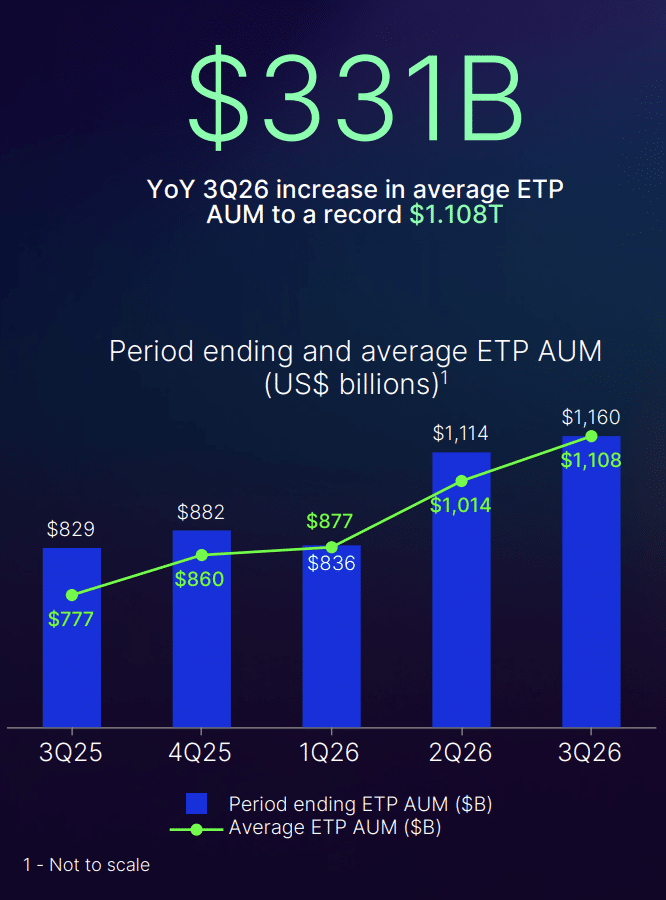
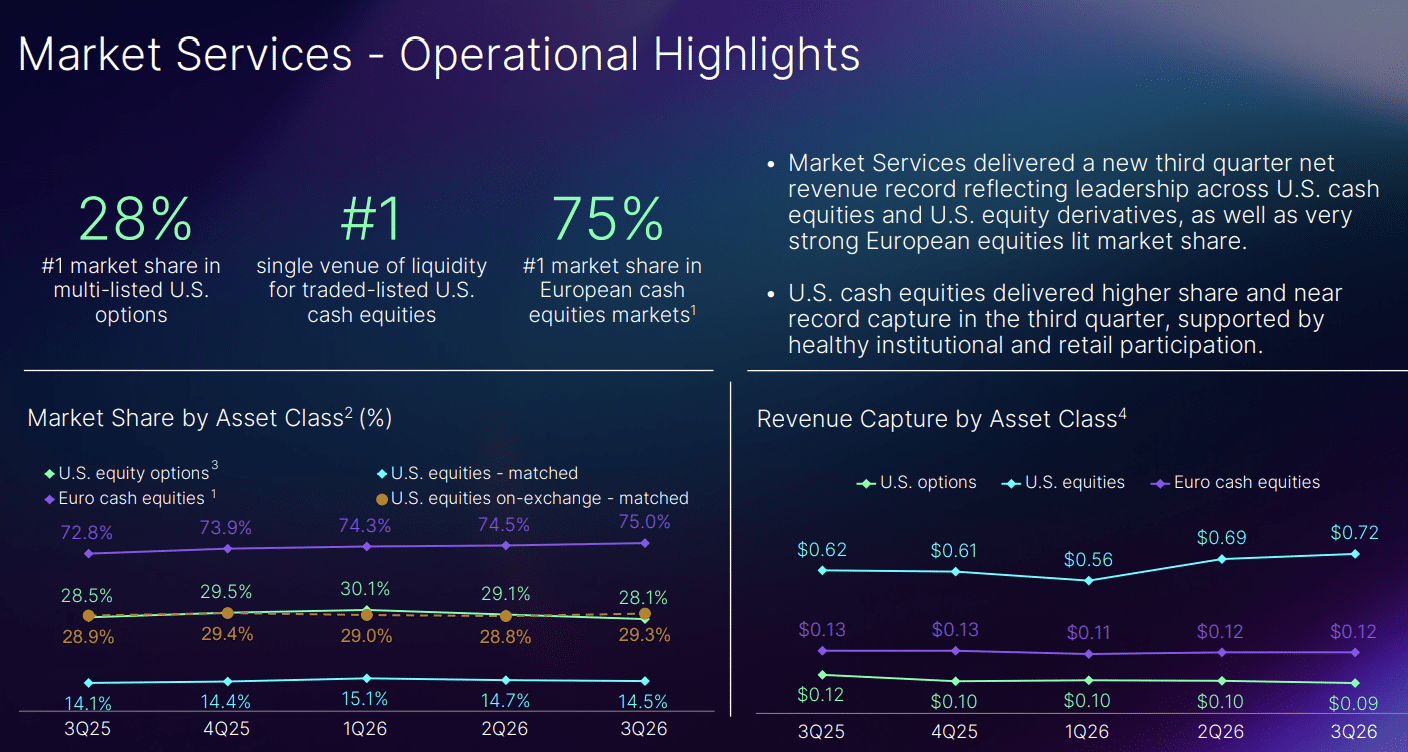

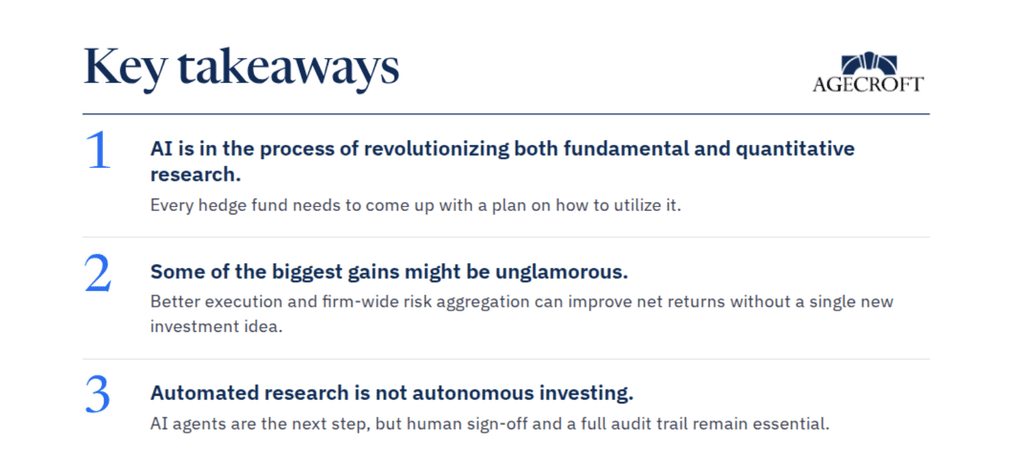




The $1million Brokerage Fee Blind Spot Banks Can No Longer Ignore
By Liz Collegio, Head of Product Management, Meritsoft (a Cognizant company)
Banks scrutinise every fraction of a basis point on the trading desk, yet millions can still leak away through brokerage fees.
These fees are the cost of doing business, but few have a clear view of what they should be paying across the business. That blind spot allows errors, missed discounts and incorrect fees to go undetected. At its worst, firms can end up making overpayments running into the millions.
We recently conducted a review with several banks to understand the scale of the problem. We found that firms were overpaying brokerage fees by at least 3–5%. There was no single weak link but pockets of inefficiency across the trading floor. Most overpayments arose because firms lacked timely access to the critical information needed by the right decision makers.
One bank could have saved around $200,000 annually in interest-rate derivative trading fees simply by routing trades to brokers with more favourable rates. Additionally, almost $400,000 a year was lost to leakages caused by poor data and zero automation. Over $10,000 of discounts were left on the table because a broker failed to apply them at the end of the month.
In one sample IRD portfolio, the error rate for accruals was more than 25%, leading to inaccurate cashflow and avoidable reconciliation breaks.
Taken together these costs quickly add up. A firm with annual brokerage fees around $30 million is typically overpaying between $1 million and $1.5 million.
The brokerage fee bugbear
Brokerage fees have been a perennial problem for firms because it’s often hard to quantify the losses. Before we started this study, the banks we looked at believed they had a strong handle on their brokerage expenses. As we have discovered, these errors can become pervasive, even for the firms that thought they had a solid grasp.
For many banks a large portion of overpayments stem from the complexity of trading fee schedules. They are carefully negotiated with each broker relationship, but afterwards the specific terms are not well disseminated. All too often they sit in inboxes and excel spreadsheets or with different departments that don’t handle the day-to-day trading. This causes a lack of transparency and poor oversight into spending.
The route to measurable savings
There are many areas where basic changes could produce immediate improvements in both efficiency and real substantive savings.
Brokerage rate cards are not being kept in a central, digital and readily accessible location. The fee schedules are often hidden or forgotten. Missing, aged or unsigned rate agreements exacerbate the problem. Without a validated rate card in place, a firm’s ability to dispute a broker’s charge is limited. This can grow to become a compliance and governance issue. Agreed rates should be easily accessible to everyone, especially for those on the execution desks.
Reconciliation also happens at the invoice level rather than the trade level, leading to discounts not being applied and trade mismatches being overlooked. When those leakages and discrepancies are finally discovered, it happens too late.
The solution is to move towards intraday accrual, with dashboards that give traders and management a view of brokerage spending as it happens.
Across the trading floor, in front- and middle-office functions, there is often no systematic capability to compare rates across a single asset class, region and broker legal entities. This lack of transparency needs to be addressed.
For large firms, the potential savings are counted in millions of dollars, while for smaller firms, building an efficient brokerage fee review process today ensures operations can scale as activity grows, with the added benefit of transparency baked in.
This study proves that unchecked costs can lead to sizeable overages. The bumper profits from trading have so far taken the sting out of overpaying brokerage fees. When the trading desk is doing so well, there is some leeway for inefficiency.
But trading is all about increments. Traders care about tick sizes a tenth of a basis point, one one-thousandth of a percent.
The scrutiny of brokerage fees should be no different.