


Thursday, January 29, 2026
More
    More

      Rimes Appoints Vijay Mayadas as President and Chief Executive Officer

      0

      New CEO Vijay Mayadas to Accelerate Rimes’ Transformation into the “Intelligence Fabric” for the Investment Industry

      [New York, NY, September 17, 2025] — Rimes, a leading provider of enterprise data management and investment platform solutions to the global investment community, is pleased to announce the appointment of Vijay Mayadas as President and Chief Executive Officer. Mayadas, a seasoned FinTech executive with a track record of scaling global businesses and driving innovation in financial markets, succeeds Brad Hunt, who will assume the role of Vice Chair, Rimes Board of Directors.

      With more than 25 years of pioneering experience at the intersection of technology, data, and financial services, Mayadas joins Rimes after 12 years at Broadridge Financial Solutions, where he most recently served as President of Capital Markets. In that role, he grew the business from $600 million to over $1 billion in recurring revenue and during his tenure helped drive the company’s market capitalization from under $3 billion to nearly $30 billion. Mayadas also spearheaded the launch of industry-first innovations, including AI-powered trading platforms and distributed ledger solutions that are now processing trillions of dollars in monthly transactions.

      Donal Smith, Chair of Rimes Board of Directors, commented: “Vijay is a world-class leader who brings an excellent track record of scaling global FinTech franchises and driving breakthrough product innovation. With deep, hands-on expertise in leveraging next-generation technologies, especially AI, Vijay is uniquely qualified to accelerate Rimes’ strategy and lead the company in its next chapter of market leadership and growth.”

      “Rimes has built an extraordinarily successful business over the last 30 years – truly the gold standard in benchmark and index data,” said Vijay Mayadas, President and Chief Executive Officer, Rimes. “I am incredibly excited about the opportunity in front of us. In a world of increasingly AI-driven workflows, the need for trusted, independent and highly-curated data – an “intelligence fabric” – is more critical than ever. There is no company better positioned than Rimes to fill that gap.”

      Backed by Five Arrows, the alternative assets arm of Rothschild & Co, Rimes has further built on its unique market leadership position at the heart of the global investment ecosystem, powered by deep partnerships with its blue-chip clients and an unparalleled network of 800+ data partners. This powerful ecosystem is the engine for Rimes’ innovation, which has delivered mission-critical solutions across the entire investment lifecycle—from its gold-standard benchmark and ESG data to its sophisticated asset allocation and rebalancing platform for the world’s most complex asset owners.

      Under Mayadas’ leadership, Rimes will accelerate its investment in this ecosystem—in its people, its technology, and its partnerships—to ensure every client is empowered to turn data into a true competitive advantage.

      About Rimes
      Rimes provides transformative enterprise data management solutions to the global investment community. Driven by our passion for solving the most complex data problems, we provide our clients with investment intelligence that powers more than US$ 75 trillion in AUM annually. The world’s leading institutional investors, asset managers and service providers rely on Rimes to help them make better investment decisions using accurate information and industry-leading technology. For more information, please visit www.rimes.com.

      About Five Arrows
      Five Arrows is the alternative assets arm of Rothschild & Co and has over €29 billion in assets under management, with offices in Paris, London, New York, Los Angeles, San Francisco, and Luxembourg.

      With more than €10 billion of assets under management, the corporate private equity business of Five Arrows is focused on investing in companies with strong management teams; business models with high visibility of organic unit volume growth and strong unit economics; and multiple operational levers that can be used to unlock latent value. Sectors are limited to data and software, technology–enabled business services, and healthcare.

      For more information, please visit https://www.rothschildandco.com/en/five-arrows/corporate-private-equity/

      SEC to Re-Examine Trade-Through Prohibitions

      In a move that could reshape the way U.S. securities markets function, the Securities and Exchange Commission (SEC) is revisiting one of its most debated rules: the trade-through prohibitions, which prevent executing trades at prices worse than the best available quotes on other venues. 

      On September 18, 2025, the Securities and Exchange Commission will host a public roundtable in Washington, D.C. to reexamine these rules—how they’re working, where they fall short, and whether they still make sense in their current form.

      The SEC roundtable will include participants from across the industry—exchanges, broker-dealers, asset managers, trading firms, academics, and investor advocates. Speakers will include representatives from BlackRock, Citadel, Nasdaq, Cornell University, Bank of America, Themis Trading, and the NYSE, among others.

      The roundtable will take place from 9:15 a.m. to 4:15 p.m. ET at the SEC’s D.C. headquarters. The event is open to the public, will be webcast live, and will be available for replay at www.sec.gov.

      What’s Prompting the Reexamination?

      The rule hasn’t changed meaningfully since it was implemented, but the market around it has. Algorithmic trading now dominates order flow. Broker-dealers face overlapping obligations under best execution, access rules, and order protection regulations. At the same time, off-exchange trading has grown significantly, and new exchanges have entered the market with novel models.

      Over the past two decades, these rules have shaped how orders are routed across U.S. equity markets. By requiring orders to be executed at the best publicly quoted prices, trade-through prohibitions were designed to protect investors from receiving worse prices when better ones are available elsewhere. However, with the rise of algorithmic trading, fragmentation across trading venues, and evolving best execution standards, critics argue that the rule may now introduce unnecessary complexity and distort market behavior.

      Trade-through prohibitions are core to Regulation NMS, a key regulatory framework governing U.S. equity markets, implemented in 2005. The Rule 611 of Regulation NMS prohibit executing a trade at a price worse than a protected quotation displayed on another venue. This applies to “top-of-book” quotes—the best available bid and offer—on exchanges that meet certain regulatory criteria.  

      Advocates of Rule 611 highlight its importance in protecting investors, while critics argue that it creates inefficiencies in the market.

      For instance, in “Order Protection Rule Tug‑of‑War, Kara Stein emphasized that Rule 611 has “served as a back‑stop protection for displayed limit orders particularly from retail investors.” She stated that retail brokerages rely on it to ensure individual investors get the best price available across all venues.

      Meanwhile, Chairman Paul S. Atkins has voiced concern that Regulation NMS and Rule 611 “have not served investors or broker‑dealers well, given the market distortion and resulting gamesmanship by those that seek to take advantage of the Reg NMS structure.”

      One of the critiques comes from James J. Angel, Associate Professor Academic Director, FINRA Certified Regulatory and Compliance Professional (CRCP (r)) Program at Georgetown University, who will be among the panelists. 

      James J. Angel

      Angel told Traders Magazine that the “trade-through rule is useless and only adds needless complexity (and cost) to the market”. 

      “Brokers already have a duty of best execution and the tools to execute with. Exchanges will likely continue to route orders out as a customer service. We should scrap the trade-through rule as it is no longer necessary,” he argued.

      “We should also scrap the round lot, which is an archaic artifact of the olden days. The BBO should be based on a fixed dollar amount, such as $5,000,” he said. 

      According to Angel, execution quality should be based on the Effective Best Bid or Offer (EBBO), which would be based on the displayed depth across the markets for the actual size of the order. 

      “Thus, if you want to trade 15 shares of AAPL, your execution quality would based on the displayed size for 15 shares, and if you want to trade 1,500 shares it would be based on the displayed size for 1,500 shares,” he said.

      With differing perspectives on the rule’s effectiveness and impact, the roundtable will be an important opportunity to assess whether Rule 611 remains relevant or requires modification. The discussions and findings will likely influence how the SEC approaches investor protection and market efficiency moving forward.

      Asset Owners Increase Outsourcing

      0

      In August this year the North Dakota Retirement and Investment Office became the first large U.S asset owner to outsource trading to Northern Trust and Melanie Pickett, head of asset servicing, Americas, expects this trend to continue.

      Northern Trust said in a statement  in August that its 35-year relationship with the North Dakota Retirement and Investment Office (NDRIO) was expanding to include outsourced trading services, through the firm’s Integrated Trading Solutions (ITS) platform. NDRIO manages investments for more than two dozen client funds, the largest being the $12bn North Dakota Legacy Fund, Public Employees Retirement System, Teachers’ Fund for Retirement, and Workforce Safety & Insurance Fund.

      Scott Anderson, chief investment officer of NDRIO, said in a statement outsourcing will enable the agency to operate with greater efficiency, reliability, and scalability as it brings more assets in-house.

      Pickett told Markets Media the Northern Trust’s front office solutions platform was launched six years ago and now has more than $1tr in assets either on the platform or being onboarded.

      Melanie Pickett, Northern Trust

      “We started with the thesis that some clients would be software only and some would take us up on middle office services,” she added. “Every single one of those clients uses our middle office services which speaks technology alone cannot solve the data needs for investment offices – it requires knowledgeable operation services as well.”

      Pickett continued that asset managers have been under cost pressure for some time, but asset owners are feeling the same pressure. Both asset owners and asset managers are trying to keep up with the pace of change of technology, their target operating model, how to use AI in their investment process as well as changes in the global macroeconomic environment.

      “Segments of the market that have typically not been open to outsourcing middle office services are now open,” Pickett added.

      In addition, conversations are getting more frequent around digital and tokenized assets according to Pickett.

      “One of the bigger shifts that we are seeing is that clients are thinking about liquidity very differently,” she said. “Cash and liquidity and how they use that as an asset class are a big part of the conversation.”

      Private markets

      There are also continuing moves into private assets, which brings challenges around valuations and transparency. In August this year President Trump issued an executive order to make it easier for workplace retirement plans to offer alternative investments including private equity.

      Pickett highlighted that in the UK Northern Trust services the LTAF fund regime which provides a broad range of investors with increased access to private markets. In May this year Northern Trust said in a statement that it is providing Partners Group with fund administration, depositary, and banking services for its first LTAF. Switzerland-based  Partners Group is one of the largest firms in the private markets industry with over $150 bn of assets under management at the end of last year according to the statement.

      “We service a number of the largest LTAF vehicles and that structure is very similar to what I think will be implemented in the U.S,” she added. “We have been able to get ahead of the curve there.”

      Northern Trust’s operations teams uses one one global operating platform so the technology used in the UK to service LTAFs could easily be dropped in the U.S. to service private assets in retirement schemes according to Pickett.

      In addition, she continued that Northern Trust has digitised the capture of data and documents for alternative assets. In 2024 Northern Trust also said in a statement that it had entered into an exclusive agreement with Hamilton Lane for the private markets investment management firm to provide its proprietary software, Cobalt LP, and integrated services to Northern Trust Asset Servicing clients.

      Griffith Norville, Hamilton Lane

      Cobalt provides private market analytics and pre-commitment research capabilities in a digital, turn-key format so Northern Trust can offer clients access to Hamilton Lane’s private market data, analytics.

      Griffith Norville, head of technology solutions at Hamilton Lane, said in a statement: “Through this exciting collaboration, we seek to deliver a new level of transparency and timeliness to Northern Trust client portfolios.”

      In 2023  Northern Trust also agreed  to make available Novata’s ESG data management software solution for private markets available to Northern Trust asset servicing clients, which Pickett described as an important partnership.

      Growth strategy

      In order to continue to grow, Pickett said the business needs to stay focused on its products and technology roadmap. There will be additional investment in cash and liquidity capabilities, additional online and data delivery capabilities, and ensuring that the right data and analytics is in the front office space.

      Northern Trust is also rolling out a platform called A-Suite to provide content for asset owners. The platform also includes building a social community to allow clients to connect with one another and share best practices. For example, pension plans in Australia and Canada have included privates assets in their schemes for a long time, and can provide advice to U.S asset owners.

      “We’ve had an incredible year,” added Pickett. “We have had an incredible win rate and client retention rate.”

      Joseph Radic Joins Freedom Capital Markets

      Freedom Capital Markets, an investment banking arm of Prime Executions, Inc., a subsidiary of Freedom Holding Corp. has appointed Joseph Radic as Managing Director, Trading, Traders Magazine can reveal.

      Joseph Radic

      Radic brings over 30 years of experience across institutional sales and trading and M&A advisory.

      He has led desks and advised clients across the small- and mid-cap landscape, with a focus on client engagement, strategic coverage, and execution.

      Radic spent over a decade at AllianceBernstein, where he helped build out the firm’s small-cap trading capabilities and worked closely with portfolio managers and analysts across equity strategies.

      His experience also includes senior roles at Needham & Company, NDB Capital Markets, and Stony Hill Advisors.

      Most recently, he has advised middle-market businesses and institutional clients on trading and growth strategies.

      At Freedom Capital Markets, he will help expand the firm’s institutional trading platform and deepen relationships across the buy-side.

      “At Freedom Capital Markets, we’re not just expanding—we’re elevating. With new leadership, research analysts, sales & trading professionals, and investment banking capabilities, we’re building a platform that delivers ideas, execution, and service at the highest level,” Radic shared with Traders Magazine.

      “Throughout my career, I’ve helped grow institutional trading desks and guided clients through every market condition. Now is the right time to bring that experience to Freedom and help create a platform where large-, mid-, and small-cap clients receive the insight, liquidity, and execution they need to achieve their goals,” he added.

      Front Office Gen AI Adoption Shifts from ‘If’ to ‘When’ for Fund Managers

      Front‑office Gen AI adoption shifts from ‘if’ to ‘when’ for leading fund managers, AIMA research finds

      Published: 16 September 2025

      PRESS RELEASE:

      • 58% of fund managers surveyed expect increased Gen AI use in investment processes over the next year, up from 20% in 2023.
      • 60% of institutional investors would be more likely to invest in a hedge fund that allocates a meaningful portion of its budget to Gen AI research and implementation.
      • 95% of fund manager respondents reported using Gen AI in their work, up from 86% in 2023, confirming a new era for the industry has arrived.

      The Alternative Investment Management Association (AIMA), the world’s largest alternative investment trade body, has published new research quantifying how alternative investment fund managers and their investors are embracing generative artificial intelligence (Gen AI).

      The report ‘Charting the course: Lessons from AI leaders in alternative investments’ reveals near universal usage of Gen AI among alternative investment firms. A majority expect Gen AI to play an increasingly significant role in the front office in the near future, highlighting a technological transformation underway across all regions surveyed.

      In 2023, just 20% of fund managers anticipated a greater role for Gen AI in their investment process over the subsequent year while nearly half were unsure. This year, 58% of respondents expect wider front-office integration, with just 10% foreseeing no increase.

      Expanding use cases and governance gaps:

      Overall, Gen AI use case innovation is widening beyond early administrative tasks into a broader range of business functions, including the front office. The largest fund manager, by AUM, are more likely to use Gen AI for a wider range of use cases than their smaller peers.

      At the same time, the report highlights a persistent governance gap among smaller and larger firms. Half of the respondents at smaller fund managers (in the report described as those running less than US$1 billion AUM), reported having no restrictions when using Gen AI tools. AI leaders interviewed by AIMA flagged this as a concern, underscoring the importance of robust policies, training and secure LLM deployments.

      Elsewhere, just over a quarter of all respondents have hired, or plan to hire, at least one AI specialist within the next 12 months. The profile of a firm that is hiring is most likely to be a multi-strategy manager with an AUM greater than US$1 billion.

      Investor insights:

      Investors, meanwhile, are also taking a closer look at how fund managers are integrating these tools, with a keen interest in the opportunities for AI-enhanced outperformance. 90% of the investors surveyed believe Gen AI would positively impact the performance of at least some fund managers’ portfolios over the next three years.

      At the same time, investors are also increasingly alert to associated risks. Nearly one third (29%) already include specific questions on Gen AI within their due diligence questionnaires (DDQ), with a further 29% expecting to introduce them this year. These questions focus on areas such as model oversight and explainability, IP risks, data privacy, and compliance concerns.

      Tom Kehoe, Global Head of Research & Communications at AIMA, said: “Gen AI is reshaping the operating model of alternative investment firms. AIMA’s research into how these firms use Gen AI is clear. The firms that will stand out are those pairing credible investment in capabilities with clear governance and human oversight. Investors are rewarding evidence over rhetoric.”

      Methodology:

      The research is based on a worldwide survey of 150 fund managers, representing an estimated US$788 billion in assets under management (AUM), alongside 18 of the world’s largest institutional investors that allocate to alternative investments. These include US state pension funds, endowments, and family offices across North and South America, Europe, and Asia Pacific. Respondents reflected a wide range of investment strategies, geographies, and AUM bands. By region, the UK, US, and APAC each accounted for roughly one-third of responses.

      The research builds on AIMA’s first dedicated exploration of Gen AI, ‘Getting in Pole Position: How Hedge Funds Are Leveraging Gen AI to Get Ahead’. Where relevant, the report provides time-series analysis to show how sentiment and adoption have evolved since that initial research.

      Contact details:

      Drew Nicol, Director, Research and Communications, AIMA

      Email: dnicol@aima.org

      About AIMA:

      AIMA is the world’s largest membership association for alternative investment managers. Its membership has more firms, managing more assets than any other industry body, and through our 10 offices located around the world, we serve over 2,000 members in 60 different countries.

      AIMA’s mission, which includes that of its private credit affiliate, the Alternative Credit Council (ACC), is to ensure that our industry of hedge funds, private market funds and digital asset funds is always best positioned for success. Success in our industry is defined by its contribution to capital formation, economic growth, and positive outcomes for investors while being able to operate efficiently within appropriate and proportionate regulatory frameworks.

      AIMA’s many peer groups, events, educational sessions, publications and practical tools like its Due Diligence Questionnaires and industry sound practice guidance available exclusively to members, enable firms to actively refine their business practices, policies, and processes to secure their place in that success.

      The Future of Post-Trade Is Now: A Conversation with Bloomberg’s Pam Samrai

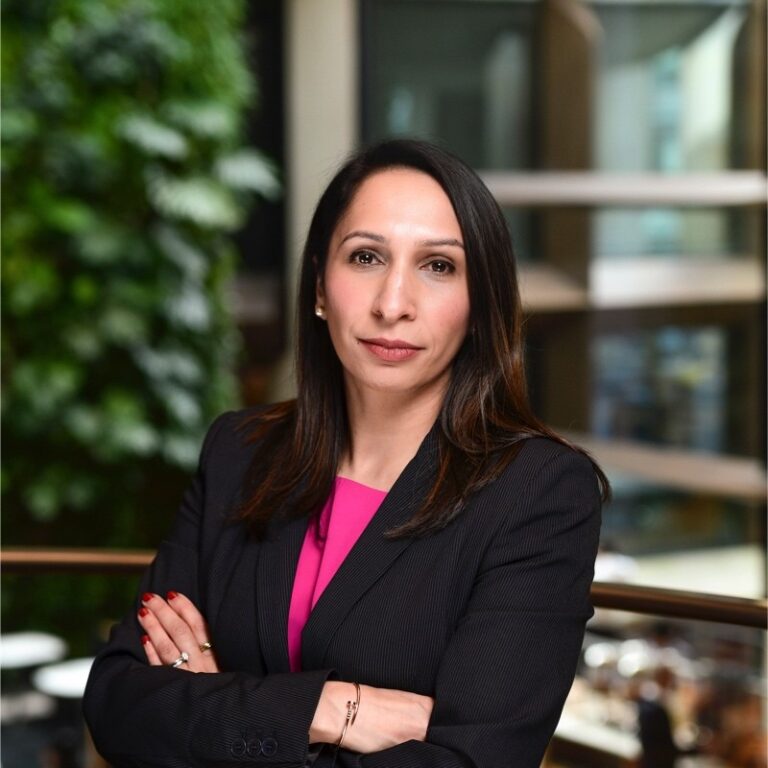
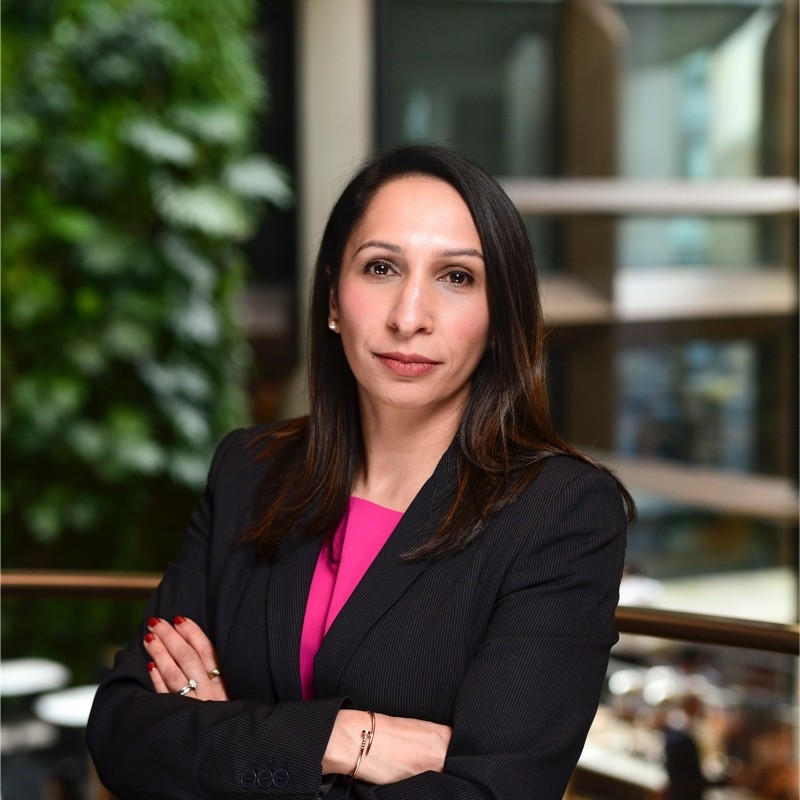
      In today’s dynamic financial landscape, post-trade operations have evolved from routine back-office tasks into a key strategic focus for firms. In an interview with Traders Magazine, Pam Samrai, Global Head Buy-Side Post Trade Product at Bloomberg, shares how her team is helping buy-side firms navigate growing complexity with smarter, more integrated solutions. As a senior woman in finance, she also reflects on the importance of visibility, mentorship, and paving the way for the next generation of leaders.

      Pam Samrai

      Can you please describe your responsibilities as the Global Head of Buy-Side Post Trade Product at Bloomberg and what a typical day looks like for you?

      My team builds technology solutions designed to support Operations teams, with a particular focus on the buy-side community. Over the past decade, post-trade workflows have been shaped by a steady stream of regulatory change — often driven by the unique requirements of each jurisdiction and fragmentation across regional markets.

      My role is to support clients in navigating this complexity. I work to simplify and streamline post-trade processes, enabling greater operational efficiency despite the challenges of differing rules and fragmented infrastructures.

      What I enjoy most about my work is the variety. No two days look the same. On any given day, I’m collaborating with Operations professionals, engaging with Sales teams, or partnering with our Engineers — all with the shared goal of improving workflows and delivering meaningful outcomes for clients.

      In your experience, what are the key trends shaping post-trade operations for buy-side firms globally?

      The buy-side community has undergone a remarkable transformation. Increasingly, clients are prioritising operational excellence and data harmonisation as critical enablers of scale. There is a growing recognition that fragmentation in middle and back office can create competitive disadvantages and ultimately constrain growth.

      A theme is strong C-Suite executive sponsorship for technology-led change to modernise front to back workflows. Much of this is centred on data quality and governance — areas that can deliver meaningful advantages and even generate investment alpha for the front office.

      Automation is already reshaping post-trade processes, streamlining workflows and reducing manual intervention. At the same time, industry-wide challenges such as global settlement compression and rising costs are driving continued investment in innovation.

      How do you see the buy-side post-trade landscape evolving over the next five years, especially with emerging technologies like blockchain and AI?

      AI is starting to make inroads into post-trade, but for now its role is focused on solving targeted pain points rather than driving industry-wide disruption. In such a highly regulated and risk-averse environment, organisations still want human oversight of any decisions or suggestions generated by AI. Over the next five years, I hope to see this evolve into more transformative applications that can reshape how the industry operates.

      Meanwhile, with Blockchain, there are promising experiments using distributed ledger technology (DLT) for digital securities settlement. However, widespread adoption still feels aspirational, and whether these pilots scale to support global usage, remains to be seen.

      What role do data analytics and automation play in enhancing post-trade efficiency and transparency in today’s financial markets?

      Data analytics and automation have become the foundation of post-trade efficiency and transparency. For today’s Chief Operating Officer, they should sit firmly at the top of the agenda. Without robust analytics, it is increasingly difficult to make data-driven decisions or to manage operational complexity with confidence.

      Looking ahead, what innovations or changes do you believe will have the most transformative impact on the buy-side post-trade ecosystem?

      The debate around single-platform, front-to-back operating models continues to gain traction. Yet, too often these large-scale transformations come with higher-than-expected costs and significant implementation delays.

      In my view, the industry is now shifting its focus. Modern open architecture, built on managed integrations and real-time data exchange, are becoming the preferred path forward for the industry. Flexibility and interoperability are critical — clients are looking for practical, incremental wins that reduce operational risk while advancing their broader operational excellence goals.

      What does it mean to you to be a senior woman in the finance industry?

      I hope that in my role now I am providing an example and positive representation of women in leadership that future generations are looking for as they kick-start their own paths in finance. I believe it is also my responsibility to proactively utilize my leadership position to mentor and empower others along their career trajectory. We continue to see more women in my field and adjacent roles and I’m proud to be part of this continued growth.

      What advice would you give to young women aspiring to leadership positions in finance?

      My own career journey has been far from linear. I’ve embraced the idea of a “squiggly” career — one defined by flexibility, adaptability, and self-direction. My advice: take risks, volunteer for new challenges, and lean into your strengths. These are the qualities that open doors and sustain long-term growth.

      OTC Markets Group Expands Data Availability via ICE Consolidated Feed

      OTC Markets Group Expands Data Availability via ICE Consolidated Feed, Unlocking Greater Global Access to Overnight Trading 

      NEW YORK, Sept. 15, 2025 (GLOBE NEWSWIRE) — OTC Markets Group Inc. (OTCQX: OTCM), operator of regulated markets for trading 12,000 U.S. and international securities, today announced that data from its MOON ATS® and OTC Overnight® trading sessions is now available via the ICE Consolidated Feed, Intercontinental Exchange’s (NYSE: ICE) premier normalized data solution. 

      This expansion brings OTC Markets’ trading data into a standardized, low-latency environment widely used by global banks, asset managers, hedge funds and analytics platforms. It represents a major step in increasing visibility into overnight activity, particularly across Asia, where local market hours align with MOON and OTC Overnight® trading. 

      Since early 2025, MOON ATS, OTC Overnight, and OTC Link NQB Daytime data have been available via ICE’s Global Network Services. Now, distribution through the ICE Consolidated Feed is designed to offer seamless integration into the trading systems, pricing engines, and analytics tools that help power global capital markets. 

      “Delivering our live quote streams via ICE’s normalized feed brings our mission critical data closer to the end users, unlocking liquidity, increasing access and expanding transparency across borders,” said Matt Fuchs, EVP of Market Data at OTC Markets Group. 

      As demand grows for real-time data beyond traditional U.S. market hours, this integration helps meet the evolving needs of institutional and retail users. 

      The ICE Consolidated Feed aggregates and normalizes content from over 600 global sources, including exchanges and OTC venues, offering a comprehensive view of liquidity across asset classes. Used by Tier 1, 2 and 3 banks, asset managers, hedge funds, ISVs and redistributors, it delivers a range of global financial information with multi-asset class coverage, including equities, derivatives, fixed income, foreign exchange, money markets, commodities, energy and ETFs. By joining this ecosystem, OTC Markets reinforces its role as a key provider of real-time market data on global equities and a trusted partner to data vendors, investors, and trading firms worldwide. 

      To learn more about MOON ATS® and OTC Overnight®, visit: https://www.otcmarkets.com/otc-link/moon-ats 

      More information on ICE’s Consolidated Feed is available at: https://www.ice.com/fixed-income-data-services/access-and-delivery/connectivity-and-feeds/consolidated-feed 

      About OTC Markets Group Inc. 

      OTC Markets Group Inc. (OTCQX: OTCM) operates regulated markets for trading 12,000 U.S. and international securities. Our data-driven disclosure standards form the foundation of our public markets: OTCQX® Best Market, OTCQB® Venture Market, OTCID™ Basic Market and Pink Limited™ Market. Our OTC Link® Alternative Trading Systems (ATSs) provide critical market infrastructure that broker-dealers rely on to facilitate trading. Our innovative model offers companies more efficient access to the U.S. financial markets. 

      OTC Link ATS, OTC Link ECN, OTC Link NQB, and MOON ATS® are each SEC regulated ATS, operated by OTC Link LLC, a FINRA and SEC registered broker-dealer, member SIPC. To learn more about how we create better informed and more efficient markets, visit www.otcmarkets.com

      Margin Transparency – Trade Bodies Weigh In

      Lynn Strongin Dodds looks at the recommendations made in response to ESMA’s consultation on margin transparency.

      The responses are rolling in to the European Securities and Markets Authority’ (ESMA) consultation launched in June on draft regulatory technical standards (RTS) under Article 38 of the European Market Infrastructure Regulation (EMIR 3.0). While they are broadly supportive, industry groups such as the Futures Industry Association (FIA), International Swaps and Derivatives Association (ISDA) and the European Association of CCP Clearing Houses (EACH) are suggesting a few changes to ensure the rules are not excessively rigid.

      Article 30 sets out transparency obligations for central counterparties (CCPs) and clearing service providers (CSPs). Based on the responses received, ESMA will prepare the final reports and submit the final draft to the European Commission by 25 December 2025. 

      ESMA was canvassing views on the type of information to be disclosed by clearing CSPs to their clients, in relation to costs and fees for the provision of clearing services. It was also looking for comment on the requirements regarding the CCPs’ margin simulation tool and CSPs’ margin simulations as well as the type of data CCPs and CSPs need to provide for their margin models.

      The FIA has urged ESMA not to mandate overly prescriptive requirements for clearing member firms, particularly those that do not apply their own margin models but pass through clearinghouses’ margin requirements to clients. 

      FIA Chief Operating Officer and SVP of Global Policy, Jacqueline Mesa, said, “We strongly support the EU’s overarching policy objectives to enhance transparency and enable clearing members, clients and end-users to be better prepared for margin calls and associated liquidity needs, particularly under stressed market conditions. However, we urge ESMA to ensure that these RTS remain firmly aligned with the Level 1 mandate, both in scope and proportionality.”

      According to FIA, Article 38(7) and (8) of EMIR places the primary transparency obligation on CCPs. CSPs, by contrast, should focus on forwarding CCP disclosures and providing additional information only where they impose their own margin add-ons.

      A recent FIA survey of clearing members reveals that 86.5% of clients are charged CCP margin only, 10.5% face CCP margin plus CSP add-ons – usually multipliers – and just 3% are subject to proprietary CSP models. This means that CCP disclosures are the dominant factor shaping client exposures, while CSP transparency needs are limited. This is why the FIA is warning against placing heavier-than-necessary obligations on CSPs.

      The FiA also expressed its concerns over a proposal requiring CSPs to provide “two scenarios related to the individual risk of the client”. It argues this would go beyond CCP obligations and would be operationally unfeasible for CSPs with large client bases. 

      The FIA believes that detailed scenario testing for each client would add cost and complexity without delivering proportionate benefits. “Overly burdensome or non-risk-aligned requirements on EU-based CSPs, particularly where similar expectations are not imposed globally or not in line with international standards, may inadvertently weaken the relative attractiveness and scalability of clearing services in Europe, “Moss added.”

      Separately, FIA has called for a proportionate compliance timeline that reflects the operational and technological complexity of the rules. In particular, FIA recommends a staggered implementation — with CCPs required to comply first, followed later by CSPs once CCP frameworks are in place. Without such staging, FIA warns, CSPs could face regulatory breaches if they are unable to access CCP disclosures in time.

      ISDA is also calling for a timely implementation period which it believes should be around 18 months. 

      As to the actual RTS, it notes that there is room for achieving transparency more efficiently and recommends a more direct approach whereby CCPs make model documentation and simulators directly available to clients. On cost of clearing, ISDA highlights that CSPs should be able to meet the new requirements by referring to existing disclosures under the Markets in Financial Instruments Directive (MiFIR).

      Meanwhile, EACH proposes that the size of a CCP should be taken into account during implementation  given the  scope of the requisite changes to IT systems. It believes that adopting a suitable phase-in approach could spread the integration of new features, such as incorporating initial margin add-ons over a longer period, rather than requiring full implementation in one step. 

      Overall, it advocates a more balanced approach, with CCPs disclosing information only when it is not already available through other means or that are, in fact, used by market participants.” Disclosing detailed information could expose proprietary algorithms and intellectual property that CCPs have developed, “it added.

       Also, EACH noted that” focusing on the usability of information should help market participants distil the benefits of aggregate information on key model characteristics rather than excessive technical details that may confuse clearing members and their clients.”

      The trade group said this could be achieved by excluding proposals that are not required by EMIR Level 1 such as sensitivity testing or already provided by other means such as the back testing obligation within the CPMI-IOSCO quarterly report.

      EACH also noted the ESMA proposals should not go beyond Basel Committee on Banking Supervision (BCBS), the BIS Committee on Payments and Market Infrastructures (CPMI) and the International Organisation of Securities Commissions (IOSCO0 guidelines on margin transparency which only require main/material and not all add-ons to be included in the simulators.

      Bank of America Makes Senior Leadership Changes

      0

      Bank of America has announced senior leadership appointments to further build and deliver its capabilities around the globe for clients, shareholders, and local communities.

      Chair and CEO Brian Moynihan has named Dean Athanasia and Jim DeMare to serve as Co-Presidents of Bank of America, and appointed Alastair Borthwick to serve as Executive Vice President and Chief Financial Officer (CFO) of the company.

      Athanasia and DeMare will drive company-wide initiatives focused on long-term growth and returns and oversee Bank of America’s eight lines of business and their leaders, who remain unchanged. Borthwick has served as the company’s CFO for the past four years, and assumed additional responsibilities over time, as a strategic advisor and the leader of the company’s positioning with its global investor base.

      The company’s Management Team, under Moynihan’s leadership and including Athanasia, DeMare, Borthwick, and their colleagues, remains otherwise unchanged.

      “These leadership appointments will drive our efforts to build and deliver Bank of America’s capabilities across the globe,” said Chair and Chief Executive Officer Brian Moynihan. 

      Brian Moynihan

      “Over the last 15 years, Dean and Jim have each served as leaders, strategists, and stewards of growth. Together, they have nearly 60 years of experience in financial services across every client segment, market, function, and industry. They have designed and driven out full transformations of the businesses under their direct leadership to focus on our clients and their needs; align resources, capabilities, and intensity; compete and gain market share; and deliver long-term, industry-leading results.”

      “After several, steadily expanding leadership roles running business lines, Alastair has expertly served as our CFO for the last four years. His financial stewardship and broad leadership have been instrumental to our progress, as we have strengthened every major aspect of our balance sheet. Bank of America set on a course of Responsible Growth more than a decade ago. With the support of our Board of Directors, I look forward to working with our leaders and 213,000 teammates as together we drive Responsible Growth through its second decade.”

      Below is the letter that Moynihan shared with the company’s teammates:

      To my teammates,

      Our company continues to focus on serving our individual, corporate, and institutional clients through the tenets of Responsible Growth: we must grow and win in the market, through our customer-driven strategy, within our risk framework, and in a sustainable manner.

      Today, we are announcing key leadership appointments that will further drive our progress. I have asked Dean Athanasia and Jim DeMare to become Co-Presidents of Bank of America, and I have asked Alastair Borthwick to serve as our company’s Executive Vice President and Chief Financial Officer.

      In their new roles as Co-Presidents, Dean and Jim will work with me to drive broad-ranging, strategic efforts that are central to our long-term performance. These include enterprise-wide initiatives focused on increasing market share and returns, leveraging our scale, and managing cost and expense; the continued expansion of AI-based tools and innovation for our clients; growth plans for local and global markets; and ongoing Operational Excellence efforts that strengthen our organization for teammates and everyone we serve.  

      In line with this focus, Dean and Jim will also join me in working directly with the presidents of the eight lines of business, including Holly O’Neill, Lindsay Hans and Eric Schimpf, Katy Knox, Raul Anaya and Sharon Miller, Wendy Stewart, and Matthew Koder. Dean and Jim will work to help accelerate growth plans, shape strategic investments for our clients, develop the talent needed in the years and generations to come, and position our company with all our stakeholder groups. They will assume overall responsibility for the company’s business lines, and the individual business heads will report to them. Other leaders who currently report to Dean or to Jim continue to do so.

      With this move, we will further build and deliver our capabilities across the globe. My focus as Chair and CEO of the company remains the same. Our Management Team remains the same, including the business heads who continue to lead and drive their individual areas. In their new appointments, Dean and Jim will significantly increase the capacity, intensity, and expertise dedicated to our highest priorities, benefiting all.

      Over the last 15 years, Dean and Jim have each served as leaders, strategists, and stewards of growth. Together, they have nearly 60 years of experience in financial services across every client segment, market, function, and industry. They have designed and driven out full transformations of the businesses under their direct leadership to focus on our clients and their needs; align resources, capabilities, and intensity; compete and gain market share; and deliver long-term, industry-leading results. With Dean’s leadership, we have reported 26 consecutive quarters of net checking account growth, deposits up roughly 32% from 2019 through last quarter, and record levels of digital adoption across consumer and wealth management. Under Jim’s leadership, our teams have posted 13 consecutive quarters of year-over-year growth in sales and trading – unmatched in the industry during this time period – and materially increased net income and returns during that period. Recent company recognition includes World’s Best Bank for Markets and World’s Best Bank for Trade Finance by Euromoney, Best Consumer Digital Bank by Global Finance, and numerous awards from J.D. Power for Customer Service, Retail Banking, and many more areas.

      As the newly appointed EVP and CFO of the company, Alastair continues to both serve as a strategic advisor to me, the Management Team, and our Board of Directors, and to assume additional responsibilities over time, most recently including our global real estate portfolio. After several, steadily expanding leadership roles running business lines, Alastair has expertly served as our CFO for the last four years. His financial stewardship and broad leadership have been instrumental to our progress. Through his tenure as CFO, we have strengthened every major aspect of our balance sheet, strategically deployed capital to key growth and investment areas, driven expense management, and in the second quarter of this year returned $7.3 billion to shareholders through common stock dividends and share repurchases. Alastair already works across our lines of business with their respective leaders, and will continue to do so with me, Dean, and Jim. He will also continue to lead broader efforts to position Bank of America with investors and shareholders around the world with our Management Team.

      I have the privilege to lead 213,000 teammates who are committed to our purpose and to our shared success. Together, we set on a course of Responsible Growth more than a decade ago. With the support of our Board, I look forward to working with all of you as we drive Responsible Growth through its second decade. I thank you for all you do, and I will see you out in the markets and at our next Global Town Hall in October.

      Source: Bank of America

      FactSet Adds J.P. Morgan, Barclays to Aftermarket Research Offering

      0

      September 15, 2025

      NORWALK, Conn., Sept. 15, 2025 (GLOBE NEWSWIRE) — FactSet (NYSE:FDS | NASDAQ:FDS), a global financial digital platform and enterprise solutions provider, today announced that J.P. Morgan and Barclays analyst reports are now available as part of FactSet’s aftermarket research (AMR) offering.

      J.P. Morgan and Barclays research complements FactSet’s existing AMR offering—which provides reports from more than 1,800 top brokers globally, including UBS, Macquarie, Canaccord Genuity, Scotiabank, RBC, Deutsche Bank, HSBC, Wells Fargo, Stephens, Needham, and more.

      “The strategic addition of J.P. Morgan and Barclays marks a major advancement for our aftermarket research coverage and reflects FactSet’s continued commitment to providing the tools and insights our clients need to analyze opportunity and make informed decisions,” said Kendra Brown, Senior Vice President and Senior Director of Banking and Sell-Side Research at FactSet. “The continued expansion of our aftermarket research offering with well-known and niche brokers provides sell-side professionals with a one-stop resource that consolidates diverse content, allows users to review and understand market sentiments through multiple lenses, and helps power company research and due diligence.”

      FactSet’s enhanced AMR product is available to entitled users on the FactSet Workstation and via mobile; in addition, specific datasets are available via API data feed. The AMR product grants FactSet clients access to a diverse range of perspectives from top brokers globally, offering robust insight into company sentiments, analyst outlook shifts, and industry-specific intelligence.

      Sell-side, corporate, and private capital professionals can access an extensive collection of company-specific aftermarket research and data to perform due diligence and advise on market-moving developments. Clients can search for content by company, theme, or keyword across brokers to gain a holistic understanding of company performance, valuations, sentiment, and forecasts.

      Learn more about FactSet’s Aftermarket Research solution here.

      About FactSet
      FactSet (NYSE:FDS | NASDAQ:FDS) supercharges financial intelligence, offering enterprise data and information solutions that power our clients to maximize their potential. Our cutting-edge digital platform seamlessly integrates proprietary financial data, client datasets, third-party sources, and flexible technology to deliver tailored solutions across the buy-side, sell-side, wealth management, private equity, and corporate sectors. With over 47 years of expertise, a presence in 20 countries, and extensive multi-asset class coverage, we leverage advanced data connectivity alongside AI and next-generation tools to streamline workflows, drive productivity, and enable smarter, faster decision-making. Serving more than 8,800 global clients and over 220,000 individual users, FactSet is a member of the S&P 500 dedicated to innovation and long-term client success. Learn more at www.factset.com and follow us on X and LinkedIn.