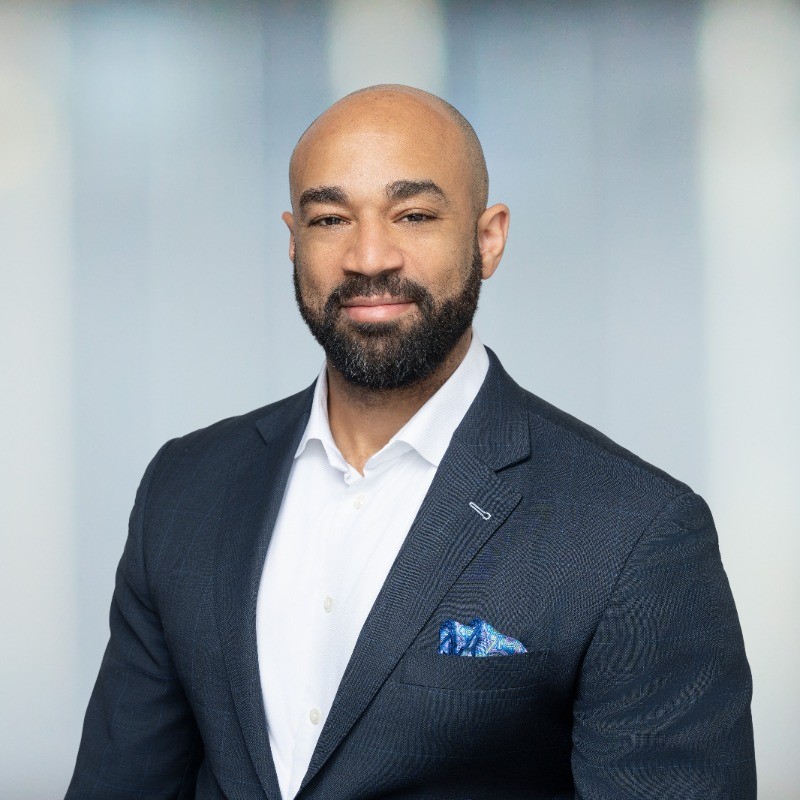
Kepler Cheuvreux has appointed Andrew Alder as a portfolio trading sales trader, based in London, Global Trading reported. Alder has close to three decades of industry experience and joins the firm from Barclays Investment Bank, where he was most recently director of EMEA equities electronic sales trading. Prior to this, Alder spent more than 10 years at Instinet in global portfolio trading roles. He began his career at UBS Investment Bank, covering global portfolio trading and restructuring.
Jeff Levin and Kunal Soni have joined Thoma Bravo as partners on the Thoma Bravo Credit platform. Levin has also been named head of the platform, according to a press statement. Levin was a founding member of Morgan Stanley Investment Management’s Private Credit business and was most recently Co-Head of its North America Private Credit platform. Soni was most recently the Head of the Western Region and Technology Lending for Morgan Stanley Investment Management’s Private Credit business, where he served as a member of the Investment Committee and focused on originating and executing investment opportunities.
Bryan Woodard
Confluence Technologies has appointed Bryan Woodard as Chief Legal Officer, according to a press release. Woodard brings more than two decades of legal and regulatory leadership in the financial services sector, most recently serving as Executive Vice President and Deputy General Counsel at State Street. This included playing a leadership role in multiple international acquisitions and leading the global legal teams responsible for supporting State Street Investor Services, State Street Global Markets, State Street Alpha, and Charles River Development, as well the corporate treasury functions and global operations division.
Steven Meier, Chief Investment Officer for the Bureau of Asset Management and Deputy Comptroller, will depart from his role effective November 7 for a new investment management opportunity. According to a press release, in his role as CIO, Meier has led the Bureau of Asset Management, which oversees the investment portfolios of each of the City’s five public pension funds, under the leadership of Comptroller Brad Lander.
SIFMA, according to a press release, has elected the following principal officers to leadership positions on the Board for 2025-2026: Chair: Ronald J. Kruszewski, Chairman of the Board and Chief Executive Officer, Stifel; Chair-Elect: David Lefkowitz, Managing Director, Global Head ABS Origination, JPMorganChase; Vice Chair: Lawrence Martinez, Chairman & Chief Executive Officer, D.A. Davidson Companies; Chair Emeritus: Laura Chepucavage, Head of Global Financing and Futures, Global Rates and Counterparty Portfolio Management, Bank of America; Treasurer: Lisa Kidd Hunt, Managing Director, Head of International Services, Charles Schwab & Co., Inc.
Grayscale Investments has named Laurie Katz as Global Head of Distribution, according to a press statement. Katz brings more than two decades of experience in client development, capital formation, and go-to-market leadership, with a track record of building and scaling businesses from the ground up. Katz joins Grayscale from Figure, where she was one of the first employees and served as Chief Revenue Officer for Figure Markets.
Citi has elected Jane Fraser, Citi’s Chief Executive Officer, as Chair of the Board, according to a press release. John Dugan, who served as Chair of Citi’s Board since 2019, will become Lead Independent Director.
If you have a new job or promotion to report, let me know at alyudvig@marketsmedia.com
As the U.S. equity markets brace for some of the largest regulatory resets in two decades, the SEC’s upcoming changes to the Regulation National Market System(“Reg NMS”) are poised to create a rewrite of how stocks are priced, traded and disclosed.
Elliot Banks
The reforms, which take effect in November 2025 (with further changes in 2026), aim to improve market quality and lower transaction costs, through changes in tick size rules, lot sizes and how information, such as odd-lot quotes, are provided to the market.
These new rules have the potential to alter order queue dynamics, execution priority, routing decisions and price discovery. Understanding the impact of these changes, and what it means for trading, is critical for market participants in order to manage risk and to continue to trade effectively. In this article, we analyze some of the key Reg NMS changes, and what these might mean for market participants.
Areas of change
The key areas where changes will occur are:
Exchange access fees, such as lowering caps on access fees
Tick sizes, making certain stocks have a half penny tick size
Lot sizes, with different round lot sizes depending on price
Dissemination of odd lot information in the SIP (this will come into effect next year)
Unlike other equity markets, the US equity market has a single, fixed tick size of 1 cent (excluding sub-dollar stocks). Under the new 2025 Reg NMS rule changes, stocks with an average tick size of less than $0.015 will change their tick size to half a cent. This is determined every 6 months.
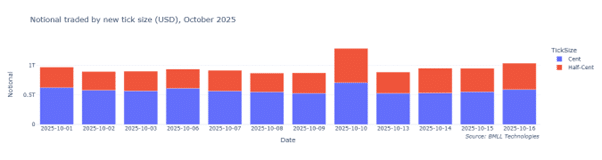
Looking at data from July – September 2025 (which will be used to set tick sizes from November onwards), we find that approximately 1700 tickers will change tick size. While this is only 20% of Reg NMS securities, it corresponds to around 40% of USD traded, as shown in figure 1.
Figure 1: Notional traded split by proposed SEC regulations, from September 1 – October 16.
Understanding the impact of these tick size changes, and how their effect on execution algorithms and transaction cost analysis, will be essential for market participants.
Round lot updates
In addition to changing tick sizes, from November 3rd, the size of round lots will change from the standard 100 (or 1 for a very small number of stocks), based on the average closing price of the security:
Average Closing Price
Round Lot Size (number of shares)
Example security
$250.00 or less
100 shares
AAPL
$250.01 to $1,000.00
40 shares
TSLA
$1,000.01 to $10,000.00
10 shares
NFLX
> $10,000.00
1 share
BRK A
Looking at the last evaluation period (July-September 2025), around 200 securities will be affected by this change, with the majority of stocks moving into the 40 shares bucket. This includes some high value retail stocks (such as TSLA, SPY and QQQ).
Importantly, by looking at the level 3 feeds, we can understand what spreads for these stocks will look like once the lot size changes come into effect. We find that, for securities where the lot size changes to 40 shares, there is an average spread improvement of 25%. However, there is still a significant difference between this new spread and the best odd-lot spread (which the SIP will disseminate from April 2026). In this case, we find the average difference between the current NBBO spread and odd lot spread is 47%.
It is important to note that these changes will not occur in isolation. By changing the round lot size, this will impact the price that protected quotes are displayed at, and could change the liquidity profile of the securities. For all market participants, understanding how changing lot sizes will impact top of book liquidity is critical, whether to accurately backtest or measure available liquidity.
Reporting changes
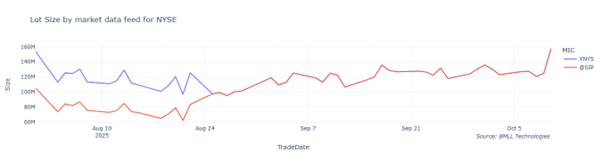
In addition to the SEC rule changes, other recent changes have come into effect. One particular change to note is how trades are reported from NYSE to the SIP. Previously, multiple trades that occurred at a single price and timestamp were bundled into a single report (and therefore not necessarily reported as an odd-lot trade). However, this was changed on August 22, 2025. We can see the effect before and after, as shown in figure 2 below. Previously, the depth feeds (red line, showed a different number of odd-lot traded volume between level 3 feeds and the SIP. However, since the change from the end of August, these two numbers are aligned.
To understand US equity behaviour, it’s necessary to understand how trades are broken up and executed. The additional information provided by the depth feeds allows market participants to better understand the make up and types of trades that have occurred.
Figure 2: Odd lot share volume, reported by NYSE and the SIP (for NYSE executions)
Leveraging Level 3 Data to get ahead of the changes
The changes to Reg NMS, beginning this November, represent a wide range of structural and technical changes to the US equity markets. By leveraging Level 3 data, market participants can better understand how tick sizes, odd lots and market data will be impacted, whether generating alpha, effectively trading or managing risk. This enables a smooth and easy transition to the new world of dynamic round lots and varying tick sizes.
Clearwater Analytics (NYSE: CWAN), the most comprehensive technology platform for investment management, and J.P. Morgan Asset Management have announced an integration that transforms how hedge funds manage cash.
The solution links Enfusion by CWAN directly with the Morgan Money® trading platform, J.P. Morgan Asset Management’s short-term investment management solution, giving clients a single, automated workflow for investing and monitoring idle cash.
Through this connection, hedge funds can now:
Maximize idle cash by automatically investing in a diversified range of money market funds.
Reduce concentration risk by spreading cash across multiple managers, custodians, and currencies.
Improve liquidity visibility through real-time data and automated withdrawal and deposit capabilities.
Eliminate manual treasury work, freeing teams to focus on trading and strategy.
Scott Erickson
“Every dollar sitting in a single account represents both a missed opportunity and unnecessary concentration risk,” said Scott Erickson, Chief Revenue Officer at CWAN. “Together with J.P. Morgan Asset Management, we’ve built a system that makes cash an active, automated asset—helping hedge funds capture more yield, strengthen governance, and simplify operations.”
The integration combines Enfusion by CWAN portfolio and order management capabilities with the MORGAN MONEY® global money market fund platform, allowing users to select from multiple fund providers, currencies, and settlement options in one connected experience.
“Our collaboration with CWAN reflects our shared commitment to delivering institutional-grade solutions that simplify complexity,” said Paul Przybylski, Global Head of Product Strategy and Morgan Money at J.P. Morgan Asset Management. “This integration gives hedge funds a straightforward way to enhance yield, diversification, and liquidity oversight—without adding operational burden.”
The launch underscores a broader industry shift toward data-driven, automated treasury management as investors seek better control of cash and risk. To learn more about the CWAN and Morgan Money integration, visit www.cwan.com.
About J.P. Morgan Asset Management
J.P. Morgan Asset Management, with assets under management of $4.0 trillion (as of 9/30/2025), is a global leader in investment management. J.P. Morgan Asset Management’s clients include institutions, retail investors and high net worth individuals in every major market throughout the world. J.P. Morgan Asset Management offers global investment management in equities, fixed income, real estate, hedge funds, private equity and liquidity. For more information, visit: www.jpmorgan.com/am.
About JPMorgan Chase & Co.
JPMorgan Chase & Co. (NYSE: JPM) is a leading financial services firm based in the United States of America (“U.S.”), with operations worldwide. JPMorgan Chase had $4.6 trillion in assets and $360 billion in stockholders’ equity as of September 30, 2025. The Firm is a leader in investment banking, financial services for consumers and small businesses, commercial banking, financial transaction processing and asset management. Under the J.P. Morgan and Chase brands, the Firm serves millions of customers in the U.S., and many of the world’s most prominent corporate, institutional and government clients globally. Information about JPMorgan Chase & Co. is available at www.jpmorganchase.com.
About Morgan Money
Morgan Money is J.P. Morgan Asset Management’s institutional investing platform. A multi-currency, open architecture trading and risk management system, the platform is designed to deliver a seamless customer experience, centered on operational efficiency, end-to-end system integration, and effective controls to allow customers to invest when, where and how they want — securely. Its intuitive platform allows customers to view aggregated account information across their entire portfolio, conduct in-depth risk analysis, model potential trades and compare available investment options. This platform is designed for clients, by clients — embedding their needs and priorities into its core capabilities. Additional information is available at Morgan Money.
About CWAN
Clearwater Analytics (NYSE: CWAN) is transforming investment management with the industry’s most comprehensive cloud-native platform for institutional investors across global public and private markets. While legacy systems create risk, inefficiency, and data fragmentation, CWAN’s single-instance, multi-tenant architecture delivers real-time data and AI-driven insights throughout the investment lifecycle. The platform eliminates information silos by integrating portfolio management, trading, investment accounting, reconciliation, regulatory reporting, performance, compliance, and risk analytics in one unified system. Serving leading insurers, asset managers, hedge funds, banks, corporations, and governments, CWAN supports over $10 trillion in assets globally.Learn more at www.cwan.com.
In a recent episode of Nasdaq TradeTalks, host Jill Malandrino sat down with Barb Morgan, Chief Product & Technology Officer at Temenos; Jacqueline O’Flanagan, Head of Financial Services, Americas at Microsoft; and Dr. Christos Makridis, Associate Research Professor at Arizona State University, to discuss the biggest cybersecurity and innovation risks in financial services and how to address the concerns.
Barb Morgan
“Cybersecurity is one of the number one concerns for banks,” said Morgan, noting how the issue dominates discussions among chief risk officers. She referenced a recent Temenos study showing that 85% of banks identify cybersecurity as their top challenge, with more than three-quarters predicting it will only become more critical in the coming years.
“Banks are prioritizing moving to a modern core platform,” she explained, adding that the shift allows for greater scalability, resiliency, and protection. “These platforms give them better scalability and stronger protection,” she said, emphasizing the value of partnering with trusted hyperscalers like Microsoft to embed security at the core of their infrastructure.
O’Flanagan highlighted how the company’s massive data footprint gives it unique visibility into global cyber threats. “Microsoft processes over 78 trillion security signals daily from billions of endpoints, devices, and cloud services,” she said. “That gives us a unique vantage point to see emerging attack vectors months before they become visible, allowing financial institutions to strengthen their defenses proactively.” O’Flanagan noted that financial services remain among the top ten industries most impacted by cyber threats, according to Microsoft’s Digital Defense Report. “This is dramatically changing the landscape, not just for banks but for their end users as well,” she added.
Dr. Makridis addressed the economic side of cybersecurity risk, explaining that while executives consistently rank it as a top priority, short-term pressures often delay the necessary long-term investments. “For the median firm, it’s costing about $90 million a year to have these incidents,” he said. “Even though it might not make headlines, it’s one of the lurking risks in every organization.”
Morgan underscored how outdated infrastructure compounds these risks. “Legacy systems weren’t built for today’s speed or sophistication,” she said. “Banks spend the majority of their IT budgets just trying to keep the lights on.” She warned that the inability to patch systems quickly creates serious exposure, making cybersecurity “not just a technology issue but a business imperative.”
Jacqueline O’Flanagan
The conversation turned to the transformative role of artificial intelligence in strengthening resilience. “Banks today are becoming AI-operated institutions,” O’Flanagan observed. “Many have moved beyond proof-of-concepts to embed AI throughout their organizations—from operations to fraud detection.”
Morgan explained that Temenos is embedding AI directly into its core banking systems, enabling continuous monitoring of transactions, compliance checks, and security risks. “Every transaction, every compliance check, every security risk is continually being monitored,” she said. She cited Temenos’ Financial Crime Mitigation solution, which has helped clients reduce false positives in screening “from as high as 99% to nearly zero.”
When asked about the emergence of agentic AI—systems capable of autonomous decision-making, Morgan stressed the importance of responsible governance. “Every decision must be auditable,” she said. “We must augment human judgment, never replace it fully. It’s AI with accountability.”
O’Flanagan echoed that sentiment, urging financial institutions not to let fear of risk stifle innovation. “At Microsoft, we have our own AI framework to ensure safe, ethical, and transparent use,” she explained. “It’s people, process, and technology. You have to double down on why you’re using AI. Early on, people worried about job loss, but what we’ve seen is new roles emerging as a result. It’s a mindset shift—and the opportunities are endless.”
Dr. Christos Makridis
Makridis added perspective on emerging technologies like blockchain and digital assets, explaining how they can enhance trust through transparency and traceability. “Blockchain provides a digital paper trail and greater transparency,” he said. Unlike cryptocurrency applications, he noted that banks are adopting permissioned blockchain for internal functions such as inventory management and compliance tracking. However, he cautioned that transformation requires more than technology. “You can’t just plop technology into an organization and say you’re done,” he said. “It requires changing how people think and the processes they use.”
All three guests agreed that cybersecurity culture must begin at the top. Makridis pointed out that many breaches stem from human error rather than sophisticated attacks. “Many vulnerabilities come from clumsy mistakes—someone forgetting a basic procedure or overlooking an update,” he said. “That’s why cybersecurity must start at the top and extend all the way to the front lines.” O’Flanagan agreed, adding, “Simple things like multi-factor authentication, done consistently across the organization, can have a massive impact.”
The future of finance will belong to organizations that integrate technology, governance, and human judgment seamlessly, according to Morgan. “When you combine human intelligence with AI that’s accountable, you unlock both security and innovation. That’s the future our customers are building toward,” she said.
FLASH FRIDAY is a weekly content series looking at the past, present and future of capital markets trading and technology. FLASH FRIDAY is sponsored by Instinet, a Nomura company.
On Saturday 18 October the professional dancers opened the Strictly Come Dancing television show in the UK with a group dance based on the stock market in which their performance was surrounded by a display of moving price tickers.
They were wearing black suits but it is fair to say that they did not look like or behave like typical traders. From the outside it looks like the male and female professionals are treated in the same way on the show, and it is fair that this is still not the case in finance.
A recent experiment found that participants rated a fictitious “Stephanie” as less competent than a male counterpart “Stephen” in financial services despite identical performance with bias was particularly pronounced among male evaluators.
An analysis from the LSE published this month concluded that gender bias distorts the assessment of performance of women in the financial sector.
The research, Advancing Women in Financial Services: Productivity and Merit, is the culmination of Women in Banking and Finance’s Accelerating Change Together (ACT) research programme, led by Dr Grace Lordan, founding director of The Inclusion Initiative at LSE.
Lordan said in a statement that, on average, women in financial services still do not have equal opportunities, visibility and voice.
“I would love the legacy of ACT to be that we see equal opportunities, visibility and voice for all colleagues in financial services that is determined solely by merit,” she added.
Lordan’s new research found that senior-level gender diversity raises innovation, once representation exceeds approximately 30% in growth sectors.
Anna Lane, chief executive of Women in Banking & Finance, said in a statement that if the financial services sector gets inclusion right, the productivity dividend flows far beyond the industry. She said: “Meritocracy isn’t just a moral principle, it’s the route to stronger, fairer growth.”
Maybe finance needs to learn something from the dance world. The performance will only be great if the dancers work in harmony with their partner and with the music.
LSEG has announced that 11 leading global banks1 (together, the Investing Banks) have agreed to invest in its Post Trade Solutions business2, taking a 20% stake. The Investing Banks will each become shareholders in Post Trade Solutions, acquiring the stake for aggregate cash consideration of £170 million, valuing the whole of Post Trade Solutions at £850 million. Post Trade Solutions generated revenue of £96 million and normalised EBITDA of £16 million in 2024.
The Investing Banks are major customers of LSEG’s clearing services and Post Trade Solutions business. As a result, this initiative continues the strong history of strategic partnership with LSEG and market participants, replicating the original LCH model that continues to prove so successful for LCH and its customers.
As shareholders in Post Trade Solutions, the Investing Banks will benefit from strategic input into Post Trade Solutions and its future growth. Three directors nominated by the Investing Banks will join the Board of Post Trade Solutions.
LSEG will also acquire an increased proportion of the revenue surplus3 from the SwapClear business. Previously, the founding members of SwapClear, which include the Investing Banks, were entitled to c.30% of SwapClear’s revenue surplus through to 2035 (the Revenue Surplus Share). As a result of this transaction, the Revenue Surplus Share for the SwapClear banks will reduce to 15% for 2025 (applied retroactively to 1 January 2025) and 10% from 2026. The Investing Banks have reaffirmed their commitment to the ongoing successful partnership in SwapClear through an extension of the Revenue Surplus Share at the 10% level from 2035 until 2045.
The amount paid in relation to the Revenue Surplus Share in 2024, included in LSEG’s cost of sales, was €0.2 billion. LSEG is paying a total cash consideration of £1.15 billion for this change in terms, payable in two instalments in 2025 and 20264. A further payment of up to a maximum of £200 million will be payable should certain future growth targets be met.
The transaction will be accretive to the EBITDA margin of the Markets division and LSEG as a whole, and will be approximately 2-3% accretive to AEPS in 2025 with further benefits anticipated in 2026.
Daniel Maguire
Daniel Maguire, Head of Markets, LSEG and CEO, LCH Group, said: “Our SwapClear business was at the forefront of innovation when it was founded in collaboration with our clearing members 25 years ago – and that spirit of innovation and partnership continues today. Our clearing services have been highly successful in generating substantial growth and ensuring robust risk management for the OTC derivatives market. This has only been possible thanks to our long-term strategic partnership with our customers. With this proven track record of success, I’m pleased that our partners are committed to continuing the approach with our Post Trade Solutions business, where we collectively see an opportunity to bring material efficiencies across capital, risk and operations to the bilateral OTC derivatives market. I look forward to working with our bank partners to transform this marketplace and enable it to continue to flourish and grow, efficiently and effectively.”
Jim DeMare, Co-President of Bank of America, said: “Technology-led collaboration is a vital component of enabling growth and efficiency in our industry. Our investment reflects Bank of America’s commitment to driving innovation that enhances operational resilience and facilitates effective risk management.”
Stephen Dainton, President of Barclays Bank PLC and Head of Investment Bank Management, said: “Barclays is pleased to continue to support the evolution of market infrastructure through our investment in Post Trade Solutions. We are keen to develop innovative solutions that drive material capital and operational efficiencies for the industry, and are confident this investment will help support that ambition.”
Olivier Osty, Deputy Chief Operating Officer of BNP Paribas and Chief Executive Officer of Corporate & Institutional Banking (CIB), said: “Clearing and post-trade efficiency are structural enablers to robust financial markets. BNP Paribas is committed to invest in those areas, and this long-standing and successful partnership with LSEG is a perfect example of that.”
Andy Morton, Head of Markets, Citi, said: “We support LSEG’s work to advance the post-trade landscape for bilateral OTC derivatives, having seen the efficiency benefits. Ongoing innovation is vital for improving risk management, and Post Trade Solutions, backed by banks, can transform the global market.”
Troy Rohrbaugh, Co-CEO, Commercial & Investment Bank, J.P. Morgan, said: “Our partnership with SwapClear has been highly successful in growing and scaling the first interest rate swaps clearing service into an established and profitable business. We see great opportunity for the many benefits associated with clearing such as risk management, standardisation and efficiencies, to be replicated by those trading uncleared derivatives. This is an exciting opportunity for us to participate in and shape growth in that area through our investment in Post Trade Solutions.”
Nat Tyce, Co-Head of Global Rates & Head of EMEA Global Markets, Nomura, said: “This collaboration with LSEG builds on our established relationship as long-standing members of SwapClear, where we have worked together over more than 15 years to develop clearing infrastructure that reduces risk and improves efficiency for OTC market participants. We look forward to Post Trade Solutions expanding these operational efficiencies into the bilateral space.”
Alexandre Fleury, Co-Head, Global Banking & Investor Solutions, Societe Generale, said: “This important step marks the evolution of a partnership with central parties like LSEG, alongside collaborating banks, to collectively drive operational excellence and efficiency across a critical component of our industry for the benefit of clients and the wider ecosystem.”
The transaction is expected to close in 2025.
Background
1 Bank of America, Barclays, BNP Paribas, Citi, Deutsche Bank, HSBC, J.P. Morgan, Morgan Stanley, Nomura, Societe Generale and UBS.
2 Post Trade Solutions provides risk management and optimisation services to the uncleared derivatives market and includes LSEG’s Acadia, Quantile, SwapAgent and TradeAgent businesses.
3 Under the SwapClear revenue surplus arrangements, after deducting the costs of running and developing the SwapClear and SwapAgent businesses, LCH shares a proportion of the remaining revenue with the SwapClear Banks.
4 The £1.15billion payment will be made in two instalments: £0.9 billion in 2025 and £0.25 billion in 2026. This will be recognised as an intangible asset on the balance sheet and amortised on a straight-line basis as a non-underlying item.
Americans are rethinking what successful investing requires today and believe they need to supplement traditional asset types with new opportunities to further diversify and tailor their portfolios, according to findings from Charles Schwab’s 2025 Modern Wealth Survey. The annual survey examines Americans’ perspectives on saving, spending, investing, and wealth.
Schwab findings show that while stocks (64%), mutual funds (41%), and bonds (37%) remain core holdings, two-thirds of Americans (67%) believe they must look beyond those traditional investment products for greater diversification and investing success today, and 42% believe the classic 60/40 portfolio is outdated.
About half (52%) also say investing today requires more short-term risk-taking than in the past. In fact, trading is playing a bigger role in how Americans are approaching investing. For 43% of investors, trading activity has increased since they first started because they have better access to platforms and tools (51%), they are looking to take advantage of market opportunities (51%), and they have more experience and confidence in trading (48%). Nine in 10 (89%) investors make trades at least annually, and nearly half (46%) trade monthly or quarterly. Only three in 10 (30%) say they trade less often than when they began.
At the same time, Americans are demonstrating more patience than ever. Six in 10 (63%) say today’s market environment demands greater long-term discipline, and nearly seven in 10 (68%) investors say they have more patience to let their investments grow compared to when they first started.
Younger generations, who are often thought to favor quick wins, are also showing this discipline. Six in 10 Gen Z investors (62%) say they are more patient now than when they began, and Millennial investors lead the way at 72%.
Jonathan Craig
“Even in a world that can feel driven by instant gratification, it’s encouraging to see so many investors recognize the importance of taking a long-term perspective and steadily building wealth,” said Jonathan Craig, Head of Retail Investing at Charles Schwab.
“At the same time, having a long-term perspective doesn’t have to mean just buying and holding investments. According to our survey—and based on what we see with our own clients—investors are more engaged than ever, actively trading and exploring new strategies in pursuit of their broader financial goals. New asset types are adding to this momentum by drawing a new generation of investors and creating more ways to diversify, a principle that has always been central to long-term investing success.”
Americans agree that…
All Americans
Gen Z
Millennials
Gen X
Boomers
Successful investing today requires looking beyond stocks and bonds
67%
61%
65%
69%
69%
Investing requires more long-term patience than in the past
63%
57%
61%
65%
66%
Investing today requires more short-term risk taking than in the past
52%
54%
53%
55%
47%
The classic 60/40 portfolio is outdated
42%
46%
46%
39%
35%
Cryptocurrencies and alternatives draw growing interest
As they look to supplement traditional asset classes in their portfolios, American investors show increasing interest in cryptocurrency. Two in five (41%) now consider it a good investment, with 23% having always believed in its potential and another 18% who have recently come around. Even as more Americans embrace cryptocurrency, both current investors and those still on the sidelines also acknowledge its risks. Still, two-thirds (65%) of current cryptocurrency investors plan to increase their allocations over the next 20 years.
Ownership of crypto
Top reasons for owning crypto
Top reasons for not owning crypto(non-crypto investors)
Currently own
35%
Long-term growth potential
53%
Concerns about scams/fraud
50%
Previously owned
11%
Diversification
48%
Don’t understand how it works
39%
Do not own but interested
23%
Interest in blockchain
42%
Not interested in blockchain
31%
Do not own and not interested
29%
Downside protection
35%
Not regulated enough
30%
Level of risk associated with crypto
Crypto investors
Non-crypto investors
High risk
53%
50%
Moderate risk
34%
27%
Low risk
12%
9%
On average, stocks make up a quarter (25%) of investors’ portfolios, followed by mutual funds (13%), bonds (8%), and cryptocurrencies (10%). But cryptocurrency is just one example of the appetite for greater diversification. Nearly half (45%) of investors are interested in owning alternatives (private equity, hedge funds, venture capital), and 33% are interested in event contracts. Many plan to grow these holdings over the next 20 years: 47% expect to increase investments in alternatives, and 53% in event contracts.
In addition to diversifying with new asset types, investors are also diversifying their approach across accounts. Some maintain a single portfolio for all their goals (39%) while others prefer multiple portfolios alongside a main account (46%). Those who segment do so to target specific objectives (54%), experiment with different strategies (38%), access new products (30%), actively trade (29%), or invest for fun or personal interests (26%).
With investors adding more asset types and trading more, 57% of Americans recognize that these modern portfolios are increasingly sophisticated and may benefit from professional guidance, including 54% of Gen Z, 57% of Millennials, 55% of Gen X, and 59% of Boomers.
“Given how portfolios are further diversifying and often adding some layers of complexity, it’s natural for today’s investors to seek more professional guidance,” said Rob Williams, Head of Wealth Management Research at the Schwab Center for Financial Research. “With more choices and strategies than ever—from crypto to alternatives to more frequent trading—advice can help investors navigate the range of possibilities, make informed decisions and shape portfolios that reflect their goals and appetite for risk.”
Why people invest, what holds some back
Americans who invest say they are motivated by goals including growing their money (32%), saving for retirement (26%), and achieving financial independence (17%). While more than half of Americans surveyed invest (54%), many remain hesitant to enter the market.
The biggest barrier is financial, with about half (49%) saying they don’t have enough money to get started. Americans believe the typical amount a person needs to begin investing is about $1,000. Americans who don’t currently invest are also concerned about risk (30%), and nearly half (44%) feel nervous or overwhelmed by the process.
Top reasons people do not invest
I don’t have enough money to invest
49%
Investing feels too risky for me
30%
I have limited financial knowledge
24%
Investing is not a financial priority for me right now
23%
“It’s never been a better time to be a retail investor,” said Craig. “With greater access to high-quality platforms and tools, comprehensive educational resources, a wider range of products than ever before, and 24/7 professional support, investors can diversify and personalize their portfolios to match their goals. We are incredibly optimistic that more Americans will continue to see the potential opportunity that investing can offer, and we will meet them where they are, empowering them to build a brighter financial tomorrow.”
About the Modern Wealth Survey
The online survey was conducted by Logica Research from April 24, 2025, to May 23, 2025, among a national sample of 2,000 Americans aged 21 to 75. An additional 200 Gen Z and 200 current crypto investors completed the study. Quotas were set to balance the national sample on key demographic variables. Detailed results can be found here.
CHICAGO, Oct. 23, 2025 – Trading Technologies International, Inc. (TT), a global capital markets technology platform services provider, today announced that Raen Trading, a proprietary trading firm specializing in discretionary and systematic trading strategies across futures markets, has chosen the TT platform to power its newly launched global Talent Scouting program. The program offers independent traders access to institutional-grade tools, providing a clear pathway to professional trading careers.
Raen Trading’s Talent Scouting program aims to identify and cultivate undiscovered trading talent worldwide while helping promising traders transition into a professional trading environment. The program operates as an open tryout, allowing traders from anywhere in the world to demonstrate their skills and compete for a position at the firm. By providing access to the TT platform under the new partnership, Raen Trading will give participants the opportunity to train and compete on the industry’s most advanced trading technology used daily by its experienced traders.
Ryan Wright, CEO of Raen Trading, commented: “TT sets the standard for professional trading infrastructure. It’s what we rely on at Raen Trading, and it’s the natural choice for the open tryouts. If we’re serious about developing world-class traders, they need access to the same institutional platform our team uses. This partnership with TT ensures our participants are training in a genuinely professional environment from day one.”
Alun Green
Alun Green, EVP and Managing Director, Futures and Options at TT, said: “We are excited to partner with Raen Trading on the firm’s innovative Talent Scouting program. TT is the platform of choice for the world’s leading professional trading firms. We’re proud that this collaboration will provide the technology for Raen to identify and develop the next generation of trading talent, while showcasing the power and versatility of the TT platform to a new audience of traders.”
Handling over 2.8 billion transactions in 2024, the TT platform delivers a comprehensive suite of advanced tools for trade execution and order management, market data solutions, analytics, trade surveillance, risk management and infrastructure services to the world’s leading sell-side institutions, buy-side firms and exchanges. Its expansive global network offers direct, high-speed access to more than 100 markets and liquidity venues across a growing number of asset classes, making it the preferred choice for leading proprietary and institutional traders globally.
About Trading Technologies
Trading Technologies (www.tradingtechnologies.com) is a global capital markets platform services company providing market-leading technology for the end-to-end trading operations of Tier 1 banks, brokerages, money managers, hedge funds, proprietary traders, Commodity Trading Advisors (CTAs), commercial hedgers and risk managers. With its roots in listed derivatives, the Software-as-a-Service (SaaS) company delivers “multi-X” solutions, with “X” representing asset classes, functions, workflows and geographies. This multi-X approach features trade execution services across futures and options, fixed income, foreign exchange (FX) and cryptocurrencies augmented by solutions for data and analytics, including transaction cost analysis (TCA); quantitative trading; compliance and trade surveillance; clearing and post-trade allocation; and infrastructure services. The award-winning TT platform ecosystem also helps exchanges deliver innovative solutions to their market participants, and technology companies to distribute their complementary offerings to Trading Technologies’ clients.
TD Securities (TDS) has announced the integration of its Public Finance business, previously operating out of TD Securities (USA) LLC, into TD Financial Products.
“With all municipal business consolidated into one entity, we can now present a unified offering to our customers across all aspects of the municipal market, including public finance, voice trading, algorithmic trading, and structured products,” said Matthew Schrager, Managing Director and Co-Head, Automated Trading, TDS.
Matthew Schrager
“This integration will also enhance our capabilities within these areas through more seamless internal collaboration. For example, we can now apply the modeling that drives our algorithmic business to other aspects of the market, such as public finance or voice trading. For clients, this means stronger liquidity and an enhanced ability to meet their needs,” he told Traders Magazine.
Martin (Marty) Mannion, Managing Director and Co-Head, TDS Automated Trading, added that the integration demonstrates TD Securities’ ability to “marry the best attributes of a fully automated trading business with a higher-touch institutional trading and underwriting franchise”.
“We see the opportunity to apply this to a number of different asset classes. This will drive greater engagement with our clients and improve the overall efficiency of our trading businesses,” he said.
The move aims to improve operational efficiency while supporting a more streamlined client experience. By combining TDS’s voice trading expertise with advanced algorithmic capabilities, the firm is working to offer a platform that balances personalized service with data-driven insights and modern trading tools.
“Existing clients will be massive beneficiaries of our combined offering. Our trading and sales teams will have access to an expanded suite of workflow tools, real-time analytics and pricing capabilities, all of which will drive increased engagement,” commented Mannion.
“Clients should expect to see higher response rates, more aggressive prices, and deeper liquidity on institutional-sized orders and greater participation in the new issue market. In addition, we are excited to work with clients to customize our offering to best fit their needs,” he added.
TDS’s voice trading desk will continue to play a central role in its services, now supported by improved analytical tools and a fully automated algorithmic solution. This combination is intended to give clients greater flexibility and more advanced options to address a wide range of financing and trading requirements.
According to Schrager, automation and technology are “critical, but by no means mutually exclusive with voice trading”.
Some parts of the market, such as smaller size orders, are more amenable to automation, and tend to be dominated by algorithmic approaches, he said, but other aspects of the market, such as large transfers of idiosyncratic risk, are more difficult to automate: “Voice trading will remain critical for those areas.”
“At the same time, we believe that the nature of voice trading will change over time, and that the role will become much more “hybrid” in nature. In addition to current tools, the voice trader of the future will leverage many of the same types of modeling and analytics that power algorithmic approaches. This will allow traders to be more precise and productive and allow them to better predict and service client needs,” Schrager said.
When asked how the integration reflects broader trends in the financial services industry, Schrager said that while he couldn’t speak for other firms, they see the seamless integration of voice and algorithmic approaches as a key part of the future of fixed income businesses.
Martin (Marty) Mannion
“We’ve seen this story before: markets tend towards efficiency and automation over time, and systematic approaches are part of how that happens.The same trends have played out in other markets, such as equities and futures, and are in the process of manifesting in fixed income as we speak. Munis have been slower to adopt these trends, but the train has left the station, and we expect to see more of this kind of integration over time.”
As TDS evolves its business model, the firm is also working to attract and retain skilled professionals by creating an environment that brings together relationship-focused finance and advanced technology.
The ongoing integration efforts aim to support collaboration across these areas, reflecting the broader shift in the industry toward more technology-enabled financial services.
TDS plans to further evolve its hybrid platform of personalized service and advanced technology by building on the success of its recent acquisitions and integrations, such as Headlands Tech Global Markets and TD Cowen, according to Mannion.
“We’ll continue to focus on fostering collaboration across trading and technology teams, retaining and attracting the best talent, investing heavily in technology and listening to the needs of our clients,” he concluded.
OSC staff reviewed firms’ use of DEPs to ensure compliance with existing securities obligations. Staff identified that DEPs are increasingly being used by registrants and found both positive and negatives in how they are deployed.
Positive examples of DEPs observed by staff included helping clients track savings goals, delivering educational nudges and alerts to promote account security, and encouraging long-term investing behaviour in the clients’ best interests. However, concerns were raised where DEPs were being used to drive further trading activity; and where firms did not maintain adequate policies and procedures. Examination findings have been shared with these firms, noting any required action to be taken.
Matthew Onyeaju
“We recognize that digital tools can help retail investors in a variety of ways to improve education, efficiency and promote smart decision-making,” said Matthew Onyeaju, Senior Vice President, Registration, Inspections & Examinations, at the OSC.
“However, it is important that firms have taken adequate measures within their compliance framework to address the risks of improper use which could harm investors by encouraging excessive trading or speculative behaviours. These safeguards help maintain market integrity and support responsible investing.”
The mandate of the OSC is to provide protection to investors from unfair, improper or fraudulent practices, to foster fair, efficient and competitive capital markets and confidence in the capital markets, to foster capital formation, and to contribute to the stability of the financial system and the reduction of systemic risk. Investors are urged to check the registration of any persons or company offering an investment opportunity and to review the OSC investor materials available at https://www.osc.ca.
Background
DEPs are tools including behavioural techniques, differential marketing, gamification, design elements, or design features that intentionally or unintentionally engage with retail investors on digital platforms, as well as the analytical and technological tools and methods.