
Goldman Sachs’s David Solomon: AI Adoption Requires Human Accountability

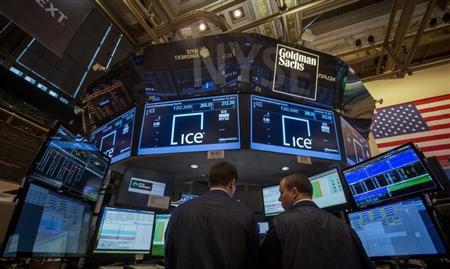
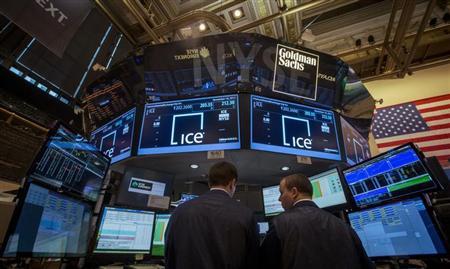
Goldman Sachs Chairman and CEO David Solomon has stressed the importance of human accountability in artificial intelligence (AI), warning that financial institutions cannot allow increasingly autonomous systems to operate without clear oversight and controls.

David Solomon

Speaking on the Goldman Sachs Exchanges podcast, Solomon said the debate over AI has become too focused on the choice between innovation and regulation, when the two should go hand in hand.

“I just don’t think it’s a binary choice. I think it’s a much more nuanced discussion. I think we absolutely can spur great innovation with this technology, but we have to have rules of the road,” he said.

Solomon identified three areas of responsibility: governments setting regulatory frameworks, technology companies ensuring their models operate safely, and businesses remaining accountable for how the technology is used. He suggested the last of these has received insufficient attention.

Goldman Sachs has incorporated AI-related models into its trading platforms for nearly two decades, with human oversight remaining part of its approach. “Goldman Sachs has been using AI-type models for trading platforms for almost 20 years, but there’s human accountability attached to every one of those platforms,” Solomon said.

Solomon dismissed the idea that a bank could blame an autonomous trading system for an unexpected outcome. “I could never imagine someone at Goldman Sachs saying to me, ‘The trading platform went off and did something awful on its own. We couldn’t stop it.'”

“We wouldn’t deploy it if we didn’t feel that we had the control to manage it appropriately, and that there was a human being that was ultimately accountable for anything that goes wrong,” he added.

Solomon believes the financial industry’s experience with risk management offers lessons for companies introducing AI into their operations. Banks have spent decades developing systems for monitoring, testing and auditing complex activities, with those controls receiving greater scrutiny following the global financial crisis.

“I do think, though, there’s a lot that can be learned from the experience that large financial institutions have had, particularly around risk management,” he said.

While established financial institutions already have experience managing sophisticated technology and operational risks, companies in other industries may need to build similar capabilities as AI becomes more widely deployed.

Beyond trading and risk management, Solomon expects AI to change how businesses operate and how employees spend their time. “Whenever you create new technology, new technology disrupts and automates, and this technology is going to disrupt and automate, and there’s just no question that we’re going to see that,” he said.

However, he pushed back against the assumption that greater automation will necessarily translate into widespread job losses. “When people talk about white-collar jobs, just because the technology makes them more productive, it doesn’t mean the job goes away,” Solomon said.

“It means that the smart people can do more productive things while getting the benefit of the technology in their workflows,” he added.

He pointed to changes in investment banking over the past four decades, noting that junior analysts now perform very different tasks from those he handled early in his career. “We don’t have less of them. They just do different things, and they’re much more productive than they were 40 years ago,” he said.

Still, Solomon acknowledged that the transition may not be smooth. If automation eliminates certain tasks or roles faster than new opportunities emerge, workers could face short-term disruption, potentially requiring policy intervention.

His advice to employees was to learn how to use AI rather than resist its adoption.

Within Goldman Sachs, the bank’s AI strategy is focused primarily on automating processes and improving the experience it delivers to clients.

“We’re really focused, in the most simplistic way, we’re focused on automation of processes, and we’re focused on enhancing client experience,” Solomon said.

Achieving meaningful efficiency gains, however, will require more than simply introducing new tools into existing workflows. “I think the more complicated thing for all enterprises is how you redo operating processes and automate them in ways where you create real productivity gains and efficiency.”

For Goldman Sachs, productivity improvements could also create opportunities to redirect resources toward investment and growth, he said.

Solomon also addressed the scale of investment flowing into AI infrastructure and the uncertainty surrounding its eventual returns.

Goldman Sachs is involved in the broader investment cycle through its advisory, financing and asset management businesses, as companies seek capital and evaluate opportunities associated with the technology. But even as spending on data centers, computing infrastructure and related technology accelerates, Solomon cautioned against assuming that current investment projections will prove accurate.

“Whether or not the buildout is going to be as significant as some people are saying, whether we’re going to spend $5 trillion on the buildout or $10 trillion on the buildout or more, I don’t think anybody really knows,” he said.

Financing costs, competition for capital and advances in computing technology could all influence how much infrastructure is ultimately required and how investors assess the returns. “It will be a journey. It won’t be a straight line. There’ll be accelerations and pullbacks,” Solomon said.

The bank is also extending its AI initiatives beyond large corporations. Solomon discussed Goldman Sachs’ $500 million commitment to launch its Small Business AI Institute, which is intended to help smaller companies adopt the technology through training and greater access to capital.

Despite the uncertainty surrounding investment levels, employment and the pace of adoption, Solomon remains confident that AI will have a lasting impact on the economy. “But it’s going to take 10, 20, 30 years for us to really appreciate the impact of all this,” he said.
ICE Invests in TradeXYZ to Build Regulated Perpetual Market

0
ICE Invests in TradeXYZ to Build Regulated Perpetual Market

Intercontinental Exchange has invested in TradeXYZ, which develops onchain markets, to build a new regulated market and clearing structure on the Hyperliquid blockchain after funding OKX, a blockchain technology and trading company, in March this year.

On 29 October 2026 ICE said in a statement that it will become the exclusive operator of TradeXYZ regulated markets, alongside making a strategic investment in the company.

TradeXYZ offers eligible users outside the United States 24/7 access to perpetual futures referencing equities, equity indices, commodities, and currencies. Perpetual futures are contracts without an expiration date that track the spot rate of the underlying asset through a floating funding rate. In just over a year, TradeXYZ’s markets on Hyperliquid have surpassed $650bn in volume, according to the firm.

Jeff Sprecher, IntercontinentalExchange
Jeff Sprecher, ICE

Jeff Sprecher, chair and chief executive officer of ICE, described TradeXYZ on the third quarter results call on 29 October 2026 as the leading deployer of real-world asset perpetual markets on the Hyperliquid blockchain.

TradeXYZ said in a statement: “TradeXYZ was built on a vision of bringing the world’s most important markets onchain, available 24/7. ICE brings the regulatory, technological and market expertise to help us realize that ambition in America.”

Sprecher continued that Hyperliquid manages the underlying technology for TradeXYZ, much like Pillar for the New York Stock Exchange, while Trade XYZ designs the products that customers want to trade. NYSE Pillar is the integrated, low-latency trading technology platform developed by ICE for all New York Stock Exchange equities and options markets.

“Together with TradeXYZ, and subject to regulatory approvals, we intend to bring these markets into a U.S. regulated framework by combining TradeXYZ’s retail market expertise with ICE’s exchange, clearing, and regulatory capabilities,” said Sprecher.

Hyperliquid said on X: “In this structure:

+ Hyperliquid serves as the underlying technology infrastructure via HIP-3*

+ tradeXYZ designs and implements the markets

+ ICE operates the regulated market and clearing structure”

Jeff Yan, co-founder and chief executive of Hyperliquid, said on X: “From pits to computers to now onchain markets, America has always led the way in innovating markets to improve price discovery and capital formation. Today the next chapter begins with ICE, trade[XYZ], and Hyperliquid.”

“When I first spoke to Jeff Sprecher around a year ago, he asked what success looks like to me,” added Yan. “I thought for some time and joked that it would be seeing ICE building on Hyperliquid’s technology. I could never have predicted the progress that we’ve made as a community in a single year to make this come true. Excited to see what we can build together next.”

Once approved, verified customers are expected to access Hyperliquid-based markets through futures commission merchants (FCMs), who will perform know-your-customer and anti-money laundering screening.

Sprecher stressed that the retail-oriented, blockchain-based TradeXYZ business will operate separately from its institutional futures and clearing franchise, so commercial hedgers can continue to rely on ICE’s traditional futures markets, forward pricing curves, and established trading and clearing infrastructure.

“The retail perpetual futures opportunity will deploy blockchain technology and serve a customer base with unique trading and settlement demands,” Sprecher added.

He argued that perpetual futures facilitate short-term exposure, citing data that the average holding period for a perpetual oil futures contract in September was 12 hours, which is shorter than a traditional financial settlement cycle.

“We see these perpetual markets as additive to our futures markets, not a replacement for them,” said Sprecher.

TradeXYZ’s regulated perpetual contracts are expected to be offered through ICE’s joint venture with OKX, which has 120 million retail clients globally, subject to the joint venture’s own pending regulatory approvals as a U.S.-registered broker-dealer and FCM. Planned contracts span equities, indices, commodities, FX, and crypto, with access through participating brokers and platforms, according to TradeXYZ, subject to approval.

With OKX and TradeXYZ, Sprecher said ICE now has relationships with two pre-eminent blockchain ecosystems. Sprecher said: “We think these two are most capable of bringing a DeFi ecosystem into a regulated environment where you have know-your-customer and protection against money laundering.”

Sprecher argued that OKX’s centralized and decentralized finance (DeFi) blockchain platforms, and Hyperliquid with its HIP3 blockchain framework which allows builders like TradeXYZ to deploy markets, are complementary businesses.

“OKX provides distribution and access to ICE’s existing platforms using its KYC and AML compliant wallet technology,” Sprecher added. “Trade XYZ brings expertise in retail perpetual markets on the Hyperliquid blockchain, and ICE provides the regulated risk management oversight that ties them together.”

Shaunda Devens, analyst at Blockworks, said on X that the partnership is the strongest validation yet of Hyperliquid’s thesis as it it validates Hyperliquid’s infrastructure for traditional exchanges and unlocks significant distribution.

Devens said: “The world’s second-largest exchange operator has chosen to build on Hyperliquid rather than offer 24/7 perpetuals through traditional infrastructure, as CME attempted.”

“If approved, the partnership could unlock distribution across ICE’s broad network of FCMs, enabling them to offer these products directly to retail clients,” added Devens. “Given the massive volume difference between NYSE and TradeXYZ, where the latter is around 1/78th of NYSE volume, even adoption from a handful of FCMs would be enough to dramatically increase TradeXYZ perpetual volumes.”

Petro Dmytrilev, a DeFi) analyst, said:

Famed hedge fund manager Stan Druckenmiller, said:

In addition, in October this year ICE announced it had invested $2bn in prediction market Polymarket. Sprecher said ICE is bringing crowdsourced probability assessments into institutional workflows, turning prediction market data into a new source of signals that complement traditional pricing and reference data sources.

Sprecher highlighted that ICE is also working with stablecoin issuer Circle and tokenization platform Securitize. He said: “These are all entrepreneurs pushing the envelope on technology, and we want to be at the table with them and incorporate some of the good work that they are doing in our business where appropriate.”

Tokenized securities venue (TSV)

The ICE-OKX joint venture includes a new tokenized securities venue (TSV) which operates using OKX’s wallet and its X Layer blockchain.

TSVs are allowed to trade tokenized NMS stock, with certain limitations including market share thresholds, under an innovation exemption issued by the U.S., Securities and Exchange Commission in September this year. If NMS stock is tokenized by a third party unaffiliated with the issuer, the TSV must provide a written notice to the issuer allowing them to object and a number of issuers have not given permission.

“Some issuers have chosen not to participate initially, but we believe our engagement and transparency will help build the trust needed for tokenized markets to digitize within this newly regulated environment,” said Sprecher.

Traditional finance markets

Sprecher said ICE is also continuing to evolve its traditional markets. ICE has launched extended trading hours on its options markets, and 23×5 equities trading on NYSE is due to begin in December this year.

New products that help customers manage event-driven risks include ICE’s binary return derivatives, known as ByRDs, and binary options tied to key performance indicators or KPIs, both of which have received regulatory approvals.

ICE has also introduced economic indicator futures tied to both central bank rate decisions and U.S. natural gas storage reports, which Sprecher said gives customers exchange-traded, centrally cleared instruments to express views on specific market-moving economic events.

To support enhanced risk management and greater trading activity outside of traditional banking hours, ICE is partnering with its key global settlement banks to allow commercial bank deposits to be moved to meet margin calls during weekends and holidays.

Financials

Warren Gardiner, ICE

Warren Gardiner, chief financial officer of ICE, said on the call: “This was the best third quarter in our history, and the second best quarter we have ever reported, behind only the first quarter of this year.”

Operating income for the third quarter was $1.4bn, 20% higher than a year ago. Third quarter net revenues were $2.8n, a 15% year-on-year increase. This comprised exchange net revenues of $1.5bn, fixed income and data services revenues of $674m and mortgage technology revenues of $549m.

Exchanges’ net revenue increased 22% from a year ago and is nearly 40% above the level of three years ago, according to Gardiner. Transaction revenues rose 28% and he said every major asset class contributed to this increase.

Cash equities and equity options net revenue grew 25% to 132m, which was a third quarter record. Gardiner said: “Importantly, total open interest ended the quarter up 13% year-over-year, giving us a strong foundation as we enter the fourth quarter and look to 2027.”

Ben Jackson, president of ICE and chair of ICE Mortgage Technology, said on the call that North American financial gas markets delivered a record third quarter with volume up 15% year-on-year. Jackson added that artificial intelligence is also creating demand for compute and ICE sees an opportunity to bring transparent pricing and risk management tools to this new market, subject to regulatory approval.

ICE has partnered with Ornn to list financial futures contracts based on the Ornn Compute Price Index (OCPI), which tracks live-traded spot prices for GPU computing power, and with NATIVX to launch energy-normalized GPU compute futures contracts based on NATIVX’s COIL Index.

Ben Jackson, ICE

“Subject to regulatory review, they will give customers a single platform and clearing relationship to manage both the energy required to produce intelligence and the compute required to deliver it,” said Jackson.

Interest rate volume increased 49% in the third quarter, accelerating in September, with total rate volume up 95%. On 10 September 2026 ICE set records for futures open interests in both financials  and interest rates as central banks move on different paths globally.

Gardiner added that during the third quarter ICE completed the financing for the acquisition of fixed income trading platform MarketAxess, that it announced in July this year. The financing is fully in place as ICE issued $3.75bn of senior notes, has a $2bn term loan and has commercial paper capacity.

“Importantly, last week we received approval from the Department of Justice, and we now expect the transaction to close in the first quarter of 2027, ahead of the first half timeline we outlined in July,” added Gardiner.

Chris Edmonds, president, fixed income & data services, at ICE said on the call that the feedback on the acquisition has been “very positive.” Edmonds added: “Folks are looking to do more with fewer vendors and are focused on scale of distribution and content, including data and new products.”

MarketAxess shareholders have also voted to approve the acquisition.

Gardiner said: “As we look to the balance of the year and into 2027, we expect to continue returning capital to stockholders alongside our deleveraging plan following the close of MarketAxess, extending our track record of growth and value creation.”

For Capital Markets, the Real AI Challenge Has Only Just Begun

0

By Andre Nedelcoux, SVP, Head of FSI at Intellias

Andre Nedelcoux

Ask an asset manager whether their firm uses AI and the answer is almost always yes. Ask whether it lets AI act, and the picture changes.  

A survey by Mercer found 55% of asset managers have integrated AI into at least one investment process, and 91% plan to expand its use. Yet only 5% give AI autonomous or semi-autonomous authority over investment recommendations or trades. 

The capital markets industry was one of the first to embrace, and experiment with AI. As the technology matured, AI adoption progressed from individual productivity (level 1) and process augmentation (level 2), to agentic processes (level 3), and, ultimately, business reinvention through autonomous multi-agent collaboration (level 4). The higher you climb, the greater the potential value. 

The primary challenge we’re observing is that organisations’ data, controls and technology foundations rarely support complex level 3+ use cases. A lot of the disappointment often comes from this complete mismatch between expectation and reality. 

A semantic layer as context for agents 

Levels 1 and 2 tend to be bound in context, and deal with limited ambiguity, such as summarising documents or drafting DDQ responses from an approved library. While more complex use cases usually performed by humans rely on better, broader context and understanding nuances. In capital markets, this involves dealing with unstructured information (plain text documents, email conversations, Bloomberg chats) and alternative sources (satellite imagery, sentiment, job postings), as well as longer running multi-step tasks – think trade break investigation or corporate actions handling. 

This means agents can’t rely solely on specific guides – that requires better context, the right vocabulary and hints on what to look for in these unstructured sources. Organisations successful with level 3+ use cases are investing in a semantic layer that helps agents interpret complex data and understand context, for example, whether “exposure” means gross, net or delta-adjusted, depending on the desk. 

Pertinently, none of this will work if the underlying data is unreliable. Notably, Gartner predicts that through 2026, organisations will have abandoned 60% of AI projects not supported by AI-ready data. 

Shaping actions 

How an action is executed in capital markets matters as much as whether it’s allowed. In 2010, a mutual fund complex hedged a $4.1 billion equity position by selling E-mini futures through an algorithm told to target 9% of market volume, with no limit on price or time. A similar sale had once taken five hours; this one took 20 minutes, and the SEC and CFTC identified it as the trigger for the flash crash.  

Agentic workflows, where agents perform operations on behalf of humans, must know their limits and be constrained by pre-approved actions and tools – for example, querying trusted internal databases rather than searching the open web. Organisations are currently pumping investment into building libraries of approved tools that codify human operations for delegation to agents. 

Limiting the blast radius 

Even with approved tools and clearly defined actions, there’s still a security aspect which must be considered. Many investment firms have relied on coarse-grained permission frameworks for humans, usually based on the role in the organisation which would grant access to a specific set of systems. So an easy route here would be to mirror the exact same RBAC (Role Based Access Control) approach to agents. The challenge is that agents tend to be creative and look for shortcuts which can lead to costly errors. 

Even the smallest of mistakes can have catastrophic consequences. In 2012, Knight Capital lost over $460 million in just 45 minutes after it turned 212 customer orders into more than four million executions. The SEC’s response rested on the Market Access Rule, which requires pre-set controls on erroneous orders and capital thresholds. 

To mitigate this risk, organisations are now deploying policy engines specifically targeted at agents, with fine grained permissions that go beyond what’s done for humans, and a control layer with strict operating windows, for example access granted to agents will only last for the duration of the task they need to perform. 

Bringing it all together: owning your feedback loop 

Regulators are converging towards a common view. FINRA’s 2026 Oversight Report addresses AI agents for the first time, flagging autonomy without human validation and risks around agent access. In the UK, the FCA is relying on existing rules, including SM&CR, which keeps accountability with named individuals. 

To meet these requirements, trace and evaluation need to be present at all levels of the foundational blocks we’ve described (the semantic layer, the approved tools and the security layer). Continuously tracing whilst also evaluating how the system’s performing creates a feedback loop for ongoing improvement. As new workflows migrate over to agentic AI and existing ones are improved, the speed, accuracy and quality of outputs will continually improve. 

Significant focus has been given to frontier models and their capability, but the value organisations can derive from them comes from this feedback loop. It also allows you to compare various models within your own context and business. Agentic systems are not deterministic. That’s their value. They can deal with ambiguity and achieve better outcomes, but they need to be constrained to remain within the boundaries of what’s explainable, legal and correct. Owning the feedback loop – and the foundations that enable it – is becoming the moat.  

AI Is Already Shaping How Financial Indexes Are Built, IIA Report Finds

0

Several index providers are already using artificial intelligence (AI) to research, maintain and test financial indexes – and AI agents may make indexes easier for investors to find and compare, according to a new report from the Index Industry Association (IIA), an education and advocacy organization representing global independent index providers.

The research, “AIand Financial Indexes: Innovation, Governance, and Trust,” finds that the features that have long made indexes trustworthy, including published methodologies, rules-based construction and human accountability, also position the industry to adopt AI responsibly.

AI use is past the experimental stage, with several IIA members reporting that they have used machine learning, natural language processing, and generative tools in data and research operations for a decade or more. It explores how some index providers are applying AI across the index lifecycle; how AI agents may change the way investors, advisers and researchers discover, compare and interact with index information; and the governance considerations that grow in importance as AI’s role expands.

“Artificial intelligence is becoming an increasingly important tool across the financial industry, and index providers are finding ways to use these capabilities to make the processes behind indexes more efficient and scalable,” said Kirsten Wegner, IIA CEO. “But the adoption of AI does not change what makes an index trusted. Transparent methodologies, fit-for-purpose validation, robust governance and human accountability remain fundamental. The opportunity is to apply AI in ways that strengthen these principles while supporting continued innovation across the index industry.”

Key Takeaways:

  • AI Insights Are Actionable for Index Providers: Several members report using AI in data and research operations for a decade or more, supporting anomaly detection, reconciliation and back-testing. Flagged data points are typically reviewed before any action is taken.
  • Transparency Helps AI Agents Represent Indexes Accurately: IIA members administer over three million indexes. Because methodologies are published and indexes follow set rules, AI agents can help users with discoverability (finding indexes based on what they want to measure), comparability (explaining in plain language how similar indexes differ) and composability (analyzing how indexes may work together or be combined for different objectives).
  • Human Accountability Anchors Trust: An index remains a measure of a market, not an investment product or recommendation. Index methodology decisions remain under human oversight, supported by explainability, data governance, operational resilience and third-party risk oversight. 

This content is part of the IIA’s ongoing mission to educate and engage the broader public about the essential role of indexes across the global financial landscape. Index providers build tools for trust and transparency, and the paper considers how AI can support that work. To learn more about the evolving role of AI across the index industry and the governance considerations surrounding its use, download the full report, “AI and Financial Indexes: Innovation, Governance, and Trust,” from the IIA’s website.

Source: Index Industry Association

VOL REPORT: Tech Rout, Muted Vol: Bullish Positioning Unwinds

Link to Report: Macro Volatility Digest

WHAT STANDS OUT:

  • While equities sold off last week on disappointing Tech earnings, implied vols were fairly muted across asset classes. Equity vol ended the week unchanged, with the VIX® Index hovering around 19.5%. Even on Friday’s large sell-off, SPX® 1M fixed strike vols increased by just 0.6pt, while both put skew and put convexity fell as investors monetized existing hedges. The equity sell-off was almost entirely driven by Tech, with 9 of the 11 S&P sectors ending up on the week (led by Healthcare +3% vs. Comm Services -8.5%). The extreme sector rotation is another reason why index volatility has been so muted.
  • Positioning in TLT options has flipped notably in recent weeks, with skew falling from near a 1-year high to near a 1-year low on stronger demand for upside calls. The fear of higher rates has dissipated, with more investors now positioning for long-end yields to fall on the back of a more uncertain macro outlook. The correlation between stocks and bonds has also flipped. The 1M rolling correlation between the SPX Index and the 10Y Treasury yield has jumped from -70% to +40% over the past month as investor focus shifts from inflation to growth risk.
  • Positioning in single stock options has also shifted notably, with call demand dropping sharply and hedging demand increasing. The percent of stocks in the S&P top 100 trading with inverted call skew (a sign of extreme bullish sentiment) has fallen from a high of 44% in early October to just 10% now. Looking at retail flow on Cboe’s exchanges, retail put buying in the mega-cap Tech stocks hit a YTD high last week, accounting for 34% of all opening trades (vs. average of 24%).

Chart: Call Demand Has Dropped Sharply Over the Past Two Weeks

Source: Cboe

[Download Full Report Here]

[Subscribe Here]

Trading Technologies Expands Institutional Digital Asset Access Through Bitstamp by Robinhood

CHICAGO, Nov. 2, 2026 – Trading Technologies International, Inc. (TT), a global capital markets technology provider, and Bitstamp by Robinhood, one of the world’s longest-running crypto exchanges, today announced that institutional clients can now trade Bitstamp digital asset markets through the TT® platform.

Tomo Tokuyama, Trading Technologies
Tomo Tokuyama

Through this connection, institutional market participants can access Bitstamp by Robinhood’s crypto spot and derivatives markets alongside other asset classes, including futures, fixed income and foreign exchange (FX) within TT’s multi-asset environment. The integration delivers institutional-grade risk controls and unified post-trade workflows to firms expanding their digital asset operations, particularly across high-growth markets in the Asia-Pacific and North America regions subject to local availability.

TT also becomes the first major traditional-markets order/execution management system (O/EMS) to connect directly to Bitstamp by Robinhood, expanding Bitstamp’s connectivity beyond predominantly crypto-native trading platforms and into established multi-asset trading workflows.

Tomo Tokuyama, EVP and Managing Director, FX at TT, said: “Institutional trading desks want to access digital assets through TT with the execution tools, connectivity, workflows and risk controls they already use across other TradFi markets. Our integration with Bitstamp by Robinhood brings crypto-native spot and perpetual futures liquidity directly into the TT workflow alongside crypto derivatives, enabling clients to manage execution across asset classes from a single, familiar environment while maintaining the execution, risk management and operational efficiencies they rely on across their broader trading operations.”

Nicola White, VP of Institutional Crypto and GM of Bitstamp by Robinhood, said: “Connecting with Trading Technologies continues our rapid expansion of institutional distribution partners. As a leading multi-asset trading platform with deep roots in traditional markets, TT extends our venue to a global network of sophisticated institutional traders, proprietary desks and buy-side firms. Market participants, through Trading Technologies, can access Bitstamp by Robinhood’s deep liquidity and institutional execution services within their primary daily workflow seamlessly.”

The two companies also plan to collaborate on joint educational initiatives and industry events to support continued institutional adoption across digital asset markets.

Source: Trading Technologies International

ON THE MOVE: Ian Cannacott Joins Berenberg; Millennium Hires Domenick Fumai

Ian Cannacott

Ian Cannacott has joined Berenberg as part of the Electronic Trading and Distribution team, according to a LinkedIn post. Cannacott joins from Peel Hunt, where he served as Head of Electronic Execution from September 2025 to October 2026. Prior to Peel Hunt, he spent more than nine years at Redburn Atlantic, most recently serving as Head of Electronic Execution from February 2023 to June 2025. He initially joined Redburn in January 2016 as an Associate Partner and Electronic Sales Trader, holding the position for more than seven years before moving into the electronic execution leadership role. Announcing his appointment, Cannacott described Berenberg as an “exciting environment in which to apply my background and expertise,” citing the firm’s combination of market experience, technical innovation and broad market reach.

Domenick P. Fumai has joined Millennium as a Trader in New York, according to a LinkedIn post. Fumai joins the hedge fund from North Rock Capital Management, where he spent three years as a Senior Trader, overseeing execution across US cash equities, index futures, custom baskets and options. Prior to North Rock, he spent more than four years at Tourmaline Partners, serving as Director, Equity Trader from July 2019 to October 2023. Earlier, Fumai worked at Columbia Threadneedle Investments as a Junior Equity Trader from November 2015 to July 2019. He began his career at OppenheimerFunds, where he worked as a Product Reporting Associate in 2015.

Nasdaq has announced the appointment of Börje Ekholm to its Board of Directors. Ekholm is the former President and CEO of Ericsson, the former President and CEO of Investor AB, and a previous Chair of the Nasdaq Board of Directors. Ekholm’s appointment is effective as of November 1, 2026, and he will serve as a member of the Audit & Risk Committee. Separately, Nasdaq today announced that Holden Spaht has notified Nasdaq of his decision to resign from the Board, effective December 31, 2026. Most recently, Ekholm was the President and CEO of Ericsson.

Saikat Bhattacharjee

Rothera, the CFTC-regulated event contract market, has announced seven executive hires and promotions: Saikat Bhattacharjee, Chief Risk Officer, most recently served as Principal in Model Risk Management at the Options Clearing Corporation (OCC). Kevin Dan, Chief Compliance and Regulatory Officer, most recently led the regulatory function at both Crypto.com Derivatives North America and Nadex. Pat DeFrancesco, Chief Technology Officer, previously served as CTO for Systematic Trading at Brevan Howard, CTO at Genesis Trading, and head of credit derivatives technology strategy at Intercontinental Exchange. Ryan Mendel, Chief Information Security Officer and Chief Information Officer, was formerly CIO of LedgerX and brings more than 20 years of experience leading IT and cybersecurity functions. Hugo Nistal Gonzalez, Vice President of Product Management, previously held senior product roles at Bitvavo and Cboe Digital (formerly ErisX), helping develop exchange and clearing technology from inception to production. Jena Pollock, Associate General Counsel, joined Rothera from Underdog Sports, and Eric Schmid, Vice President and Head of Operations, previously spent over 12 years at IEX, most recently as Senior Product Manager for the IEX Options Exchange, following leadership roles in market operations.

William Blair Private Wealth Management has announced the opening of an office in Dallas with the addition of a four-person wealth advisory team led by Ryan Berube and Allen Abney, managing directors and wealth advisors. According to a press release, Berube, a CFP professional with more than three decades of experience, previously led wealth management teams at UBS, Credit Suisse, U.S. Trust, and J.P. Morgan. Abney has spent nearly two decades in financial services, previously at UBS and Credit Suisse. 

Talos, a provider of institutional technology and data for digital asset trading and portfolio management, has hired Kelly Ye as Head of Research, according to a press release. Ye brings nearly two decades of experience across traditional finance and digital assets, including 14 years in traditional finance spanning research, portfolio management and product development. She held investment leadership roles in digital assets at Avenir Group and Decentral Park Capital, and research and product leadership roles at Fidelity Digital Asset Management and CoinDesk Indices. Most recently, she was building Coinbridge, a company focused on bridging the capital gap for tokenized real-world assets.

ACA Group, a governance, risk, and compliance solutions provider in financial services, has appointed Scott Collins as Chief Revenue Officer, according to a press release. Before joining ACA, he served as Senior Vice President and General Manager of Equifax’s Financial Services vertical and Chief Commercial Officer at Billtrust and HireRight. 

If you have a new job or promotion to report, let me know at alyudvig@marketsmedia.com 

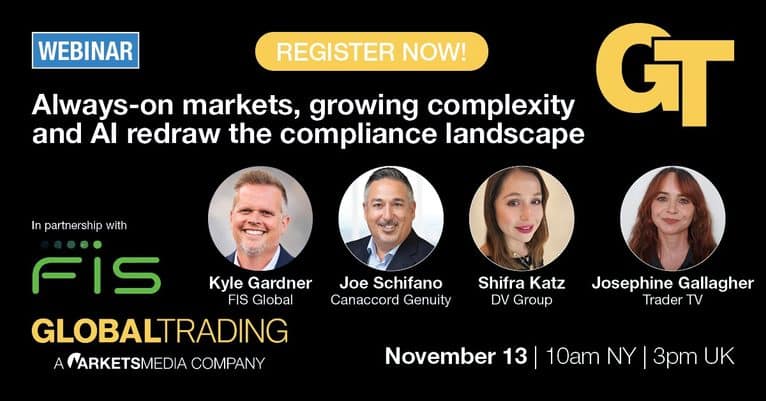
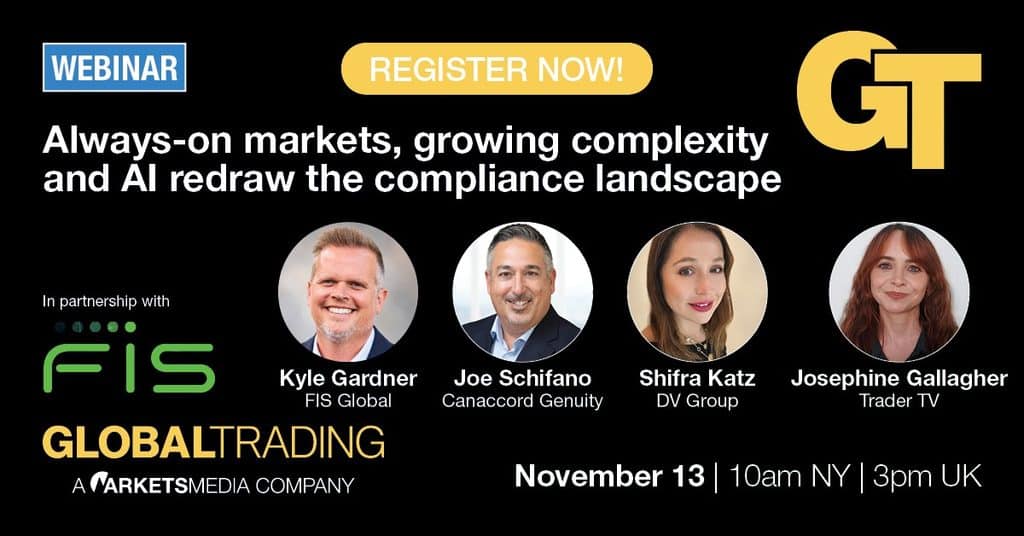
FREE WEBINAR: Always-On Markets, AI and the New Compliance Frontier

0

Free webinar | 13 November 2026, 3:00pm London / 10am EST

Trading is heading towards 23/5 markets, venues are growing more fragmented, and desks are adopting AI at pace. For compliance teams, the old model of periodic checks is no longer enough. In this free webinar, hosted in partnership with FIS Global, a panel of senior practitioners will look at how firms can future-proof their technology stacks while keeping up with evolving global regulation.

The discussion is split into three parts:

  • Compliance in the age of 23/5 trading: what it takes to move from periodic checks to real-time surveillance, monitoring and risk management.
  • Surveillance amid growing market complexity: how firms are building regulatory compliance, market surveillance and operational risk controls into their tech designs from the outset.
  • AI and automation: how to harness AI-driven compliance tools while managing new risks around transparency, explainability, governance and regulatory oversight.

Meet the panel:

Why attend?

If you work in compliance, surveillance, risk or trading technology, this session offers practical insight from those dealing with these challenges first-hand. You will hear how leading firms are preparing for round-the-clock markets, managing fragmentation, and deploying AI responsibly under close regulatory scrutiny

Register for free now to secure your place.

©Markets Media Europe 2026

SteelEye and FundApps to Launch as RegSensus

0

FundApps and SteelEye are launching RegSensus, a new, combined firm that is building a unified platform for regulatory intelligence. RegSensus will leverage FundApps’ 16 years of regulatory monitoring expertise with SteelEye’s 9 years in trade and communications surveillance.

The launch comes as round-the-clock trading keeps surveillance teams always on, and compliance functions face mounting regulatory change, such as the FCA’s upcoming validation rules for the transaction reporting regime this month and changes to US private fund reporting requirements (Form PF) coming into force in July 2027.

RegSensus takes its name from the firm’s mission to provide a Regulatory Consensus as the market faces global regulations that shift and diverge at speed. The platform is built on a Trusted Regulatory Standard, developed by FundApps for regulatory monitoring and now extending across trade and communications surveillance following the merger with SteelEye. Shaped by regulatory experts and continuously validated by a global client community, this standard gives compliance teams a trusted framework that holds up under regulatory scrutiny.

By combatting fragmented compliance systems and unifying data, the business will also focus on helping firms use AI to overcome blind spots, make more strategic decisions and automate routine compliance functions. In a recent analysis, RegSensus clients using its Result Investigation tool, in which AI takes on the manual checking of compliance alerts, saw a 25 per cent reduction in disclosure resolution time.

The merger between FundApps and SteelEye was completed in September 2026, supported by FTV Capital. FTV Capital invested in FundApps in July 2025 and provided additional capital for the merger with SteelEye when it was announced in November 2025.

Frederic Ceyte, CEO of RegSensus, said:

“Investment firms rarely win a mandate on compliance, but plenty lose one on it. They need to be competing on performance and service, not on how they each interpret the same regulations. RegSensus brings much needed standardisation so that the financial industry can stop sinking time into risky, isolated interpretations of global regulations. With those standards in place, and with previously fragmented compliance data coming together, agentic AI can take on more of the manual work and surface insights faster. That’s regulatory intelligence. And while AI will transform compliance workflows, the final call stays with the experts.”

Richard Earnshaw, partner at FTV Capital, said:

“AI will reshape compliance, but only on rules and data firms can trust. That’s what RegSensus is built on. Its standard is already proven in regulatory monitoring and now extending into surveillance. We’ll keep backing the team’s investment in agentic AI.”

Source: RegSensus

DTCC Tokenization Service Goes Live

The Depository Trust Company (DTC), a subsidiary of The Depository Trust & Clearing Corporation (DTCC), the premier post-trade market infrastructure for the global financial services industry, has launched the DTCC Tokenization Service (DTS). The service brings tokenized securities into regulated financial markets through trusted, resilient and scalable market infrastructure, enabling investors to move assets more efficiently, access new liquidity pools and mobilize collateral within minutes.

DTS enables the minting of tokenized representations of real-world assets held at DTC. By leveraging the service, eligible users can take advantage of DTC-tokenized securities entitlements that can be converted between traditional and tokenized forms and delivered to users’ digital wallets of choice. Tokenized securities, or digital twins, retain the ownership rights, investor protections and economic entitlements of their traditional counterparts. Today, DTC has more than $114 trillion in assets under custody.

“Today marks the culmination of years of work to bring tokenized securities into a regulated framework supported by trusted market infrastructure,” said Frank La Salla, President and CEO of DTCC. “By extending DTC’s resiliency, governance and operational standards into digital markets, we are establishing the foundation for responsible institutional adoption at scale.”

To date, 20 DTC Participants (clients) have signed agreements to access DTS including Alpaca, Apex Clearing Corporation, Barclays, Bank of America, BNP Paribas, Brown Brothers Harriman, Citadel Securities, Citi, Clear Street, DriveWealth, Edward Jones, Fidelity Investments, Interchange Clearing, J.P. Morgan, Marex, Mirae Asset Securities (USA) Inc., Morgan Stanley, State Street, UBS and Velocity Capital LLC. Future users will be onboarded on a rolling basis.

Created by the Markets, for the Markets

Consistent with DTC’s role as a critical market infrastructure provider, DTS was created in close collaboration with the industry it is designed to serve. Developed with input from more than 150 firms in the DTC Digital Assets Solutions Industry Working Group, DTS combines institutional-grade controls, established governance and operational safeguards to support adoption and convertibility across traditional and digital markets.

“The breadth of engagement across traditional finance and digital asset markets demonstrates that the industry is ready to move beyond experimentation and toward practical adoption,” said Brian Steele, Managing Director, President of Clearing & Securities Services at DTCC. “Working with more than 150 firms in our Industry Working Group, we built a service designed to support institutional use of tokenized securities at scale within a trusted operational framework.”

Supporting a New Interoperable Financial Ecosystem

DTS employs a multi-network, interoperable model designed to give firms greater scope to transact across traditional and digital environments. This model allows market participants to convert and deploy their assets seamlessly across traditional and tokenized markets, promoting ongoing liquidity in traditional markets while expanding it via the tokenized service. The service is currently integrated with the Canton Network and DTCC’s private Besu network, with additional blockchain networks to be added in 2027.

Beyond the DTC Participants that will use DTS directly, DTCC convened a broad digital asset ecosystem encompassing market participants, wallet providers, applications and technology firms to support greater interoperability and connectivity as digital markets and tokenization use cases evolve. Collaborators and partners include BitGo Bank & Trust, N.A., Blockdaemon, Broadridge, DFNS, DRW, Fireblocks, HIFI, Kaleido, Matter Labs, Ondo, Prometheum Capital, Talos, Taurus, Temple Digital Group, Tradeweb, Transcend and Virtu.

“Today’s launch demonstrates what can be achieved through sustained industry collaboration, regulatory engagement and a disciplined approach to innovation,” said Nadine Chakar, Managing Director, Global Head of DTCC Digital Assets. “This is only the beginning of DTCC’s ultimate goal to build the Web3 ecosystem of the future that bridges established, trusted market infrastructure and digital ledger technology.” 

The delivery of the DTCC Tokenization Service is the culmination of regulatory engagement, extensive industry collaboration and real-world validation to create a practical path for the adoption of tokenized securities. In December 2025, DTC received a No-Action Letter from the U.S. Securities and Exchange Commission authorizing it to tokenize Russell 1000 constituents, exchange-traded funds tracking major indices, and U.S. Treasury securities. About seven months later, DTCC and more than 30 firms completed initial limited-production trades and multiple on-chain transactions.

Source: DTCC