


Sunday, April 19, 2026
More
    More

      big xyt, Trackinsight Partner to Elevate Analytics for Global ETF Markets

      0

      27 November 2024

      This collaboration between trusted industry leaders provides the highest quality data for ETFs

      London, 27 November, 2024 – big xyt, a leading AI-analytics company for global financial markets, is delighted to announce its partnership with Trackinsight, a globally recognised ETF data provider. This collaboration brings together the complementary strengths of both companies to provide market participants with unparalleled insights into ETF trading and investment across the globe.

      With $14 trillion in assets under management, the global ETF ecosystem is rapidly evolving, driven by increasing product complexity, regulatory changes, and growing demand for transparency. This partnership leverages big xyt’s expertise in secondary market analytics processing billions of records every day, and Trackinsight’s comprehensive coverage of ETF reference data, primary market flows, and portfolio data. Together, the firms provide an integrated, high-quality dataset to empower better decision-making for issuers, investors, exchanges, and other market participants.

      By combining their capabilities, big xyt and Trackinsight enables clients to:

      • Access a comprehensive view of liquidity across the ETF landscape, integrating primary and secondary market insights.
      • Improve trading efficiency and reduce costs by providing clarity on liquidity and product quality.
      • Enhance pre-trade and post-trade analytics with improved insights for evaluating trading costs, liquidity, and market efficiency.

      The collaboration will pave the way for additional services, such as liquidity analysis across global markets, and peer group analysis to help issuers benchmark their ETFs against competitors to make informed decisions on product development and market positioning.

      Robin Mess, CEO of big xyt, commented: “This partnership with Trackinsight represents a pivotal milestone in our mission to deliver unmatched data transparency and actionable insights to the ETF community. At big xyt, we pride ourselves on our leadership in market analytics, offering deep insights into liquidity and trading dynamics across global markets. By aligning our expertise with Trackinsight’s exceptional reference and primary market data, we are creating a comprehensive solution that empowers investors, issuers, and intermediaries to navigate the ETF ecosystem with confidence and precision.”

      Philippe Malaise, CEO of Trackinsight added: “Partnering with big xyt allows us to bring a new dimension to ETF data and analytics. Trackinsight’s focus on delivering accurate and comprehensive reference and primary market data, combined with big xyt’s expertise in secondary market analytics, creates a unique offering for the industry. This collaboration ensures that market participants can rely on a unified source for understanding ETF performance, liquidity, and trends, driving smarter decisions and greater efficiency in the market.”

      This collaboration reflects the companies’ shared vision of innovation and efficiency, setting a new standard for ETF data transparency and usability across global markets.

      < ENDS > 

      About big xyt
      big xyt’s independent analytics tools provide unrivalled data accuracy and enable users to transform data into decisions and to observations for their audience.   

      big xyt has created a global ecosystem for tick data analytics covering more than 120 trading venues across equities, ETFs, FX, and listed derivatives (futures and options), and are available in T+1 and real-time. Our clients include major global investment banks, asset managers, leading exchanges and trading venues, ETF issuers, and regulatory bodies.   

      big xyt’s unique private cloud-based technology normalises trade conditions of venues, allowing accurate and transparent aggregations of trading volumes, comprehensive analysis, and delivery of results in flexible and customisable formats. Our APIs support more in-depth quantitative research and feed-dependent systems such as algorithms and decision support tools, which are essential for data science and quant teams. 

      In November 2024, big xyt announced a €10 million investment led by European growth investment firm Finch Capital, its first round of external investment after 10 years of profitable bootstrapped growth. 

      Firms across the financial services industry choose big xyt as their data analytics partner due to our independence and ability to provide the best quality normalised data, our capability to deliver complex security and execution analytics in sophisticated and data-rich financial markets, as well as the in-depth domain experience of the big xyt team in setting up, running and maintaining data analytics environments for tick data in highly secure environments. 

      About Trackinsight 
      Since its founding in 2016, Trackinsight has been at the forefront of the ETF industry, delivering accessible, comprehensive, and reliable tools to support the evolving needs of investors. 

      Over the years, Trackinsight has expanded its operations across six countries, serving tens of thousands of professional investors while consistently innovating to provide cutting-edge solutions that address the evolving demands of the ETF market. 

      In 2024, Kepler Cheuvreux, a leading independent European financial services firm, acquired a majority stake in Trackinsight, becoming its principal shareholder. 

      This strategic partnership reinforces Trackinsight’s position as a premier provider of ETF selection and analysis tools and strengthens Kepler Cheuvreux’s commitment to becoming a leading player in the ETF space. 

      Together, they are focused on delivering advanced services that empower professional investors, advisors, and institutions, enabling the development of more comprehensive and innovative technological solutions to drive ETF investing to new heights.

      Outsourced CIO Industry Poised for Consolidation

      High levels of acquisitions are expected in the outsourced chief investment officer (OCIO) industry according to research provider Cerulli.

      A report from Cerulli, U.S. Outsourced Chief Investment Officer Function 2024, said the concentration of assets among the largest providers is expected to increase as industry-wide and idiosyncratic factors drive further consolidation. US assets managed by OCIO providers reached $2.9 trillion at the end of 2023 and Cerulli projected they will reach $4.2 trillion by the end of 2028, reflecting an average annual growth rate of 7.9%.

      For example, in September this year the Shell Pension Fund Foundation (SSPF), which had €27bn in assets at the end of last year and more than 30,000 participants, said in a statement it has decided to appoint BlackRock as its fiduciary manager for asset management.

      “SSPF’s assets will be managed by an experienced BlackRock team, leveraging the scale and global expertise of the world’s largest asset management company,” said the statement. “Moreover, BlackRock adds relevant experience with the design of the portfolio for the new pension scheme with several other clients.”

       Marc Nachmann, Goldman Sachs

      In May this year Goldman Sachs Asset Management said in a statement it had been appointed by the UPS pension plan fiduciaries to provide investment management services for UPS’s US and Canadian defined benefit pension plan assets. UPS’s North American pension plans had a combined $43.4 bn in assets as of March 31, 2024.

      Marc Nachmann, global head of asset & wealth management at Goldman Sachs, said in a statement: “Outsourced CIO solutions can deliver investment excellence, economies of scale and enhanced risk management while allowing corporate and pension plans of all sizes to focus on their core business.”

      Large-scale OCIO providers, above the 90th percentile in assets under management, account for 61% of global OCIO assets, up from 49% in 2017 according to Cerulli.

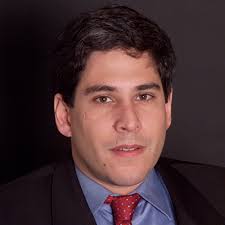
      Chris Swansey, associate director at Cerulli, said in a statement that an OCIO provider needs sophisticated investment capabilities, expertise working with large client portfolios, and a well-established investment team in order to gain scale among institutional investors. “Acquiring a well-established institutional OCIO provider may help RIAs expand into the channel and gain access to better alternative asset capabilities for their private wealth clients,” he added.

       Chris Swansey, Cerulli Associates

      In addition, the rising costs of technology, compensation, and regulatory/compliance requirements have put pressure on many OCIO providers. As a result smaller providers have also shown an interest in selling all or a portion of their businesses.

      “Acquisitions from outside entities such as RIAs and private equity firms could lend resources to these providers that enable them to build new market advantages,” said Swansey. “As large providers gain scale and smaller providers entrench themselves within niche markets, middle-market providers will need to differentiate their value.”

      Endowments and foundations

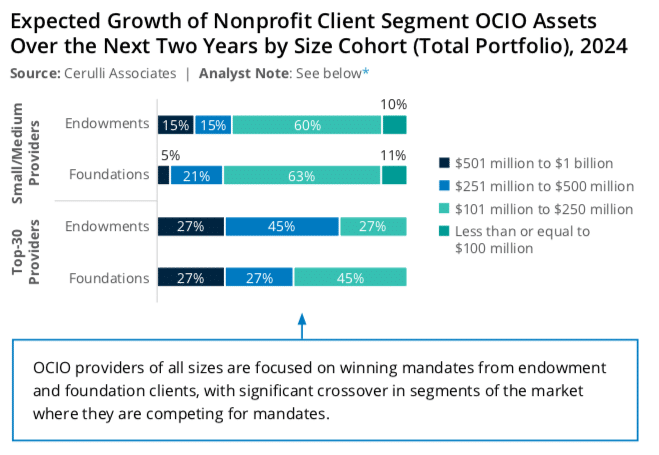
      Cerulli continued that endowment and foundation clients are one of the only client channels where both large and small OCIO providers can compete for assets.

      The majority, 60%, of endowments with between $100m and $250m in AUM already use an OCIO provider and there has been an increase in the number of large institutions with more than $1bn in assets adopting the OCIO model.

       Source: Cerulli

      Endowment assets managed by OCIO providers are expected to grow 11.3% annually over the next five years, according to Cerulli.

      Hedge Fund Industry Poised to Gain Significant Influence in the Trump Administration

      By Don Steinbrugge, Founder and CEO, Agecroft Partners

      The hedge fund industry is set to play a more prominent role in the Trump administration compared to previous administrations. While various articles have highlighted individual hedge fund figures who may have influence, few have examined the broader implications of this trend for the industry as a whole.

      The most notable development is the selection of Scott Bessent, a former partner at Soros Fund Management, as Treasury Secretary. As one of the most powerful cabinet positions, the Treasury Secretary wields substantial influence over financial policy, including areas that directly impact the hedge fund industry. Bessent’s appointment marks a significant win for hedge fund representation at the highest levels of government. Notably, he edged out other high-profile contenders, including John Paulson, founder of Paulson & Co., who withdrew from consideration but remains a respected advisor to Trump.

      Additionally, several major figures from the alternative investment space were significant donors to the Republican Party, including four of the eight largest, which are listed below:

                  •           Ken Griffin, CEO of Citadel ($101 million)

                  •           Jeffrey Yass, Co-Founder of Susquehanna International Group ($96 million)

                  •           Paul Singer, Founder of Elliott Management Corporation ($59 million)

                  •           Stephen Schwarzman, CEO of Blackstone Group ($39 million)

      These contributions not only reflect financial support but also position these leaders for direct access to the administration, further amplifying the industry’s influence.

      Beyond the cabinet and donor base, hedge fund leaders are making their mark in elected office and public discourse. David McCormick, former CEO of Bridgewater Associates, recently won a U.S. Senate seat in Pennsylvania, bringing his financial expertise to Capitol Hill. Meanwhile, Bill Ackman, founder and CEO of Pershing Square and a number of other high profile hedge fund managers, have become increasingly vocal on political matters, potentially signaling a shift toward more active engagement in shaping policy.

      Taken together, these developments point to a hedge fund industry that is poised to wield unprecedented influence during Trump’s tenure. Whether through key appointments, campaign contributions, or elected representation, the industry is positioning itself as a powerful player in shaping the administration’s policies.

      Promoting Carbon Removal Markets and Technology at COP29 – A Step Towards Achieving Net-Zero

      TECH TUESDAY is a weekly content series covering all aspects of capital markets technology. TECH TUESDAY is produced in collaboration with Nasdaq.

      Referred to as ‘the finance COP’ to highlight the critical nature of negotiations to advance various financial tools and mechanisms designed to aid in climate change mitigation efforts, Nasdaq was proud to be present for a fourth consecutive year at the UN Climate Change Conference COP29 which was held from November 11th to 22nd  in Baku, Azerbaijan.

      Tomas Thyblad

      Despite efforts to cut carbon dioxide (CO₂) emissions via renewable energy and efficiency, residual emissions persist. With excessive amounts of CO₂ accumulating in the atmosphere, achieving the Paris Agreement’s goals rests heavily on increasing the pace of reductions while also investing in durable Carbon Dioxide Removals (CDRs) to manage the residual emissions that are proving impossible to reduce. While permanent carbon dioxide removal is essential to neutralize emissions, it remains scarce and is primarily supported by voluntary corporate initiatives.

      Achieving net-zero emissions necessitates a multifaceted approach that includes reduction activities combined with the development of a mature carbon removal market. The carbon removal market needs to expand to gigaton capacity, requiring swift action and cooperation between public and private sectors.

      Clear guidelines for using carbon credits in corporate net-zero strategies are necessary to ensure high-quality carbon removal projects are effectively utilized. Consensus on handling durable CDRs and clear definitions for compensation, contribution, and neutralization claims utilizing carbon credits are essential for effective implementation and to ensure that private capital is mobilized.

      An important example is the utilization of durable CDRs for corporate claims in the era of Article 6 of the Paris Agreement. It is of utmost importance to clarify that durable CDRs would not require a so-called Corresponding Adjustment to be eligible for neutralization claims. A Corresponding Adjustment is a technical term in the Paris Agreement and means an adjustment to ensure that an emission reduction or removal is only counted once—either by the country where the reduction or removal takes place or by the country purchasing the reduction or removal to fulfill its Nationally Determined Contributions (NDCs). Requiring Corresponding Adjustments for durable CDRs would result in inconsistency where residual emissions would need to be neutralized twice to allow for a net-zero claim. This would also significantly raise costs and hinder scaling. Clarity on this issue would be highly beneficial to minimize uncertainty for buyers of carbon removals. And since the growth of the CDR market is highly dependent on long-term offtake agreements, such uncertainty creates unnecessary barriers for the scaling of the CDR market.

      Beyond clear policies and industry guidelines, scaling the carbon removal market will also require the creation of efficient pricing mechanisms, verified and trusted carbon standards, and transparent and interconnected marketplaces and registries. Competition fosters innovation and a well-organized carbon market can use financial market insights to improve carbon removal efficiency.

      This is where Nasdaq’s expertise in managing effective capital market infrastructures comes in. Nasdaq’s new registry technology, as described in Tech Tuesday’s recent article, brings registry solutions in line with modern capital markets standards by meeting resiliency, security, performance and interoperability expectation. Robust technological infrastructure will be essential also for managing the complexities of Internationally Transferred Mitigation Outcomes (ITMOs) transactions established under Article 6 of the Paris Agreement and facilitating successful cross-border transfers. Efficient and transparent asset creation, and issuance and transfer of sovereign carbon credits with full auditability ensures accurate ownership and facilitation of transfer from issuing countries to acquiring countries and corporates.

      To further advance the carbon markets, it is crucial to create more standardized carbon spot and futures contracts, as well as to develop a vibrant secondary market for better price discovery and demand signaling. The European Union’s Emissions Trading System has already set a global standard for carbon pricing. To expand these initiatives and integrate high-integrity durable carbon removals into emission trading systems in a controlled way would create an important foundation for the development of a more liquid market. This would also drive demand for additional carbon removal projects, encourage climate-positive corporate behavior, and ultimately support the objectives set forth in the Paris Agreement.

      The availability and allocation of capital is a critical enabler, underpinning all other innovations, solutions, and initiatives that will accelerate progress – from investments in new and emerging technologies, to funding of large-scale, capital-intensive energy and carbon removal projects, to investments that help decarbonize traditional industries and infrastructures. Capital markets will play a critical role at the epicenter of capital formation and allocation. Experience and solutions from the financial market should be leveraged on when developing the structure of carbon markets. Simultaneously, building a robust and transparent carbon removal market is crucial to encouraging corporate involvement in climate solutions and achieving significant climate results.

      Achieving net-zero emissions will require various approaches. Implementing a diverse array of tactics, including the policy measures outlined here, can drive the significant climate impact that is needed.

      Tomas Thyblad is VP, Carbon & ESG Solutions, European Markets at Nasdaq.

      Creating tomorrow’s markets today. Find out more about Nasdaq’s offerings to drive your business forward here.

      Capitolis Announces New Strategic Investments from Citi, Morgan Stanley, State Street and UBS

      0

      New investments will support continued rapid growth for Capitolis

      A representative from each bank will join the Board of Directors

      NEW YORK – Capitolis, the technology company helping to create safer and more vibrant capital markets, today announced new strategic investments from four leading global banks. The new round is led by Citi and includes State Street, both existing investors in Capitolis, as well as new investors Morgan Stanley, and UBS. Each bank will invest $5 million and will join other existing investors including Andreessen Horowitz (a16z), Index Ventures, Sequoia Capital, S Capital, Spark Capital, SVB Capital, Canapi Ventures, 9Yards Capital, Standard Chartered and J.P. Morgan.   

      The transaction and the funds it will generate will be used to fuel Capitolis’ growth across both its Capital Marketplace and Portfolio Optimization businesses. With an experienced and passionate team of global financial and technology executives, and some of the most innovative solutions in the industry, Capitolis has become a strategic partner to the financial industry. Its unique approach to working side-by-side with its customers to understand their core optimization issues and help solve for them is seen as a true differentiator.     

      The need for the products Capitolis offers is expanding and as a result the company is seeing strong business momentum in terms of revenue growth, network participation and new product releases. Capitolis has been named as one of CNBC’s World’s Top Fintech Companies, World’s Best FX Software Provider in the Euromoney Foreign Exchange Awards, and one of Fast Company’s World’s Most Innovative Companies.  

      “Capitolis has been partnering closely with the industry to make the financial markets safer and stronger within a well-regulated system, and we have seen tremendous growth because of this,” said Gil Mandelzis, CEO and Founder of Capitolis. “Our partnership with the world’s leading banks over the last few years has been terrific and we are excited to expand these relationships as well as add more of the world’s foremost financial institutions as both investors and board members.” 

      “State Street is excited to continue our long-standing partnership with Capitolis. Welcoming additional key bank investors will further accelerate Capitolis’ success in capital markets optimization products,” said Tobias Krause, senior managing director, Risk and Capital Optimization at State Street. 

      About Capitolis 

      We believe the financial markets can and should work for everyone. Capitolis is the technology company helping to create safer and more vibrant financial markets by unlocking capital constraints and enabling greater access to more diversified capital and investment opportunities. Rooted in advanced technology and deep financial expertise, Capitolis powers groundbreaking financial solutions that drive growth for global and regional banks – and institutional investors alike. Capitolis is backed by world class venture capital firms, including Canapi Ventures, 9Yards Capital, SVB Capital, Andreessen Horowitz (a16z), Index Ventures, Sequoia Capital, Spark Capital, and S Capital, as well as leading global banks such as Citi, J.P. Morgan, Morgan Stanley, Standard Chartered, State Street and UBS. 

      Founded in 2017, our team brings decades of experience in launching successful startups, technology, and financial services. Capitolis was named to Fast Company’s prestigious annual list of The World’s Most Innovative Companies for 2023, named World’s Best FX Software Provider for the second consecutive year in the 2024 Euromoney Foreign Exchange Awards, and included on each of CNBC’s World’s Top Fintech Companies 2024 list and Deloitte’s 2024 Technology Fast 500 list for the second straight year. American Banker recognized Capitolis among the Best Places to Work in Fintech, and the company was named by Crain’s New York Business as one of New York’s Best Places to Work in 2024 for the third consecutive year. For more information, please visit our website at www.capitolis.com or follow us on LinkedIn

      Clear the Decks

      Lynn Strongin Dodds looks at the different reports assessing the challenges the new SEC clearing and repo mandates will have on industry participants.

      Sell-side firms that will provide clearing services under the Securities and Exchange Commission’s (SEC) treasury and repo clearing mandates are concerned about the economics and  implementation deadline, according to a new report – US Treasury Markets: Plotting the Sell-Side’s Path to Mandatory Clearing, from Acuiti  in partnership with ION.

      The SEC legislation, which aims to enhance transparency, stability, and resilience in the $27 tr Treasury market, is considered to be one of the most significant shifts in US capital markets for decades. Under the current timeline, cash Treasury clearing will go live by the end of next year, while the repo clearing is set to take effect on 30 June 2026.

       In a December 13, 2023, statement, the SEC Chair Gary Gensler said that “having a significant portion of the Treasury markets uncleared — 70% to 80% of the Treasury funding market and at least 80% of the cash markets — increases system-wide risk”. There are varied risk management and margin practices across different institutions, with trading counterparties exposed to each other’s creditworthiness.

      A separate report – US Treasury Central Clearing: Industry Considerations Report – from EY and SIFMA – concurs noting  the new legislative blueprint will drive several changes to the overall U.S. Treasury market structure and require the integration of market participants who will now be obliged to centrally clear transactions for the first time.

      The Acuiti report, which surveyed or interviewed senior executives at the major future commission merchants (FCMs) and banks, highlighted the key challenges. Top of the list was the significant uncertainty about the viability of current mandate deadlines, with 48% saying the repo deadline was unlikely or impossible while 31% felt the same for the cash cut off.

      Respondents also voiced concerns over the nuts and bolts of implementation with over three quarters calling for a staggered approach to repo clearing, either determined by thresholds, as when the Uncleared Margin Rule (UMR) was introduced, or by client type. Some market participants expect that either an extended deadline or phased-in approach will be introduced as the deadline nears.

      There also remains widespread doubt that current sell-side models and infrastructure can scale to meet incoming demand. This was especially the case regarding the done-with structure which forms part of the successful sponsored model and bundles clearing and execution services together, that is handled by the dealer that serves as sponsor.

      The general consensus was that making this an obligation would limit competition and increase cost as well as complexity. For clients that need multiple clearing relationships, Acuiti said there was a threat that gross margin requirements would balloon from the exposure to several repo counterparties and sponsors which in turn would be difficult to net down.

      By contrast, market participants were more positive with the done away models which are used by FCMs allowing clients to execute trades with one counterparty and then clear the transaction through a separate clearing relationship.  Many believe they are more scalable for the industry, and central counterparties (CCPs) are in the process of developing their own variations.

      Cost overall is a major worry for over 80% of respondents. It is not just about the compliance checklist but also the pressure the new rules will put on the benefits of the FICC sponsored model which until now has been the only clearing house to offer Treasury clearing. Many of the biggest clients typically pay no or minimal haircuts or margin when trading repo under sponsorship. This is because their exposures are netted down in the dealer clearing pools that they are a part of.

      As with any regulatory change, technology will be the linchpin.  FCMs are planning to increase automation and reduce overheads in what is likely to be a high-volume, low-margin business. It is still early days but almost two-thirds expect to work with third-party vendors for some or all of the required build.

      While there will be short term pain, the report notes looking ahead, there will be “an enormous opportunity for those who can create new efficiencies both for clients and themselves. Cross-margining, capital efficiencies and straight through processing (STP) all on offer to those firms that can best understand and adapt to the new paradigm.”

      *Related clearing and treasury articles.

      SIFMA Statement on Issuance of Revised No-Action Relief for SEC Rule 15c2-11

      Washington, DC, November 22, 2024 – SIFMA today issued the following statement from president and CEO Kenneth E. Bentsen, Jr. on the issuance of revised no-action relief for SEC Rule 15c2-11:

      “Extending the 15c2-11 no-action relief is the right outcome and we commend the SEC for taking this approach.  SIFMA has long held that rules need to be fit for purpose and designed thoughtfully.  In this case, an equity-markets focused rule was ill-suited for application to the very different fixed income markets, and if the current no action relief that has allowed fixed income markets to continue to function effectively were to expire, these markets would have seen material disruption and investors would have been harmed through a reduction in liquidity and price transparency.  If this rule is to be applied to fixed income markets, it needs to be revised through a public notice and comment process so that the Commission can design a rule that both protects investors and promotes, rather than impairs, the ability of fixed income markets to fund the consumer, business, and other credit creation that fuels our economy.”

      SIFMA is the leading trade association for broker-dealers, investment banks and asset managers operating in the U.S. and global capital markets. On behalf of our industry’s one million employees, we advocate on legislation, regulation and business policy affecting retail and institutional investors, equity and fixed income markets and related products and services. We serve as an industry coordinating body to promote fair and orderly markets, informed regulatory compliance, and efficient market operations and resiliency. We also provide a forum for industry policy and professional development.  SIFMA, with offices in New York and Washington, D.C., is the U.S. regional member of the Global Financial Markets Association (GFMA).

      ON THE MOVE: TD Securities Makes Leadership Changes; Stifel Adds Brad Edgar

      Michael Breheney

      Michael Breheney has recently joined TD Securities as the new Head of U.S. Equity Sales Trading. Breheney brings extensive experience from his time at Bank of America, where he served as Managing Director and Head of Sales and Trading. His deep knowledge of the equity trading landscape, combined with his proven track record at Bank of America, Morgan Stanley and Deutsche Bank, makes him a valuable addition to the team. In addition, Adam Lent, Managing Director, has been named Head of TD Securities newly formed Equity Client Risk Systematic Solutions (CRSS) team. Lent will report directly to Rhys Brooks and has been with TD Cowen for over seven years. In his new role, he will oversee block distributions and capital commitment on the desk. He will also work closely with ECM/Syndicate, using his insights to strengthen capabilities and deliver even more value to clients. In addition, as part of TD Securities growing U.S. Prime Brokerage strategy, they’ve introduced a new Markets Prime Services Leadership Team, comprised of Ron ChinMike McBrien and Matt Popkin.

      Brad Edgar

      Stifel Financial Corp. has hired Brad Edgar as Managing Director and Lead Healthcare Equity Trader. He is based in the firm’s New York office and reports directly to R.J. Grant, Head of Global Equity Trading at Stifel. Edgar joins Stifel from Seven Grand Managers, where he served as Partner, responsible for all risk execution and trading of the firm’s equity portfolio. He brings more than 20 years of healthcare equity trading experience to his new role, having held the position of Head of
      Healthcare Equity Trading at firms including BMO, Evercore, and UBS. He began his career in healthcare equity trading at Merrill Lynch.

      Melissa Gingrich

      STP Investment Services (STP), a global provider of technology-enabled, end-to-end investment servicing solutions, has added several senior leaders across operations, fund administration, compliance, and investment performance. Melissa Gingrich has been appointed Chief Financial Officer and Chief Operating Officer; David Goldstein has joined as Director of Fund Services; Ben Jones joins STP as Vice President of Business Development – Fund Administration; Lori Weston has been appointed Head of Compliance, leading STP’s new ComplianceAdvisor practice; Cynthia Kelly has joined as a Senior Compliance Consultant specializing in registered investment adviser compliance; Steve Leydet has joined STP as Vice President of Investment Performance.

      Kezar Markets, owner of Kezar Trading, LLC, the broker-dealer operator of the LeveL and Luminex Alternative Trading Systems, has announced that Chief Executive Officer, Whit Conary will retire from his role by year-end after 18 years as CEO. The organization’s Board of Directors also announced the appointment of Steve Miele, currently Kezar’s Chief Strategy Officer, as the new Chief Executive Officer of Kezar Markets, effective January, 2025. The appointment of Miele as CEO is a natural progression following his role overseeing strategy, sales, and product development at LeveL ATS and Kezar Markets for 17 years coupled with his trading and financial services background from organizations such as Fidelity Capital Markets and the Boston Stock Exchange.

      The Securities and Exchange Commission has announced that its 33rd Chair, Gary Gensler, will step down from the Commission effective at 12:00 pm on January 20, 2025. Chair Gensler began his tenure on April 17, 2021, in the immediate aftermath of the GameStop market events. He led the agency through a robust rulemaking agenda to enhance efficiency, resiliency, and integrity in the U.S. capital markets. He also oversaw high-impact enforcement cases to hold wrongdoers accountable and return billions to harmed investors.

      CDPQ, a global investor and one of Canada’s largest pension funds, has announced that Dame Sharon White is joining the group as Managing Director and Head of Europe. Her start date will be January 27, 2025. Until September 2024, Sharon was Chairman of the John Lewis Partnership – the largest employee- owned business in the UK – for a five-year term.

      The World Federation of Exchanges, the global industry group for exchanges and CCPs, has elected seven directors to its Board for a three year term: Gilson Finkelsztain, CEO, B3; Korkmaz Ergun, CEO, Borsa Istanbul; Carlson Tong, Chairman, Hong Kong Exchanges & Clearing (HKEX); Julie Becker, CEO, Luxembourg Stock Exchange; Ed Knight, Executive Vice Chairman, Nasdaq; Ashishkumar Chauhan, Managing Director & CEO, National Stock Exchange of India Ltd; and Khalid Al Hussan, CEO, Saudi Tadawul Group (STG).

      If you have a new job or promotion to report, let me know at alyudvig@marketsmedia.com

      The Transformative Potential of AI in FIX Connectivity

      0

      By Jeremy Hamerman, Lab49’s Director for Digital Assets and Blockchain

      FIX connectivity has been a cornerstone of the financial services industry since its inception in the early 1990s. Providing a standardized protocol for the exchange of information related to securities transactions, FIX has been integral to electronic trading, enabling real-time communication between brokers, exchanges and institutional investors. Although, despite its widespread use, FIX connectivity is often perceived as a widespread but outdated tool. It’s seen little innovation in recent years which is particularly problematic when you think about the technological advancements from the past decade.

      Jeremy Hamerman, Lab49

      Meanwhile, innovations in AI have been making waves across every sector. In particular, as financial institutions and vendors continue to invest heavily in the research, development and implementation of AI—enabled technology, excitement around its potential applications has only grown. The impact AI has had on the industry already is undeniable, from algorithmic trading and risk management to customer service and fraud detection. Now, there is increasing recognition that AI might have the potential to revitalize FIX Connectivity, transforming it into a forward-thinking solution fit for the demands of modern traders and institutions.

      The Current State of FIX connectivity

      While robust, the FIX protocol is not inherently designed to handle the complexities that can come with modern trading environments which demand greater speed, transparency and adaptability. As a result, communication between market participants in this digital age can be cumbersome and prone to inefficiencies.

      One of the main drawbacks of traditional FIX connectivity is its rigidity – operating on predefined message types and fields, these can be difficult to modify or expand without significant time and effort. As firms increasingly rely on fast data-driven insights, FIX’s architecture often struggles to keep pace. The vast amount of data generated by modern trading can overwhelm legacy FIX systems, resulting in bottlenecks and increased latency.

      Despite these challenges, there’s been little innovation in FIX connectivity to address them. As a result, the FIX protocol is not traditionally associated with innovation, growth and differentiation although, through the integration of AI this perception could be changed. By integrating AI into FIX connectivity, the protocol can be reimagined as a forward-thinking, adaptable solution, capable of meeting the modern demands of financial markets. It could help FIX break out of its rigid framework and open new avenues for automation, efficiency, and enhanced user experiences.

      The Role of AI in Enhancing FIX Connectivity

      In the fast-paced trading environments of today, actionable date is crucial to making informed decisions. While FIX does not naturally lend itself to this type of analysis without significant investment in time and resources. AI provides the potential to process and analyze vast amounts of data in real time. Integrating AI with FIX connectivity can make it easier for firms to garner meaningful and actionable insights from the large amount of data extracted through the protocol. By enabling more sophisticated data processing and analysis, AI can not only improve the quality of information available to traders but also streamline the entire trading process.

      At the same time, as trading platforms become more complex, there is a growing need for simplified, intuitive interfaces that allow traders to interact with data and execute trades seamlessly. In particular, when it comes to the tools and technology they use in the workplace every day, today’s traders have high expectations. Seeking simplicity, transparency and control – especially in how data is presented – it’s important that firms employ technology that can keep up with their traders’ modern requirements.

      One of the main pain points faced by operations teams revolves around understanding and analyzing failed trades.

      Trade failures can occur for a variety of reasons—mismatched trade details, incorrect counterparty information, or network issues. Typically, resolving these failures requires manual intervention, which is time-consuming and prone to human error.

      AI, however, can swiftly analyze the logs from FIX messages and pinpoint the root cause of the failure. By using machine learning algorithms trained on historical data, AI can provide detailed insights into why the trade failed, whether due to incorrect trade details or systemic issues in the connectivity process. It can also suggest corrective actions and preventative measures to avoid similar failures in the future. This adaptive approach not only speeds up the resolution process but also improves operational resilience.

      In addition to operational fixes, AI can help institutions understand key market dynamics—specifically, where trading volume is flowing from and who their most valuable counterparties are. By continuously analyzing trade data across various market participants, AI can highlight trends in counterparty behavior and trading patterns. This lets Sales Traders know who their most valuable counterparties are based on trade flow, which is invaluable for institutions aiming to optimize their execution strategies, identify potential risks, and strengthen relationships with key trading partners.

      Another key area for AI is improving the user experience (UX). Traditionally, interacting with FIX has been complex, requiring a deep understanding of messaging protocols and workflows. AI can simplify these interactions by intuitive dashboards, natural language processing, and other user-friendly interfaces, allowing traders and operators to focus more on strategy and decision-making rather than technical details. In this way traders can ask a chatbot simple question or ask it to perform complex data analysis all from a single chatbot.

      By automating routine tasks, streamlining workflows, and personalizing user experiences based on individual preferences and behavior, AI can help revolutionize FIX connectivity and achieve the required level of UX needed to stay competitive. By making FIX connectivity more user-friendly, AI can help reduce the cognitive load on traders and improve their overall productivity.

      The Future of FIX connectivity

      AI has the potential to revolutionize FIX connectivity, transforming it from a legacy system into a forward-thinking solution that meets the demands of modern traders and institutions. By focusing on addressing the current challenges associated with traditional FIX connectivity, AI can enhance data processing and simplify UX, ultimately leading to more efficient and effective trading.

      As the financial services industry continues to evolve, it is crucial for firms to prioritize AI-driven technology strategies. By doing so, they can unlock new opportunities for growth and differentiation, ensuring that FIX connectivity remains a vital component of the trading ecosystem in the digital age and future-ready trading infrastructure.

      SEC Charges Three Broker-Dealers with Filing Deficient Suspicious Activity Reports

      The Securities and Exchange Commission has announced that broker-dealers Webull Financial LLC, Lightspeed Financial Services Group LLC, and Paulson Investment Company, LLC have agreed to settle charges that they filed with law enforcement suspicious activity reports (SARs) that failed to include important, required information. The three broker-dealers agreed to pay $275,000 combined in civil penalties to settle the SEC’s charges.

      Federal law requires broker-dealers to file SARs to report transactions that the broker-dealer has reason to suspect involve, among other things, funds derived from illegal activity or activity that has no apparent lawful purpose. The SARs must contain “a clear, complete, and concise description of the activity, including what was unusual or irregular that caused suspicion.”

      According to the SEC orders, each of the three broker-dealers filed multiple deficient SARs over a four-year period beginning in 2018.

      Jason Burt

      “Suspicious activity reports play a vital role in keeping our markets safe, and the failure of broker-dealers to include necessary information to explain suspicious transactions deprives law enforcement and regulatory agencies of valuable and timely intelligence, undermining the very purpose of the SARs,” said Jason Burt, Director of the SEC’s Denver Regional Office. “Today’s cases reinforce the importance of complying with the applicable regulations and guidance surrounding the filing of SARs.”

      The SEC’s orders find that the broker-dealers violated Section 17(a) of the Exchange Act and Rule 17a-8 thereunder. Without admitting or denying the findings, the firms agreed to be censured, cease and desist from violating the charged provisions, and pay civil penalties listed below. Further, Webull Financial LLC and Paulson Investment Company, LLC agreed to undertake a review of their anti-money-laundering programs by compliance consultants. The resolutions reflect each of the firms’ cooperation after being contacted by Commission staff, as well as certain remedial measures taken by Lightspeed: 

      • Webull Financial LLC, of New York, N.Y., agreed to pay a $125,000 civil penalty.
      • Lightspeed Financial Services Group LLC, of Morristown, N.J., agreed to pay a $75,000 civil penalty.
      • Paulson Investment Company, LLC, of Lake Oswego, Ore., agreed to pay a $75,000 civil penalty.

      The SEC’s investigation was led by Kimberly Steckling, with assistance from Kenneth Stalzer and Jacqueline Moessner of the Denver Regional Office; Daniel Goldberg, Andrae Eccles, Damon Reed, David Cohen, Susan Schneider, and Naomi Sevilla of the Office of Market Intelligence’s (OMI) Bank Secrecy Act Review Group; and Giz Tariku of OMI’s DATA and Analytics Group. The investigation was supervised by Ian Karpel, Nicholas Heinke, and Jason Burt of the Denver Regional Office. The SEC appreciates the assistance of the Financial Industry Regulatory Authority (FINRA).