









The Texas Stock Exchange has secured approval from the U.S. Securities and Exchange Commission to operate as a national securities exchange, marking the first such approval in decades for a fully integrated platform offering listing, trading, clearing, settlement, and market data services.
Announced on September 30, 2025, the SEC’s decision formally recognizes TXSE as a peer to the New York Stock Exchange and Nasdaq, both of which the Texas-based exchange has openly positioned itself against in previous statements.
With $161 million in backing from major players such as BlackRock, Citadel Securities, and Charles Schwab, TXSE is entering the market with considerable resources and high expectations.
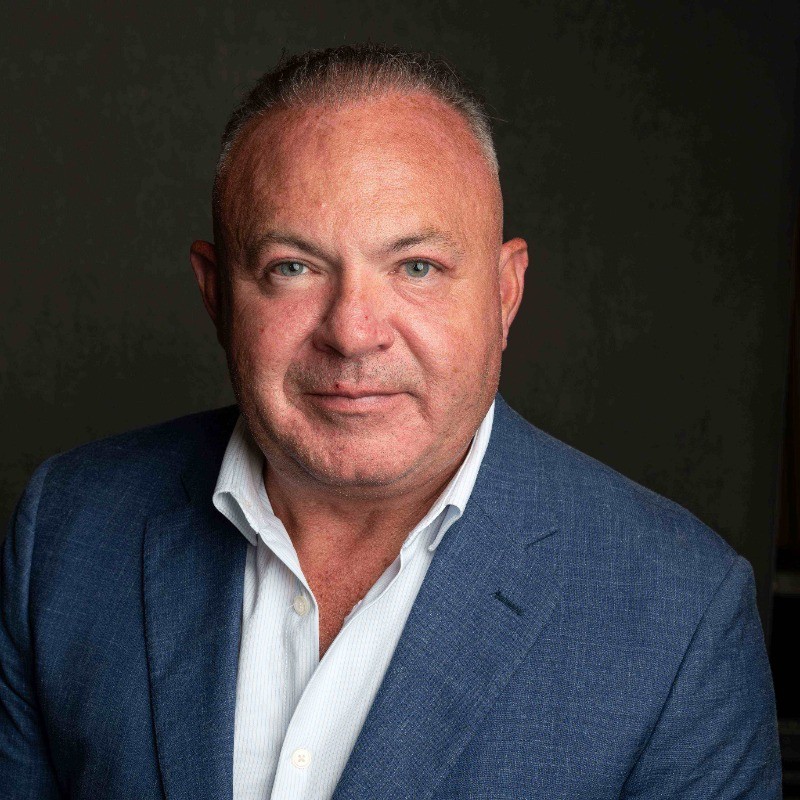
“This is the first serious challenge we’ve seen to the NYSE-Nasdaq duopoly in over two decades,” said Shawn Severson, CEO and Co-Founder of Water Tower Research.
“They’re not just entering with capital—they’re focused on the part of the business that drives exchange profitability: listings, not just trading,” he told Traders Magazine.
Severson noted that trading activity at launch will likely be modest. “We’re probably looking at 2 to 5 percent market share in TXSE-listed securities initially. That’s typical for new entrants. The real pressure point is on the listings side. They’re going after dual listings, private equity-backed IPOs, and mid-sized firms that have been priced out of the traditional exchanges.”
Attorney David Wolpa, a partner at Troutman Pepper Locke, emphasized that while TXSE’s approval was anticipated, it still marks a shift in the competitive landscape. “Most observers expected approval, but now that it’s official, it signals the beginning of potentially meaningful competition. Whether it becomes real, long-term competition is a separate question.”
Wolpa pointed out that TXSE’s decision to maintain a single, high-tier listing standard will limit its ability to compete for smaller-cap companies, which have traditionally been the focus of Nasdaq’s Capital Market and NYSE’s American exchange. “By opting not to include a lower tier, they’re excluding a big part of the market. That could be a constraint,” he said.
Still, the TXSE’s model is designed around a different kind of value proposition. According to Severson, “They’re going after quality. Under TXSE’s proposed rules, about 1,700 currently public companies wouldn’t qualify. They’re aiming to build a premium brand that attracts high-value private companies.”
One of the more notable features under consideration is the potential to share market data revenue with listed companies. “Today, exchanges keep all the market data revenue. TXSE is talking about sharing that with issuers—the companies whose securities generate the data in the first place. That’s a major shift in incentives,” said Severson. “It could be a reason for companies to choose TXSE even if liquidity takes time to build.”
Technology is another point of differentiation. “They’re using simplified technology with fewer order types,” he added. “That reduces complexity and levels the playing field a bit for participants who don’t benefit from high-frequency trading infrastructure.”
Wolpa cautioned that despite TXSE’s messaging about being more issuer-friendly, the exchange’s initial rulebook largely mirrors those of NYSE and Nasdaq. “The SEC’s approval order even said that since it had already approved these rules for other exchanges, it had no reason to object here. TXSE will need to do more than repackage familiar rules if it wants to truly stand out.”

The approval comes as both NYSE and Nasdaq have taken early steps to reinforce their presence in Texas. Earlier this year, both exchanges opened regional offices in the state—a move Severson described as “preemptive.”
“They know TXSE is serious. You don’t open new offices months before a competitor launches unless you think it poses a real threat,” he said.
While changes to trading fees across the industry are unlikely in the near term—given how competitive those fees already are—listing fees may be another story. “Annual listing fees today range from $56,000 to nearly $200,000,” Severson said. “TXSE is expected to come in at 30 to 50 percent lower. Even if TXSE only picks up a small share of the market, that alone could force NYSE and Nasdaq to reconsider their pricing.”
Wolpa agreed that competitive pressure is likely. “Fee changes usually follow competitive threats. If issuers have another viable option—and if that option proves reliable—then the incumbents may have to adjust.”
Still, TXSE faces the well-known liquidity dilemma faced by all new exchanges. “Issuers want liquidity. But liquidity providers follow volume. It’s a chicken-and-egg problem,” Severson said. “That’s why the first 90 days of trading will be critical. If they stumble out of the gate on technology or routing, it could undermine everything.”
What both experts agree on is that TXSE’s success or failure will have broader implications for the structure and regulation of U.S. markets. “TXSE is a live test case for whether competition can address the concentration we’ve seen in exchange services,” Severson said. “It could inform SEC policy on Regulation NMS, order type complexity, and especially market data pricing.”
He also pointed to differences in corporate governance policy. “TXSE doesn’t follow Nasdaq’s board diversity rules. And Texas law sets a 500-times-higher threshold for shareholder proposals. That’s a very different environment for public companies. It may appeal to firms looking for more control.”
Wolpa said that in the short term, the exchange will be judged on how many companies list and how quickly. “A handful of high-profile dual listings would send a message. But landing a major IPO—that’s the real milestone.”
He also stressed the importance of seeing how far TXSE’s influence reaches geographically. “If this becomes a regional exchange serving mostly Texas and the Southeast, that’s one thing. But if they start pulling listings from New York or Silicon Valley, that’s another.”
For now, both agree that the focus should be on a few key indicators: technology reliability, pricing strategy, early listings, and market participation. “I’d watch whether Fortune 500 names test the waters,” said Severson.
“Look for three to five significant IPOs in the $500 million to $2 billion range by the end of 2026. And keep an eye on market maker spreads. If they can get within 15 percent of the incumbents on spreads and 5 to 10 percent on routing, they’ll be in a good position.”
Even if the TXSE captures only a modest share of the market, its presence may be enough to influence behavior across the industry. “It doesn’t need to dominate,” said Severson. “If they bring in 40 dual listings, 10 solid IPOs, and offer meaningful price competition, they’ve done their job. They’ll have changed the market by existing.”
“For the first time in years, companies have a real alternative. That alone could change the conversation,” Wolpa concluded.
