






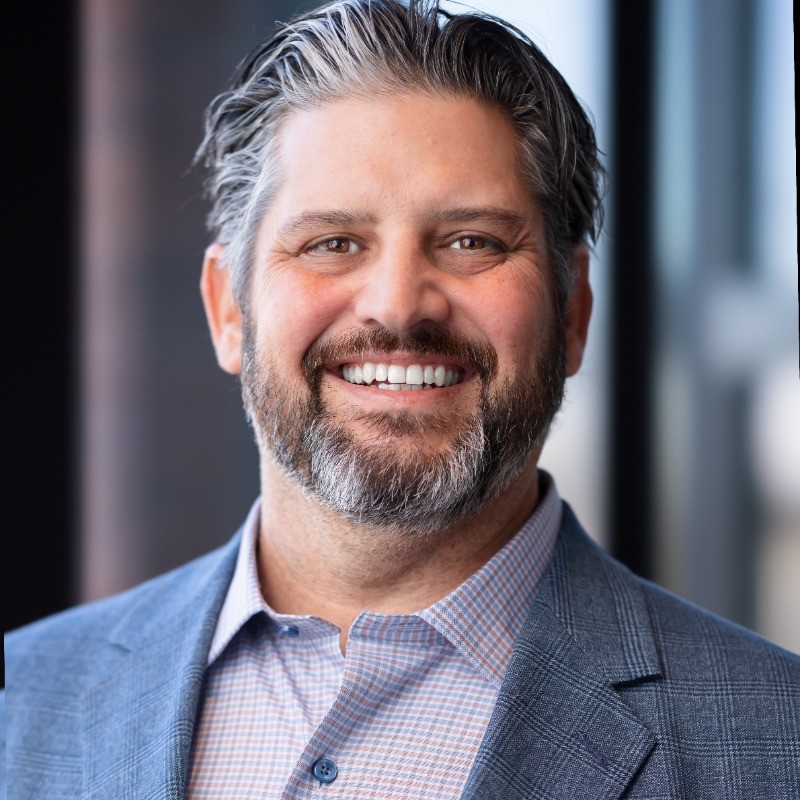
By Jeff Hooks, Senior Vice President at STP Investment Services.
For decades, the wealth and asset management industry has pursued a vision of operational unity: a “single platform” capable of connecting data, workflows, analytics, and controls across the front, middle, and back office. While the ambition was sound, the technology and market structure of 20 years ago simply weren’t ready.
Today, that same ambition has returned, but for entirely different reasons. After years of layering tools on top of aging infrastructure, many firms now find themselves constrained by the very complexity they hoped modernization would solve. Rising regulatory expectations, talent shortages, and intensifying cost pressure are forcing leaders to rethink not only what technology they use, but how their operations should function around it.
This moment is less about innovation for innovation’s sake and more about necessity. Investment managers need operating models built for accuracy, adaptability, and scalability, and they are realizing that platform choices and operating-model choices are now inseparable.
Fragmented Platforms Have Become an Operational Risk, Not a Technology Issue
Many firms spent the last decade modernizing: adding new reporting engines, adopting workflow tools, implementing portals, and replacing legacy accounting systems. Though the intention was simplification, the outcome for many has instead been a sprawling ecosystem of overlapping tools, disparate data sources, and inconsistent processes.
As McKinsey has observed, the financial-services industry faces a growing operational-risk burden as institutions depend on third-party providers and multiple systems that must interoperate under evolving business models. Legacy processes and disparate platforms no longer offer the resilience or coherence required for today’s pace of change.
Meanwhile, analysis by Deloitte warns that fragmented or siloed data systems continue to inhibit accurate reporting, regulatory compliance, and efficient decision-making, issues that emerge as firms navigate increasing regulatory and operational demands.
The consequences are now business-critical: teams reconcile data across misaligned systems; dual systems run in parallel for extended periods during migrations; manual oversight proliferates; and vendor governance becomes resource-intensive.
These are operational gaps, not technology failures – and they threaten accuracy, timeliness, and ultimately client trust. And they’re leading leaders to ask a new question: What if the operating model, not the technology stack, is what needs to change?
Why Firms Fear Switching Technology and Why They Can’t Avoid It Forever
Most investment managers recognize the need to consolidate technology. Yet many hesitate to make a change, not because they want to preserve the status quo, but because changing systems is a deeply intimidating operational exercise.
Data Migration Anxiety Is Real
Data migrations are often misunderstood as technical projects, when in reality they are massive operational archaeology exercises. Migrating positions, transactions, mappings, pricing history, performance, regulatory records, and client-specific configurations requires time, accuracy, and institutional knowledge.
Switching systems is a lot like moving to a new home. The moment you open the attic, you’re staring at boxes you forgot existed. Some items are essential, some are duplicates, and some should’ve been tossed years ago. Yet everything has to be unpacked, sorted, labeled, and moved with care — all while life in the rest of the house carries on. It’s no surprise, then, that industry research shows most data migrations run over budget or fall behind schedule.
Staff Worry They’ll Face More Work, Not Benefit From Better Tools
For many teams, switching technology means learning new interfaces, redesigning workflows, and maintaining BAU responsibilities at the same time. Middle- and back-office leaders routinely express concern that adopting new technology will place an unrealistic burden on their teams, especially those already stretched thin by end-of-day deadlines, exception management, and client reporting cycles. Many younger professionals are also less interested in repetitive operational roles, making it harder for managers to staff critical functions during transition periods.
Firms Fear Getting Trapped in Another Fragmented Stack
Leaders worry that after all the effort to modernize, they will simply replace one set of integration challenges with another. Without a clear operating-model redesign, a new piece of technology can still produce old problems: manual controls, redundant work, unclear ownership, or shaky vendor oversight.
These fears are rational, but remaining on outdated technology also carries silent risks: higher operating costs, slower responsiveness, and continued exposure to manual processes that don’t scale.
The Shift: Firms Are Pairing Technology Decisions with Operating-Model Decisions
The industry has reached a turning point. More firms are realizing that consolidating technology requires redesigning operations alongside it, not after the fact. As a result, a growing number of managers are bringing in third-party managed services during transitions rather than waiting until after new systems are installed.
This shift is being driven by three realities:
1. Data Extraction and Migration Require Specialized Expertise
Firms are increasingly engaging managed services partners to handle the most complex elements of switching systems: extracting, normalizing, cleansing, and mapping data from multiple sources. These partners maintain repeatable processes and playbooks, reducing the risk of conversion errors and creating a cleaner foundation for future reporting and analytics.
2. System Implementation Is No Longer a “Side Project”
Platform implementations today involve workflow redesign, control tuning, exception routing, reconciliations, and parallel testing. Many firms lack the internal capacity to run a multi-month implementation while also maintaining daily cutoffs and client deliverables.
Managed services providers can serve as an extension of the operations team, handling configuration, testing, documentation, and training, while allowing internal staff to focus on oversight and strategic decision-making.
3. Platforms and Technology Require Operational Subject Matter Experts
Once a new platform goes live, daily operations must continue without disruption. Staffing is often the greatest challenge during this phase. Many firms now look to managed services partners for:
- Temporary or long-term staff augmentation
- Handling reconciliation, reporting, or data validation
- Running core middle- or back-office processes during stabilization
- Providing ongoing expertise when new issues emerge
This allows teams to avoid burnout, maintain service levels, and adopt new systems gradually and sustainably.
A Practical Framework: How Firms Should Evaluate Technology and Operating Models Together
To modernize effectively, decision-makers should evaluate technology and operations through the same lens. Below is a practical, non-vendor-specific framework that leaders can use to guide the process.
People
- Which roles will change when we move platforms?
- What training, documentation, or knowledge transfer will be required?
- Can our team realistically support BAU and participate in migration?
- Where might we need external support, temporarily or permanently?
Process
- What are our most critical daily functions (e.g., reconciliations, corporate actions, reporting), and how will they run during dual-system periods?
- What manual workarounds exist today that we do not want to replicate in the new model?
- How will we maintain controls, governance, and auditability during migration?
- How many vendors will we need to oversee and can that number be reduced?
Technology & Data
- What data needs to migrate, and what can be archived or retired?
- How clean is our data, and how much normalization will be required?
- Are we creating a truly front-to-back architecture or introducing new silos?
- Which components should remain in-house and which should be supported by managed services?
This type of evaluation enables firms to design operating models that are more scalable, more resilient, and less dependent on manual oversight.
The Future Isn’t “Single Platform,” It’s a Single, Accountable Operating Model
The wealth and asset management industry is at an inflection point. Technology consolidation is necessary, but it is no longer sufficient. The real opportunity lies in building a cohesive operating model where data, workflows, governance, and expertise move together, even as systems and regulations evolve.
Firms that succeed in the next decade will not simply install new platforms. They will align their people, processes, and managed-services partners in a way that creates real operational agility. They will reduce the fear and friction historically associated with switching systems. And they will create more resilient, more scalable operating models capable of supporting clients, advisors, and stakeholders in a fast-changing landscape.
The next generation of operating excellence will not be defined by the software a firm selects, but by the accountability, integration, and adaptability of its entire operating ecosystem.
