Prediction markets are moving from experimentation to a more established part of financial market infrastructure. As new contracts, participants and trading models proliferate, the challenge of supervising these markets effectively is becoming increasingly urgent. Our new whitepaper examines why market integrity must extend beyond traditional trade surveillance, with controls spanning the entire lifecycle of an event contract.
What You’ll Learn
What makes prediction markets different: Explore how shifting insider populations, real-world events and variable time horizons introduce risks that traditional surveillance models may not fully capture.
Why integrity starts before the first trade: Understand how contract design, participant eligibility, settlement methodology and pre-trade controls shape the integrity of prediction markets.
How surveillance must adapt: Learn why identifying suspicious activity requires a combination of participant behavior, contract-specific analysis, external information and cross-market data.
A framework for scalable market oversight: Discover how firms can connect product design, surveillance, investigations and settlement into an integrated, adaptable approach as markets and participants evolve.
Build a clearer understanding of what effective oversight looks like in this rapidly evolving market. Download our whitepaper, Prediction Markets and the Architecture of Market Integrity, and explore a practical framework for building market integrity before, during and after trading.
Exchanges are facing growing pressure to modernize their trading infrastructure as longer trading hours, rising message traffic and competition from alternative trading platforms challenge traditional market models, according to speakers at a World Federation of Exchanges (WFE) webinar.
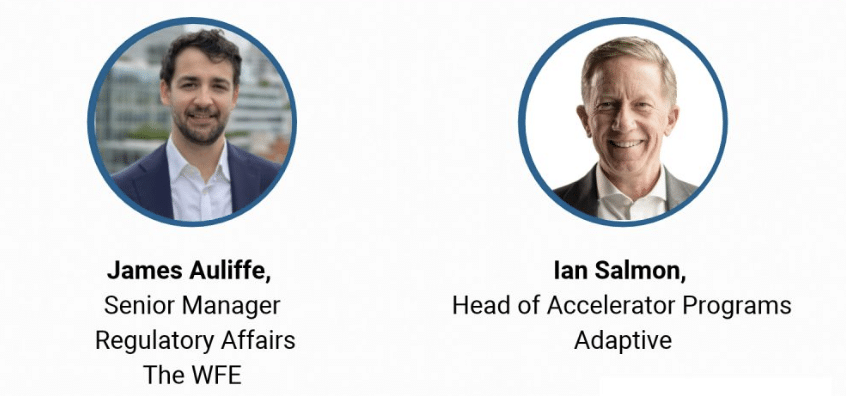
During the November 4 webinar, Trends and Predictions for Exchange Tech in 2027, James Auliffe, Senior Manager, Regulatory Affairs at the WFE, and Ian Salmon, Head of Accelerator Programs at Adaptive, discussed how exchanges can respond to changing market demands without compromising operational resilience.
Auliffe said traditional exchanges are increasingly competing with cryptocurrency platforms, prediction markets, alternative trading systems and private markets for institutional and retail order flow.
Customer demand is also shaping technology investment decisions, according to Auliffe: “When I speak to exchange CTOs, customer demand often emerges as the key priority. The prevailing attitude is basically, if customers want it, we’ll build it,” Auliffe said.
One of the most immediate challenges is the move toward extended trading hours. Salmon recalled a recent conversation with a client developing a new algorithmic trading platform who insisted that the system needed to support trading 24 hours a day, five days a week.
According to Salmon, the client did not necessarily expect a substantial shift toward overnight trading but believed investors increasingly wanted to react to market developments without delays.
Longer trading sessions, however, leave exchanges with less time to maintain and upgrade their systems. “There’s no longer a weekend. There’s no longer a period where you can take all the systems down,” Salmon said.
He explained that exchanges increasingly need technology capable of supporting maintenance, upgrades and new functionality while markets remain operational.
“That’s one of the areas that’s the biggest driver of exchange technology modernisation today, is to be architecting a platform that enables either planned or unplanned change to happen in real time on the fly without compromising any form of resilience or performance on the platform,” Salmon said.
Auliffe emphasized that the challenge extends beyond trading platforms themselves. Clearing, settlement and other interconnected systems must also adapt, while exchanges need to maintain appropriate human oversight and operational resilience throughout longer trading sessions.
According to Auliffe, core system modernization consistently ranks among the leading priorities discussed by members of the WFE’s technology working group, alongside operational resilience and cybersecurity.
He noted that relatively few exchanges consider their technology stacks fully modernized, with most describing themselves as partially or mostly modernized. “Modernisation basically remains a work in progress, and I suppose it’s always going to be a work in progress because by the time you modernize, some new tech comes along, and that’s now modern,” Auliffe said.
The increasing volume of electronic trading messages is adding further pressure, according to Salmon, who cited recent Securities and Exchange Commission analysis of Consolidated Audit Trail data showing that market message traffic had increased by approximately 193% over the period examined, growing roughly three times as quickly as the number of shares traded. “Exchanges simply cannot extrapolate future infrastructure requirements from historical trading volumes,” Salmon said.
He explained that technology capacity planning must account for sudden bursts of activity around market openings, closings and economic announcements, rather than relying primarily on average trading volumes.
Performance also involves more than matching engine speed, he said. “The matching engine is only one part of the equation. Distributing the resultant market data depth of book reliably with minimal latencies is equally demanding,” Salmon said.
He added that exchanges must increase capacity while maintaining predictable latency, execution sequencing and market integrity.
Competition is also putting pressure on exchanges to introduce new products and trading functionality more quickly, according to Salmon. “Every innovation, you know, every new auction method or order type that can’t be delivered quickly on the core exchange system is an opportunity for others to take flow away from the main exchange or the order book,” Salmon said.
For exchanges replacing legacy systems, Salmon described an incremental migration approach involving parallel platforms, replayable data and controlled transitions, rather than replacing entire systems at once. The objective, he explained, is to reduce migration risk while maintaining trading operations.
Artificial intelligence was another topic of discussion, although Salmon suggested its influence may be greater in supporting technology development and accelerating customer requirements than in core market infrastructure itself. Auliffe said WFE members are already using AI for code generation, software testing, cybersecurity and customer-facing services.
He added that market surveillance remains a particularly important application. “Market surveillance has been the number one use case for a couple of years now, and I think it probably will continue to be so,” Auliffe said. He explained that AI can help exchanges analyze large volumes of surveillance data, with human reviewers subsequently assessing the results.
Salmon agreed that surveillance offers opportunities, particularly in reducing false positives. He also highlighted AI’s potential to accelerate algorithm development, analysis and backtesting. “We see AI accelerating probably more on the user requirements and the pace again of change than we do on the market infrastructure piece itself,” Salmon said.
Miami International Holdings, Inc. (MIAX®), a technology-driven leader in building and operating regulated financial markets across multiple asset classes, announced that MIAX Options® submitted proposed rule filings to the Securities and Exchange Commission (SEC) to offer cash-settled binary index options — including contracts based on its exclusivelylicensed Bloomberg equity indices — and cash-settled binary options tied to company key performance indicators (KPIs), on one or more of its SEC-registered exchanges, pending regulatory review. The filings mark the first step in the launch of binary options for its SEC-exchange customers.
“Investors increasingly want event-driven exposure, whether that’s where a benchmark closes or whether a company hits a specified performance metric,” said Thomas P. Gallagher, Chairman and Chief Executive Officer of MIAX. “We believe that pairing binary options contracts with our Bloomberg index franchise and with companyreported KPIs is an important initiative as we build out our proprietary product offerings.”
The planned binary index options will allow market participants to take a view on whether a broad-based index benchmark, such as the Bloomberg® 500 (B500) Index or Bloomberg 100 (B100) Index, will finish above or below a stated level at expiration. Subject to SEC review and operational readiness, MIAX plans to launch the binary index options, which will clear and settle at The Options Clearing Corporation (OCC), in 2027.
The planned KPI binary options will allow market participants to gain exposure to specific and objective performance metrics that a public company reports in its SEC filings, such as revenue, earnings per share, or another disclosed operating figure, measured against a predetermined threshold. The timeline for launch of the KPI binary options will be announced at a later date and will be subject to SEC review and operational and clearing readiness.
Binary options are classified as security options by the SEC, meaning they operate under the same regulatory guidelines and with the same customer protections as traditional U.S.-listed options. This structure delivers institutional-grade liquidity, clear market transparency, and rigorous oversight, alongside several other advantages.
Wall Street has spent decades making it possible to buy and sell shares in fractions of a second, yet the transfer of securities and cash still typically takes until the following business day to complete. The SEC’s five-year innovation exemption, which creates a regulated pathway for trading tokenised US-listed equities, brings this imbalance into sharper focus.
The exemption marks an important development for tokenisation, allowing firms to explore new trading models while preserving established investor rights and involving issuers. It also brings the prospect of 24/7 equity markets closer, with consequences that reach well beyond exchanges and trading desks.
If shares can change hands on a Sunday evening, the obligations created by that trade still need to be fulfilled. Cash must reach the seller, ownership must transfer to the buyer and the institutions involved must agree that the transaction is complete. Today, those steps can involve multiple intermediaries, separate records and processes which operate to different schedules.
The risk is that Wall Street extends trading hours without making progress on settlement, leaving institutions having to commit more capital to support transactions that cannot be completed as quickly as they are executed.
The cost of keeping markets open
The US move to T+1 settlement in May 2024 showed how much progress the industry can make when working towards a common deadline. Yet compressing settlement into one business day still leaves firms managing many of the same operational dependencies, with less time to resolve problems.
Round-the-clock trading takes this a step further, because transactions could accumulate during periods when payment systems, custodians or other essential services cannot complete the corresponding transfers.
For brokers and custodians, the inability to move securities and cash when required creates a funding challenge, potentially forcing firms to hold additional liquidity and collateral against outstanding transactions and tying up balance-sheet capacity that could otherwise support trading and investment.
Modernising post-trade processes becomes commercially important in this context, as automating the obligations created by a trade and coordinating the movement of assets and payment could reduce the time capital remains tied up before settlement is complete.
Atomic settlement, where securities and payment transfers are linked so that neither completes without the other, offers one way to achieve this. But the ability to transfer tokenised shares around the clock is of limited benefit if the corresponding cash cannot move at the same time. Institutions will need suitable payment arrangements, robust controls and mechanisms for handling failed or interrupted transactions.
One market, many different systems
There is another risk as exchanges, custodians and technology providers develop their own tokenised equity platforms. Each may be able to move assets efficiently within its own environment, while transactions involving other institutions continue to encounter inconsistent data, reconciliation and delays.
Securities markets depend on an extensive network of participants, and their systems must agree on what has happened to a trade, what obligations remain and who is responsible for completing them.
Common standards such as the FINOS Common Domain Model (CDM) can help establish this consistency by giving institutions shared definitions for financial transactions and lifecycle events. When those definitions are built into automated workflows, firms can process the same transaction across different systems without repeatedly interpreting or reconciling information.
The legal position must be equally clear. A token moving between digital records does not automatically establish that ownership has transferred or settlement is final. Those outcomes depend on enforceable rights, recognised records and the legal arrangements governing the transaction.
The SEC’s emphasis on preserving investor rights is therefore important, particularly as tokenised securities begin moving between different platforms and custodial arrangements.
Where the real opportunity lies
The SEC’s exemption gives the industry an opportunity to test whether tokenised equities can improve how securities markets operate, with settlement efficiency, liquidity management and operational risk providing more meaningful measures of progress than trading hours alone.
With the UK, the EU and Switzerland moving to T+1 in October 2027, and firms increasingly considering T+0, the pressure to coordinate cash, securities and the obligations between them is only likely to grow. Shorter settlement cycles leave less room for manual intervention and place greater demands on the systems and institutions responsible for completing transactions.
The priority should therefore be to modernise the processes connecting trading, payment and settlement, rather than allowing each part of the market to develop in isolation. That means more automation, consistent transaction data and closer coordination between trading venues, custodians, payment providers and other market infrastructure.
The attraction of tokenised equities is understandable, particularly if they can support more flexible trading and faster access to capital. But those benefits will be difficult to realise if investors can trade at any hour while institutions still have to wait for cash and securities to move.
Wall Street has become extraordinarily good at executing trades quickly. The SEC’s decision offers an opportunity to bring the rest of the transaction much closer to this standard. Extending trading hours may be the most visible change, but improving what happens after a trade will determine whether tokenisation delivers on its promise of more efficient markets.
Premialab, the leading independent platform for quantitative investment strategies (QIS), announced a partnership with Aladdin, BlackRock’s platform that unifies the investment management process, to accelerate the adoption of quantitative investment strategies (QIS) by bringing Premialab’s specialist QIS data capabilities directly to common clients.
QIS now play a central role in modern portfolio construction, and deploying them effectively requires sophisticated risk analytics and precise modelling. The partnership pairs Aladdin’s capabilities with Premialab’s deep QIS data and analytics expertise, giving common clients a more streamlined way to manage QIS exposures alongside the rest of their portfolios.
The collaboration will enable:
Holdings-level transparency: more precise exposure management and aggregation of QIS strategies across the whole portfolio
Risk analytics: granular attribution across QIS exposures, identifying the drivers of strategy returns
Ongoing data and quality management: continuous data delivery, quality control and risk reporting, underpinned by data sourced from 20 leading QIS banks
Together, Aladdin and Premialab are advancing a shared industry priority: making QIS more accessible to institutions worldwide.
”We are delighted to partner with Aladdin on this strategic initiative,” said Adrien Géliot, CEO of Premialab. “We are seeing a sharp rise in institutional adoption of QIS and derivatives. This partnership addresses a longstanding operational challenge that has constrained QIS adoption. By improving connectivity and reducing operational friction, we believe this unlocks meaningful new opportunities for institutional investors and their counterparties. Aladdin’s scale and reach mean this integration will have a material impact on how QIS is deployed across the global institutional investment community.”
Kamya Somasundaram, Global Head of Aladdin Enterprise Partnerships at BlackRock added: “As demand for Quantitative Investment Strategies continues to grow, our clients are looking for greater depth and precision in how these strategies are modelled, monitored and reported. Partnering with Premialab adds specialist QIS expertise to the Aladdin platform, giving our common clients faster, more efficient access to these strategies alongside the wider investment and risk infrastructure they already rely on.”
Premialab’s multi-asset, multi-region platform processes more than 15 million data points daily across over 8,000 investable systematic strategies, representing approximately USD 20 trillion in client assets under management. Its proprietary dataset and analytics provide detailed risk decomposition, factor attribution and scenario analysis.
Artificial intelligence (AI), data mining, expert system software, machine and deep learning and another modern computer technologies concepts. Brain representing artificial intelligence with printed circuit board (PCB) design.
By Kirat Singh, President of Risk and Alternative Assets, Clearwater Analytics
Kirat Singh
On the face of it, AI looks like it fits the derivatives industry like a custom-made glove. After all, OTC derivatives markets are, regardless of the asset class in question, built on data, models and calculations, which is exactly where AI is set to revolutionise how efficiently financial institutions can get their work done.
Understanding how risks interact takes more than calculating a specific risk, and complex derivatives expose one of the fundamental challenges of bringing agentic AI into financial markets. An OTC derivative position rarely contains a single exposure. An interest rate swap, as a prime case in point, has numerous sensitivities across different points of the curve. In FX, a bilateral derivatives portfolio can bring volatility and potentially correlation risk alongside the direction of the underlying market. In commodities, derivatives can introduce physical exposures. The point is that regardless of the type of portfolio in question, firms have to consider counterparty. liquidity, collateral, margin and funding risks, which interact with each other and can change drastically as markets move.
Asking an AI agent what your risk might be becomes much more complicated. Sure, all AI agents will give an answer, but what a risk manager cares about is how it got to that answer. It is the equivalent of showing your working to a maths teacher in school. The questions range from what market data was used and which valuation models were called, to whether assumptions were consistent between products and asset classes. And that is all before asking whether the agent has captured basis and liquidity risks, and what happens to collateral and margin requirements under stress.
For those immersed in OTC derivatives markets, models and assumptions have always been central to how swaps and other bespoke instruments are priced and managed. Agentic AI makes model discipline even more important, because it allows analysis to be produced at extraordinary speed. That is why the most promising application of AI in derivatives is to let agents orchestrate the trusted models, data and calculations that firms already use.
Take the valuation of a complex instrument, for example. The AI Agent should receive an approved valuation model, defined market data and explicit calibration parameters, which fix how the instrument is priced. Only then can the agent interrogate the findings and combine them with other portfolio information. The intelligence can be flexible while the financial mathematics remains controlled.
This becomes particularly powerful as financial infrastructure grows more API-driven. Positions, reference data, market data, valuation engines and risk models can be made available as defined services. An agent can yoke them together, letting risk managers question exposures without switching between multiple systems and reports. They can then spend more time challenging the information that the agent has gathered for them.
The history of derivatives markets (who could forget 2008?) reminds us that losses often emerge not from top-line risk figures, but instead from leverage, liquidity, basis, correlation or funding assumptions buried elsewhere in the portfolio.
Agentic AI could become an extraordinarily powerful tool for finding those connections. But in the complex world of derivatives, knowing the individual risks matters less than understanding the intricate relationships between them.
Artificial intelligence is making investment scams more convincing, allowing fraudsters to impersonate financial professionals, create fake identities and build sophisticated websites in minutes, according to officials at the Financial Industry Regulatory Authority (FINRA).
Christine Kieffer
Speaking on a recent episode of FINRA Unscripted, Christine Kieffer, Senior Vice President of Investor Education and President of the FINRA Investor Education Foundation, said the technology has changed how fraudsters operate, even as the schemes themselves remain familiar: “The ‘what’ is very familiar, but the ‘how’ has fundamentally changed,” she said.
According to Kieffer, pump-and-dump schemes, fictitious investments and scams built around popular market trends are nothing new. What has changed is how easily fraudsters can use AI to make themselves appear legitimate.
“Call scripts are perfected, voices are changed and impersonated, whole websites are built within minutes. Legitimate people and businesses are being cloned, and this builds source credibility for the scammer,” Kieffer said. “It’s simply a shortcut to trust,” she added.
Mayur Patel, Director, Financial Crimes Intelligence, Strategic Intelligence at FINRA, said the regulator is seeing AI used to create fraudulent identification documents, deepfake images and cloned voices. The technology is also making phishing emails, fraudulent text messages and other social engineering attacks more sophisticated.
Patel said fraudsters are using these techniques to obtain personal information, steal money or gain access to brokerage accounts. Kieffer added that traditional methods of verifying someone’s identity are becoming less reliable, particularly as AI-generated video and voice impersonations become more convincing.
Kieffer said FINRA has heard from scam victims who remained suspicious of an online contact until they agreed to a video call. Seeing the person on screen convinced them the relationship was genuine. “A modern AI tool only needs as little as three to 15 seconds of audio to clone and imitate a person’s voice,” she said.
According to Kieffer, a single clear photograph can also be enough to create a basic face swap or talking-head impersonation.
Patel cautioned that video calls should not be abandoned as a verification method, but investors should no longer treat them as definitive proof of someone’s identity. He also warned against relying on AI-powered search engines to verify investment opportunities or the people promoting them. “An AI search engine is not a tool to verify stuff. It is a more enhanced version of a Google search,” he said.
Mayur Patel
Patel warned that fraudsters can create convincing online identities and supporting material that may appear in search results or AI-generated summaries, making independent verification particularly important.
Kieffer stressed that investors also need to recognize the psychological tactics behind scams, including urgency, emotional manipulation and pressure to make quick decisions.
Kieffer pointed to urgency, promises of guaranteed returns, claims of exclusivity and requests for secrecy as warning signs that remain relevant regardless of the technology involved. “One of the most important red flags that a lot of people don’t really think about as much is a request for secrecy,” she said.
Her advice is to slow down and discuss a potential investment with someone else before committing money. That creates time to reconsider the decision and gives another person an opportunity to identify suspicious elements.
Patel said AI-enabled fraud is also creating challenges for brokerage firms, particularly as fraudsters use increasingly sophisticated impersonation techniques to target firms and their customers. He said that FINRA’s intelligence teams can identify broader patterns by combining investor complaints, tips and information submitted by member firms. “We see more of the puzzle put together rather than the pieces of the puzzle,” he said.
FINRA has been expanding its intelligence-sharing efforts as fraudsters develop new techniques. In March, the regulator launched its Financial Intelligence Fusion Center (FIFC), a secure portal through which member firms can receive and share cybersecurity and fraud-related threat intelligence. The center distributes information about emerging threats, mitigation strategies and the use of generative AI by malicious actors.
FINRA has also developed a takedown toolkit to help firms address fraudulent websites impersonating their businesses or registered representatives. Kieffer said some of these websites display legitimate Central Registration Depository (CRD) numbers, making it harder for investors to distinguish them from authentic financial services providers.
Patel said the quality of these websites has improved considerably. “If you just take a look at the websites that we were identifying maybe a year, year and a half ago, they are rudimentary compared to the websites that we see now,” he said.
Looking ahead, Patel expects losses associated with AI-enabled fraud to continue rising as criminals adapt to new safeguards. His concern is that efforts to combat fraud could receive less attention than other developments in AI, leaving investors responsible for detecting increasingly sophisticated scams.
Kieffer agreed that investor education, while important, cannot carry the burden alone. “We simply cannot rely on warning messages about how to spot a fake as a reliable prevention tool,” she said.
Instead, she argued, financial institutions, regulators and technology providers need better ways to identify and block fraudulent activity before it reaches investors. “I’m most concerned that the easy answer is to tell investors how to recognize it while that’s part of it, it’s not enough,” she said.
The transaction on behalf of a large financial institution signals growing institutional momentum behind regulated event contracts and market readiness
NEW YORK, November 3, 2026 – Marex Capital Markets Inc., a subsidiary of Marex Group Limited (NASDAQ: MRX) (“Marex”), the diversified global financial services platform, today announced the successful clearing of an institutional event contract transaction on Kalshi for a large financial institution. The transaction demonstrates the growing institutional adoption of regulated event contracts as tools for hedging risk and expressing targeted market views.
Regulated by the U.S. Commodity Futures Trading Commission (CFTC) as a Designated Contract Market (DCM), Kalshi operates markets tied to a wide range of economic, financial, commodity and political events. Event contracts enable participants to take positions on defined outcomes, such as economic releases, commodity price levels or election results, providing a targeted way to manage event-driven exposure.
As a clearing member on Kalshi, Marex will serve as an intermediary between clients and the exchange, providing enhanced counterparty protection backed by the firm’s institutional-grade credit rating and risk management frameworks. Marex’s global institutional clients, which include major hedge funds, proprietary trading firms and other capital managers, will gain access to event contracts in carefully approved markets and jurisdictions including commodities, economics and financials for more efficient and flexible hedging exposure.
Thomas Texier, Group Head of Clearing, Marex, commented, “Our decision to join Kalshi as a clearing member was driven by client demand, institutions have followed the development of event markets closely, and demand for a trusted, regulated pathway to these products has accelerated. This landmark transaction with a major client illustrates that regulated event contracts are becoming an institutional asset class and valuable tool for hedging risks and taking views on economic, financial and commodity events. Marex’s agility and position as one of the largest non-bank FCMs allows us to introduce innovative products quickly with the risk management and clearing infrastructure clients necessarily expect.”
Andy Ross, Head of Institutional, Kalshi, said, “Kalshi’s partnership with Marex represents a big step in becoming the next-generation financial exchange. Political outcomes and other real-world events can have significant consequences for institutions, yet those risks are often difficult to isolate and hedge through traditional financial instruments. Having a clearing partner of Marex’s caliber with deep relationships across the hedge fund and institutional trading community will meaningfully accelerate the movement of sophisticated market participants to the platform.”
This announcement builds on Marex’s track record of innovation in securities products. Marex recently issued the world’s first note tied to prediction markets, a structured product which will pay out a 7% coupon if Nvidia Corp. is the world’s largest company in a year. The firm has also completed institutional block trades in prediction markets, further demonstrating its role in expanding institutional access to this emerging asset class.
Stephen Hood, Head of Clearing, Americas, Marex, added: “Institutions have been evaluating event contracts for some time, and we’re now seeing sophisticated market participants actively incorporating these products into their trading and risk management strategies. Marex has responded by combining disciplined risk management with a strong commitment to innovation, working proactively with clients to support event contracts’ growth and trading requirements”
As a broker- and venue-agnostic clearing firm, Marex provides access to over 60 global exchanges coupled with decades of financial markets experience and unmatched risk management and market expertise.
Marex Group Limited (NASDAQ: MRX) provides market access, infrastructure services and essential liquidity to clients across global commodity and financial markets. The Group provides comprehensive breadth and depth of coverage across four services: Clearing, Agency and Execution, Market Making and Hedging and Investment Solutions. It has a leading franchise in many major metals, energy and agricultural products, with access to more than 60 exchanges. Marex has over 3,400 active clients, including some of the largest commodity producers, consumers and traders, banks, hedge funds and asset managers. With more than 50 offices worldwide, the Group has over 3000 employees across Europe, Asia and the Americas. For more information visit www.marex.com.
About Kalshi:
Founded in 2018, Kalshi is the world’s next-generation financial exchange. Prediction markets provide accurate, real-time information on the likelihood of events, making humanity more informed about the future. As the first regulated exchange for events, Kalshi is credited with legalizing and establishing prediction markets as a financial asset class. It’s the leading safe and regulated platform, trusted by millions of people and a growing number of institutions in America. To learn more about Kalshi, visit www.kalshi.com.
CHICAGO, November 3, 2026 – Cboe Global Markets, Inc. (Cboe: CBOE), a leading global markets operator and pioneer in equity and index derivatives, today issued the following statement in support of legal action filed by the Capital Markets Alliance (CMA) challenging the CFTC’s approval of perpetual derivatives on U.S. stocks and ETFs. The CMA includes Cboe, Citadel Securities and Healthy Markets Association:
“Cboe has joined this action alongside some of the largest U.S. market participants and investor advocates because we believe the CFTC’s actions threaten to erode the regulatory framework that has protected investors and governed U.S. securities markets for more than nine decades,” said Craig Donohue, CEO of Cboe Global Markets.
“Single-stock perpetual derivatives are the latest example of a troubling trend in which securities products are being offered on CFTC platforms – outside the appropriate regulatory framework and customer protection regime established by Congress. Whether tied to individual issuers, broad-based security indices, corporate events, or other securities-related outcomes, these securities products belong on registered securities platforms and should be subject to the investor protections, oversight, and safeguards required under U.S. securities laws. Cboe and others, including legislators, have raised concerns with these developments through public comments and industry forums, to no avail.
Cboe is no stranger to competition. For more than 50 years, Cboe has competed successfully in some of the world’s most competitive markets and we welcome new entrants and innovation. If this were simply a commercial issue, Cboe could bring these products to market on CFTC-regulated trading and clearing platforms that it operates. We support the mission and purpose of the CFTC to oversee the products that Congress has placed under its authority.
This issue, however, is about investor protection for securities trading and the rule of law. Investors deserve the specific protections Congress established for securities markets, and regulators have a responsibility to enforce the framework Congress created. When securities products are permitted to trade outside that framework, it creates regulatory arbitrage, bypasses both federal and state laws, and undermines the integrity of those markets.
The CFTC has authorized a multitude of filings for securities-related products that break with decades of precedent and its own prior determinations, without providing a clear public explanation of the legal basis for doing so. Through this action and our request for injunctive relief, we look forward to resolving the uncertainty created by these actions and preserving the laws and principles that have made U.S. capital markets the strongest and most trusted in the world.”
Washington, D.C., November 3, 2026 – SIFMA filed a comment letter with the Securities and Exchange Commission (SEC) and Commodity Futures Trading Commission (CFTC) on rule filings by four designated contract markets (DCMs) to list and trade perpetual futures contracts on individual equity securities (“Equity Perpetuals”) as security futures.
In the letter, SIFMA notes that Equity Perpetuals, which have no expiration date, differ meaningfully from the traditional single stock futures the security futures framework was designed for. SIFMA asks the SEC and CFTC to use their existing statutory tools to allow a broader review with public input before these products launch.
Specifically, the letter asks the Commissions to:
Assess potential impacts on the underlying equity markets, including liquidity, price discovery, capital formation, investor protection, and cross-market manipulation risk in a nearly continuous trading environment.
Resolve whether Equity Perpetuals should be classified as security futures, swaps, or security-based swaps, consistent with questions the agencies raised in their joint request for comment earlier this year.
Rely on the CFTC’s authority to stay the filings, or the SEC’s authority to abrogate them and require refiling under Section 19(b)(1) of the Securities Exchange Act, which provides for public notice and comment.
“Equity Perpetuals raise important questions about how these products would interact with the U.S. equity markets that investors and issuers rely on,” said Kenneth E. Bentsen, Jr., SIFMA president and CEO. “We encourage the SEC and CFTC to work through those questions together, with the benefit of public comment, before these products are offered to investors.”