



Agentic AI Moves Closer to the Trading Desk, But Humans Remain in Control

The trading industry has spent years refining execution algorithms, automating workflows and feeding ever-larger volumes of market data into increasingly sophisticated systems. Now attention is shifting to a new generation of technology: agentic AI. Unlike traditional algorithms that follow predefined rules, these systems promise to interpret context, adapt to changing market conditions and take action toward specific objectives.

But despite the excitement, industry experts say the technology is still finding its place.

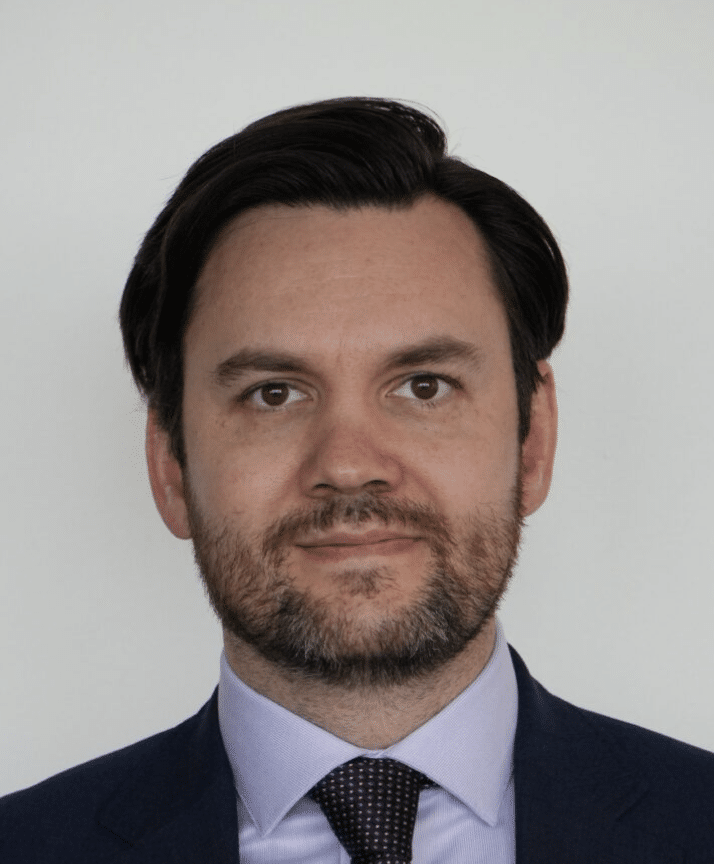
Mehmet Kinak, T. Rowe Price
Mehmet Kinak

“The distinction comes down to whether the system is simply executing a better set of instructions, or whether it can operate across a workflow with context, adaptation and governed autonomy,” Mehmet Kinak, Global Head of Equity Trading at T. Rowe Price, told Traders Magazine.

Traditional execution algorithms remain highly effective, Kinak said, but they generally operate within fixed parameters. An agentic system, by contrast, would need to “observe changing market conditions, reason across multiple sources of information, decide when to act or not act, and document why it made a recommendation.”

That does not require fully autonomous trading, he added. Instead, the technology should help traders synthesize market color, liquidity signals, order context and execution analytics while keeping humans accountable for the final decision.

Audrey Costabile, Senior Analyst, Market Structure & Technology at Crisil Coalition Greenwich, also sees adaptability as the defining characteristic separating agentic AI from conventional algorithms. “Functionality which is more adaptive—for instance, an algo that can react and reconfigure based on market movements and other information… are beginning to emerge,” she said. More advanced ETF algorithms that incorporate information about both the fund and its underlying securities are already demonstrating how execution technology is becoming increasingly dynamic, she said.

Data Comes Before Intelligence

For fixed income trading, Dwayne Middleton, Global Head of Fixed Income Trading at T. Rowe Price, argues that the industry’s biggest challenge is not intelligence but infrastructure.

“A more advanced algorithm still executes rules,” Middleton said. “A genuine evolution pursues an objective instead: it takes a goal inside defined limits, works through the steps, and hands control back when conditions move beyond its mandate.”
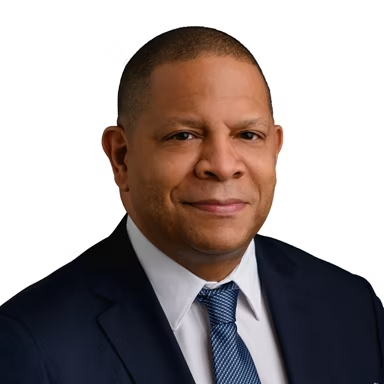
Dwayne Middleton

That distinction has become increasingly relevant as fixed income trading shifts from identifying individual securities toward constructing desired risk exposures, he said.

“The desk now defines a target risk profile across duration, spread, sector, rating, seniority, and liquidity, then sources the liquidity that fits it,” he said.

Making that possible depends on connecting fragmented systems, he said. “Attribute-based trading works only when clean, bond-level data spans the universe and a single trade can draw at once on the security master, positions, restrictions, axes, pricing, and market intelligence,” Middleton said.

“Those systems predate any expectation that they would talk to one another, so most of a trader’s preparation still goes into assembling the picture by hand,” he added.

Before AI can automate more of the workflow, he added, “the infrastructure has to come first.”

Larry Tabb, Head of Market Structure Research at Bloomberg, offered a similar perspective: “The promise of Agentic is large, but the reality is uncertain. We have been down this road often starting even in the late 80s, but we have never seemingly gotten there. That said, we are certainly closer than we have ever been in the past.”

Where AI Is Likely to Help First

According to market participants, the first wave of adoption is expected to target the repetitive, information-heavy work that consumes much of the trading day.

Kinak expects AI to begin with workflow augmentation: “The first wave will likely be workflow augmentation rather than autonomous execution,” he said, pointing to trader commentary, broker color summaries and organizing market data as natural starting points.

Over the next three to five years, he expects delegation to expand into “pre-trade analytics, market-color synthesis, alerting, exception detection and decision support.”

Costabile sees similar opportunities beyond the trading desk: “There are massive tech gaps in the post-trade part of the workflow where a lot of human interaction still happens,” she said.

Audrey Costabile, Crisil Coalition Greenwich
Audrey Costabile

“Although we are beginning to see more predictive technology e.g., identify false positives in the settlement process there are still “bodies being thrown at the problem,” she said.

“AI will likely have the impact of one day changing the makeup of the back office from worker bees to more analytical decision-makers as agents can filter out and predict issues leaders need to focus on,” she added.

Middleton also believes information gathering will move first: “The work that moves first is the information-heavy part of the job,” he said, citing pricing collection, dealer rankings, liquidity discovery, routing smaller liquid trades within established thresholds, exception management and post-trade analysis.

But he stressed that automation depends entirely on reliable data: “None of this survives a stale price or an incomplete position feed.”

Tabb also pointed to operations as an early opportunity: “Even today there are still many manual operations and reconciliations that occur when there are new products and systems rolled out,” he said. AI could reconcile multiple streams of data while allowing humans to verify significant discrepancies before progressively increasing automation, he said.

Beyond operations, Tabb expects AI to play a growing role in investment research: “Smaller company research, or less frequently traded names will be covered by AI.”

AI will also synthesize research from multiple sources before eventually contributing to investment ideas, he said.

The Human Still Makes the Call

While AI is expected to take on more of the workflow, market participants drew a clear line around decisions involving judgment, accountability and client responsibility.

Kinak said human judgment remains essential “where context, risk, block liquidity, counterparty, client objectives and market nuance matter.”

Middleton identified responsibility for client capital as one of the clearest boundaries.

“The work that stays human is the judgment closest to the portfolio and the client,” he said, including defining target risk profiles, managing large or sensitive risk transfers, maintaining dealer relationships and interpreting changing market conditions.

“The desk spends less time executing and more on managing risk, handling the hard cases, and feeding better positions into the investment process.”

Costabile also expects evolution rather than revolution. “I do think many more people will be using it, but from a risk standpoint I don’t expect anything extreme like desks autonomously trading,” she said.

Governance Becomes More Important

As AI systems become capable of taking actions rather than simply producing analysis, governance and explainability become increasingly important. “The biggest risk is that agentic tools shift the risk profile from ‘answer risk’ to ‘action risk,'” Kinak said.

Institutional trading desks need to understand “what information was used, what assumptions were made, what was ignored, what confidence level applied, and where uncertainty remained.”

For Middleton, the greatest risk comes back to data quality: “Any system that can place a trade is only as reliable as the price it acts on and the position it believes it holds,” he said.

He also warned against blurred accountability: “Someone approved the policy, someone built the tool, someone bought the model, and no one owned the decision.”

Larry Tabb

Before firms deploy agentic AI, he said, they should determine “who owns the model, who owns the outcome, and who has the authority to switch the system off.”

Costabile believes governance frameworks are still evolving: “AI is new-ish so a lot needs to be developed still at the industry and firm levels,” she said, while adding that explainability is improving.

“More explainability means more trust, adoption and use,” she said.

Tabb framed the risks in the context of previous market disruptions: “This is very experimental technology and it could go horribly wrong, especially in a period of turbulence,” he said.

“If models are trading your account, data goes astray… and the models don’t know the data is incorrect and continues to trade, sending orders to the market at wrong prices.”

An Evolving Trading Desk

While opinions differed on the pace of change, all experts described trading desks evolving rather than disappearing.

Kinak expects “fewer manual handoffs, more automated synthesis, more data-driven decision support, and more push-based intelligence delivered directly into the trader workflow…The desk of the future will still need experienced traders.”

Middleton believes automation will allow traders to cover more while focusing on higher-value work.

“The main gain is scalability, since automation extends how much each trader can cover and strengthens the capability of the desk’s human capital.”

He also believes firms will increasingly differentiate themselves through proprietary data. “As these systems grow cheap and common, holding them counts for little,” Middleton said. Competitive advantage will come from “a firm’s own execution history, positions, dealer relationships, and feel for how its desk trades.”

Costabile likewise expects steady, incremental change.

“Pieces of the workflow will become more automated where possible,” she said, while noting that “product and data maturity will continue to play a significant role in how quickly desks evolve.”

Tabb expects AI to reshape the industry without replacing the people at its center. “It will create winners and losers,” he said, while predicting continued consolidation across the investment industry.

Ultimately, he said, money management remains rooted in trust.

“At the end of the day, money management is about trust,” Tabb said. “And folks, no matter how much AI is used, they want to be comforted by humans, not robots. The idea that the investment advisor is going away is just wrong.”


Clear Street Promotes Senior Leaders from Within for Next Phase of Growth

NEW YORK — July 29, 2026 — Clear Street (“Clear Street” or “the Company”), a cloud-native financial technology firm on a mission to give every sophisticated investor access to every asset in every market, today announced several senior leadership changes from within to drive growth as it charts further expansion. 

Megan Cruse, who spent nearly a decade at Citadel and who has been working with Clear Street since late 2025, has been promoted to the role of Chief Operating Officer, which includes oversight of corporate development, strategy, facilities, communications and investor relations.  Andy Volz, Clear Street’s Chief Commercial Officer, and John DiBacco, Global Head of Markets, have been promoted to Co-Presidents of the firm. Jon Daplyn, architect of Clear Street’s bespoke infrastructure and technology stack, is moving to the role of Chief Technology Officer.

Uri Cohen, Executive Chairman and Chief Executive Officer, said “We have incredible leaders here and this new organizational structure lets us move faster and more efficiently, to scale with intention as we deliver access to every asset in every market. These changes enable a steadfast commitment to sharper focus, stronger relationships and an enhanced client experience.’’

Michael Stover, Chief People and Performance Officer, commented “We are platforming proven leaders in the roles where they create the most value, with clear accountability across revenue, technology, operations and markets. The strength of this firm lies in the talent behind it, and we will continue to promote exceptional talent where we see it to support our long-term ambitions. Also, since joining Clear Street earlier this year, I am consistently impressed with the inbound talent we have hired as we  keep pace with our growth.” 

Clear Street has boosted overall headcount this year, with a total of 830 employees, compared with 773 at the start of the year. The Company, which this year has launched a trading app for individuals, added large-scale spot-trading capabilities in leading cryptocurrencies and cemented a first-to-market partnership with prediction market Kalshi, is planning further expansion across new geographies and into emerging asset classes.
Cruse held several senior leadership roles during her time at Citadel and also served as Deputy COO of Global Credit, helping scale the investment team and expand the business into new asset classes. Prior to that, she held high-level operating and investor relations roles at Monroe Capital and Altum Capital. Most recently, Cruse provided operational leadership to portfolio companies, including Clear Street, at the private investment firm White Bay.

John DiBacco’s role as Co-President is in addition to his acting role as Global Head of Markets.  As Co-President, Volz has expanded oversight of the Prime Brokerage and Active Trading businesses.

About Clear Street:
Clear Street is a cloud-native financial infrastructure technology firm on a mission to give every sophisticated investor access to every asset, in every market. The Company is replacing the industry’s outdated infrastructure with a single, cloud-native, end-to-end platform that powers the entire trade lifecycle, from ideation to execution, clearing, custody, financing and settlement, delivering speed, transparency and scale across the Clear Street ecosystem.

The Data’s Got to be Good

By Mark Haraburda, CEO, Barchart

Mark Haraburda, Barchart

JP Morgan has been testing whether an AI agent can be trusted to move money between stocks and bonds on its own. In two decades of backtests, all eight of its agents beat the classic 60/40 portfolio on a risk-adjusted basis. The bank warns the results are simulations, not proof. True: a backtest is a wager on the recorded past, and it is only as good as the record. What strikes me is that the record exists at all. When I entered this business, you could not see every trade in a market unless you were standing in the pit where it traded. Access to data was geography, and the geography was one trading floor.

I have been in market data since 1999: first at the Chicago Board of Trade, licensing exchange data to distributors, and since 2007 at Barchart. Part of the Board of Trade job was replacing the Zip drives and CD-ROMs we shipped price history on with a web service. Within living memory, the market’s past traveled by mail. And I worked in the data department of an exchange whose own floor kept no complete record: no report of every bid and ask, no view of the order book up and down the price ladder, no record of every trade. The information existed for the people standing in the pit, and then most of it evaporated.

Starting around 2000, exchanges demutualized and went public, and electronic trading took off. The transition took about a decade, and it multiplied the data: every quote and every fill now left a record. All of it demanded bigger telecommunication lines, bigger servers, better software to analyze it, and that is really when cloud computing came into the picture. A decade ago the story everywhere was big data, big data, big data. Today, it’s AI. And the software layer assembled over a quarter century — the APIs and the delivery infrastructure — turned out to be exactly what AI models needed to work at all. It has been an evolution, each stage feeding the next.

This is where I am supposed to say AI changed everything. And, indeed, much has changed, and it keeps changing faster. But AI did not change the thing at the center. A data point is a data point; a price is a price. My analogy is Uber. It did not invent the car or the fare; it changed the delivery and the packaging, and suddenly anyone could summon a ride. AI is data’s version of that event. It changes how much you can get out of facts you already had: quicker, deeper, cheaper. In roughly the past year, those gains have run beyond our wildest dreams.

What did change is access. Analysis that once required a quant desk now runs off a question you type out for an AI to run with. We watch customers write their own dashboards and custom analytics against data APIs, requests that used to mean an Excel integration. Retail widened it further. Smartphones put brokerage apps like Robinhood in every pocket, commissions went to zero, at least in equities, and a wave of new participants generated data sets that did not exist before. What the floor once rationed by geography is now rationed by little more than curiosity.

Appetite followed. AI is great, but if you don’t have the data, you can’t do anything with it. Look at the exchanges’ earnings reports: data revenue keeps rising, a bigger share of the business and a bigger goal of theirs. The answer has not changed: stay a data company and layer the new technology on top. The institutions in this market — banks, hedge funds, brokers, energy and commodity houses — can ask questions of the data in plain English or pull it raw through an API; underneath, the inventory keeps growing, because nobody serving this appetite survives on one asset class or one geography. The unglamorous half is compliance: everything a data provider hands a trading desk answers to the policies of dozens of exchanges and other information providers, and the good data companies get very good at managing those requirements. The more decisions get delegated to agents like JPMorgan’s, the more that dependence compounds.

JP Morgan’s own strategists, for their part, caution against uncritically accepting what amounts to “overly confident answers” from an AI. They are right, and the problem is older than the technology. An agent will answer anything you ask; it will not pause to wonder whether the numbers underneath it are wrong. Somebody still has to. From the trading floor on, every stage of this evolution has arrived at the same place, and this one does too. You’ve got the world at your fingertips, or at your keystroke, to ask anything of that data. But the data’s got to be good.

Bloomberg to Acquire Canoe Intelligence

0

Bloomberg to Acquire Canoe Intelligence, Taking a Defining Step in Its Mission to Transform Private Markets Investing

Transaction will accelerate end-to-end intelligence across public and private markets from pre-investment to portfolio oversight with AI-driven insights for investors

Bloomberg today announced it has entered into a definitive agreement to acquire Canoe Intelligence (“Canoe”), a leading AI-powered data management and intelligence platform for automating private markets data collection and delivery. The acquisition is the latest step in Bloomberg’s multi-year commitment to transform how institutional investors engage with private markets — accelerating its strategy to deliver unified data, analytics, and tools to power end-to-end workflows and better serve investors across public and private markets.

Bloomberg has long provided leading public markets intelligence through the Terminal, and its broader suite of data, news, and enterprise solutions that the world’s most sophisticated investors rely on every day. Bloomberg has been extending that same expertise into private markets, today delivering data on more than three million private companies, 50,000 private funds, and 16,000 private direct loans alongside analytics, news, research, and enterprise solutions. This includes a certified integration with Canoe launched earlier this year, which demonstrated the value of connecting permissioned private fund data directly to Bloomberg PORT Enterprise to support cross-asset portfolio analysis. Today’s announcement goes further, enabling Bloomberg to integrate Canoe’s private markets capabilities with Bloomberg’s solutions to deliver innovative tools and new insights across the full investment lifecycle for both private and public markets.

Canoe serves as the connective tissue between many general partners (GPs) and limited partners (LPs), streamlining post-investment reporting at the scale, speed, and consistency that sophisticated investors expect. Processing over 1.5 million documents per month across more than 44,000 funds, Canoe delivers structured portfolio-ready insights to over 500 institutional clients representing more than $11 trillion in assets under service. Its global client base spans large institutional investors, fund servicers, wealth managers, and family offices.

This acquisition addresses a challenge that has long defined private markets: data and intelligence has been fragmented across the investment journey. By bringing together Canoe’s community and data with Bloomberg’s public and private markets foundation, the acquisition will unlock near- and long-term capabilities that span the full investment lifecycle, including:

  • Fully Integrated Total Portfolio View: Deeper, automated, and more timely post-investment workflow for exposure & risk analysis, cash management and underlying holdings look-through, all underpinned by an integrated Investment Book of Record across public and private assets.
  • Enhanced Pre-Investment Intelligence: Fund screening, benchmarking, and comparative analysis extended into private markets, enabling investors to discover relevant funds and move seamlessly into deeper analysis, capital allocation, and portfolio evaluation with the analytical rigor Bloomberg’s clients have long applied to public markets.
  • Converged Data Infrastructure: Broader fund coverage and more timely performance data normalized with consistent fund identifiers such as the Financial Instrument Global Identifier (FIGI), creating the foundational data architecture that powers enterprise solutions from security master to downstream operating systems.
  • AI-Powered Intelligence: Bringing these capabilities together within ASKB, Bloomberg’s agentic AI conversational interface, to help investors accelerate discovery, streamline analysis, and generate insights across public and private markets with greater speed and confidence.

Vlad Kliatchko, CEO of Bloomberg: “Over four decades ago, Bloomberg revolutionized the finance industry by bringing transparency and efficiency to public markets. Today, private markets are primed to undergo a similar transformation as investors seek the same kind of structured, timely insights across private assets. Canoe gives us access to the data, technology, and community to respond to that shift, and positions Bloomberg to deliver an experience that will define the next era of investing: connecting data, analytics, and tools to support the full investment lifecycle across both public and private markets.”

Jason Eiswerth, CEO of Canoe Intelligence: “Alternative investors manage billions in private capital without the visibility and insights that public markets take for granted. We’ve built Canoe around a fundamental belief: that shouldn’t be the case. When we partnered with Bloomberg earlier this year on our PORT integration, we saw firsthand what becomes possible when Canoe’s data automation meets Bloomberg’s portfolio infrastructure. Joining Bloomberg lets us build on that foundation at scale, with more resources, more reach, and more data behind Canoe, giving investors the clarity to analyze their complete portfolios and the confidence to act on what they see. This is how the world invests in alternatives going forward.”

Canoe was incubated by principals of 10East and 22C Capital, and its institutional investors included Blackstone Innovations Investments, Carlyle AlpInvest, Eight Roads, F-Prime, Growth Equity at Goldman Sachs Alternatives, Hamilton Lane, and Nasdaq Ventures.

Jefferies LLC acted as exclusive financial advisor to Canoe and Cooley LLP served as legal advisor to Canoe.

About Bloomberg

Bloomberg is a global leader in business and financial information, delivering trusted data, news, and insights that bring transparency, efficiency, and fairness to markets. The company helps connect influential communities across the global financial ecosystem via reliable technology solutions that enable our customers to make more informed decisions and foster better collaboration. For more information, visit Bloomberg.com/company or request a demo.

About Canoe Intelligence

Canoe Intelligence (“Canoe”) is the data management and intelligence platform for smarter alts management. Canoe redefines alternative investment intelligence with AI-driven software that directly addresses the core challenges of private markets. Its technology empowers institutions, LPs, and wealth managers to future-proof their alts infrastructure, modernizing systems and providing a scalable foundation for long-term growth and compliance. By automating manual data processing with AI-native precision, Canoe helps clients reduce operational costs and risks, significantly lowering overhead and mitigating errors. Ultimately, Canoe’s timely, accurate, and comprehensive data enables investment teams to drive superior investment outcomes through deeper insights and more profitable allocation strategies. With Canoe, it’s all about making Alts, smarter. Learn more at www.canoeintelligence.com.

CME, FutureSports Partner on Futures on Sports Indexes

CME Group partners with FutureSports to introduce world’s first futures on sports indexes

Contracts based on FutureSports Performance Indexes (FSPI) to offer new hedging vehicles for sports ecosystem, trading opportunities for institutions and individuals

CHICAGO, July 29, 2026 – CME Group, the world’s leading derivatives marketplace, and FutureSports, the new independent index administrator transforming professional and college sports statistics into rules-based, benchmark financial indexes, today announced a long-term partnership through which CME Group will list futures and options on FutureSports Performance Indexes (FSPI).

Based on FutureSports’ transparent methodology and officially reported, league-approved statistical outcomes, the contracts will provide new hedging and risk transfer capabilities for the sports ecosystem and a variety of new trading opportunities for institutions and individuals. The first monthly and quarterly cash-settled FSPI futures will begin trading this summer, pending regulatory review, with details to be announced in the coming weeks.

“CME Group is where the world comes to manage risk, and that’s exactly what we’re bringing to the business of sports leagues,” said CME Group Chairman and Chief Executive Officer Terry Duffy. “The contracts we’re developing with FutureSports are built on rigorous indexes and backed by the transparency and integrity that only exchange-traded products deliver. This isn’t just a new product — it’s about bringing real price discovery and risk management discipline to an industry that’s ready for it.”

Leigh Taylforth, FutureSports Co-Founder, said: “We’re seeing incredible demand for these unique new contracts as hedging instruments from a broad range of potential participants, from stadium owners and operators, to sports sponsors and endorsers, insurers, sports apparel manufacturers and league broadcasting partners, among others. The ideal trading venue for these first-of-their-kind instruments on a $650 billion global industry is CME Group, where there is already a vast community of institutional market participants and liquidity providers eager to trade innovative futures contracts.”

Bob Fitzimmons, EVP at Wedbush Securities, said: “The FutureSports indexes take the insular world of the business of global sports and open it up to the global capital markets. What was once relegated to wealthy individuals and private entities now becomes a tradable financial asset that can be used as a risk management tool in the dynamic ecosystem that encompasses sports, media, entertainment, real estate and technology. We at Wedbush are proud to be a part of this burgeoning asset class.”

The indexes are administered by FutureSports, with methodologies designed to align with the International Organization of Securities Commissions (IOSCO) Principles for Financial Benchmarks and supported by published governance, oversight and methodology change procedures. The leagues serve as official data sources and do not participate in index determination or governance.

FutureSports will be announcing a series of exclusive partnerships with global professional sporting leagues, where team and athlete statistics will be turned into broad-based, continuously priced benchmark indexes. 

About CME Group

As the world’s leading derivatives marketplace, CME Group (www.cmegroup.com) enables clients to trade futures, options, cash and OTC markets, optimize portfolios, and analyze data – empowering market participants worldwide to efficiently manage risk and capture opportunities. CME Group exchanges offer the widest range of global benchmark products across all major asset classes based on interest ratesequity indexesforeign exchangecryptocurrenciesenergyagricultural products and metals. The company offers futures and options on futures trading through the CME Globex platform, fixed income trading via BrokerTec and foreign exchange trading on the EBS platform. In addition, it operates one of the world’s leading central counterparty clearing providers, CME Clearing. 

CME Group, the Globe logo, CME, Chicago Mercantile Exchange, Globex, and E-mini are trademarks of Chicago Mercantile Exchange Inc. CBOT and Chicago Board of Trade are trademarks of Board of Trade of the City of Chicago, Inc. NYMEX, New York Mercantile Exchange and ClearPort are trademarks of New York Mercantile Exchange, Inc. COMEX is a trademark of Commodity Exchange, Inc. BrokerTec is a trademark of BrokerTec Americas LLC and EBS is a trademark of EBS Group LTD. The S&P 500 Index is a product of S&P Dow Jones Indices LLC (“S&P DJI”). “S&P®”, “S&P 500®”, “SPY®”, “SPX®”, US 500 and The 500 are trademarks of Standard & Poor’s Financial Services LLC; Dow Jones®, DJIA® and Dow Jones Industrial Average are service and/or trademarks of Dow Jones Trademark Holdings LLC. These trademarks have been licensed for use by Chicago Mercantile Exchange Inc. Futures contracts based on the S&P 500 Index are not sponsored, endorsed, marketed, or promoted by S&P DJI, and S&P DJI makes no representation regarding the advisability of investing in such products. All other trademarks are the property of their respective owners. BrokerTec Americas LLC. (“BAL”) is a registered broker-dealer with the U.S. Securities and Exchange Commission, is a member of the Financial Industry Regulatory Authority, Inc. (https://brokercheck.finra.org/), and is a member of the Securities Investor Protection Corporation (www.SIPC.org). BAL offers products and services in relation to U.S. Treasury Benchmark instruments, Repurchase and Reverse Repurchase instruments. BAL does not provide services to private or retail customers. All investments involve risk of loss, particularly in terms of fluctuations in value and yield. If an investment is denominated in a currency other than your base currency, exchange rate fluctuations may have a favorable or unfavorable impact. Further, there are risks associated with investing in fixed income asset classes that include, but are not limited to, market risk, interest rate risk, default risk, event risk, credit risk, and government security risk.

About FutureSports

Under development since 2022 and launched in 2026, Chicago-based FutureSports has created a proprietary index methodology for measuring on-field, on-ice and on-court performance for a range of professional sporting teams and athletes. Partnering with many of the most recognizable sports leagues and financial market participants, FutureSports transforms live, play-by-play statistical data into rules-based, benchmark indexes that may be referenced by exchange-listed financial products. The indexes are designed to serve the same benchmarking function as the leading equity, commodity and fixed income indexes utilized every day across major global exchanges to track performance and hedge risk in the financial markets. FutureSports administers the indexes independently, with formal governance, oversight and methodology change procedures designed to align with the IOSCO Principles for Financial Benchmarks. For more information, visit www.futuresports.com.

24/5 Trading: The Infrastructure Shift Behind Always-On U.S. Equity

Overnight trading in U.S. equities is entering a new phase, with rising volumes, deeper liquidity, and broader participation accelerating the shift toward a more continuous trading model, according to executives from Exegy, Blue Ocean ATS, Bruce ATS, and BMLL who joined a recent webinar examining the infrastructure changes reshaping U.S. markets.

During the discussion, 24/5 Trading: The Infrastructure Shift Behind Always-On Markets, industry leaders explored how overnight trading has developed from a niche offering into an increasingly important part of the equity market ecosystem.

John Willock

For Blue Ocean ATS, the growth has been significant. When the venue launched in 2021, overnight trading was still largely untested, according to John Willock, Head of Strategy, Blue Ocean Technologies.

“Blue Ocean started in 2021. At that point, there was nothing. It was very much an experiment in so many ways to see if something would happen. At the point I joined the company, which was early 2023, we were doing maybe a million shares a night, and that was a decent quality night. On a notional basis, perhaps tens of millions of dollars,” he said.

“Over the course of early 2026, we’ve exceeded $10 billion on a notional basis in a single session, and into the hundreds of millions on an average basis in certain months in recent past, well over $100 million on average,” Willock said.

The market now covers thousands of securities, according to Willock.

“It’s grown massively, and that’s across maybe eight or 9,000 different unique instruments over the course of a month,” he said.

Despite the growth, overnight trading remains a small percentage of overall U.S. equity activity.

“In the grand scheme of things, even these relatively large numbers are still perhaps 1% market share of the total U.S. equities trading volume pie,” Willock said.

“In some ways big, in some ways bigger than some national exchanges, funnily enough, but still actually quite small in the U.S. overall scale.”

The customer profile has also evolved from retail-focused activity toward greater institutional participation, he said.

“Going from heavily retail to start with, a few market makers to be their counterparties, to then increasingly up the institutional chain of user types,” Willock said.

Competition drives market maturity

Jason Wallach, CEO of Bruce Markets, said competition among overnight venues has accelerated market development.

“The average volume per session from June in 2025 to 2026 has gone from 25 million shares a night to 250 million shares executed a night across three ATSs,” Wallach said.

Jason Wallach, Bruce Markets
Jason Wallach

“From a notional perspective, it’s one and a half billion per night to $8.6 billion in June,” he said.

Wallach said the evolution is about more than trading volume: “It is both broader adoption, but it is also what we’ve seen is really this maturation of the market.”

The arrival of multiple venues has introduced new capabilities, including smart order routing and additional order types, he said.

“We now have three ATSs operating overnight. That competition brings a number of things. It’s brought innovation. We’ve seen new order types hit the market. We’ve seen the introduction of smart order routing,” Wallach said.

According to Wallah, liquidity has also improved: “We’ve seen spread compression and increased liquidity to the levels of 9,000 unique symbols being quoted a night on Bruce ATS. The liquidity has grown. The market has grown. It’s become more robust.”

Data points to stronger liquidity

For Elliot Banks, Chief Product Officer at BMLL, the key shift has been the improving quality of overnight liquidity.

“A big part of it isn’t just volume, but the overall liquidity picture,” Banks said.

He said market data shows overnight activity increasingly resembles traditional trading sessions: “You’re seeing volume smiles in the same way you would see that during a day session, indicating sort of a real flow type behavior that’s there.”

Elliot Banks

He also said that the composition of trading has broadened: “It’s not just certain stocks. It’s not just certain ETFs. If you were to look at the makeup of names that were trading during an overnight session, it looks very much like what you see on a day session,” Banks said.

The panel said market attitudes have shifted from simply exploring overnight trading to incorporating it into trading strategies.

“In the beginning there was a lot of interest in just understanding. What is this? Is this something that I want to use?” Banks said, adding that has changed as firms have gained access to better data and analytics.

“Now we’re getting people saying, actually, I’m trading this, or I’m looking to build strategies on this. The narrative has shifted from ‘this is something I should probably understand’ to ‘this is something I need because it’s built into my trading workflow,’” he said.

Regulation and the road ahead

As overnight trading becomes more established, regulation is moving toward greater integration with existing market infrastructure.

“The regulators have laid out the exact plan. The exchanges have issued their filings and have received approval for those where necessary. The consolidated tapes have received their appropriate approvals for 23 by 5,” Willock said.

He added that future changes will include additional transparency requirements.

“That will include calculation of a national best bid and offer. That will include real-time TRF reporting,” he said.

Wallach said maintaining execution quality will remain critical.

“The overwhelming top priority item here is to make sure that we do have a strong sense of market integrity and opportunities for investors to know that if they choose to participate in the overnight trading session, that their orders are being executed at the best price possible under prevailing market conditions,” he said.

The panel also discussed whether equities could eventually move toward 24/7 trading.

“There’s absolutely no reason I see that our markets need to be closed or should be closed. The demand to react to that news will only grow,” Wallach said.

For Willock, the ultimate measure of success is when overnight trading becomes routine: “Success for me would mean that it’s table stakes.”

“There is essentially no need to ask your broker whether they have that overnight capability. It just is there as it would be during the middle of any normal weekday,” he said.

How Firms Can Assess Derivatives Competence Before it Becomes a Risk Problem

By Max Heppleston, Founder and Managing Partner, H-Squared

Max Heppleston, H-Squared

Working out what a candidate actually knows about derivatives is one of the harder problems in investment recruitment. A CV may show several years at a hedge fund, an asset manager or a bank, and a technical interview may establish familiarity with the Greeks, futures pricing and the common trading structures. Neither reliably answers whether the person understands how volatility, leverage, margin and liquidity interact once a position is live and moving against them.

What employers need to establish is rarely whether a candidate has encountered derivatives, since at this level almost everyone has. The question is whether the knowledge is complete enough and practical enough for the responsibilities of the role. Someone can explain the mechanics of an option spread accurately and miss what holding it does to the portfolio around it. Someone can price a futures contract correctly and underestimate what it takes to run the position once it is on.

Job titles reveal less than employers assume

Titles are unreliable indicators of technical depth. Two candidates can both describe themselves as derivatives traders having done substantially different work. One designed and managed positions across several asset classes. The other executed a narrow set of strategies inside tightly defined parameters, competently, without ever owning the risk decision. The same spread runs well outside dedicated trading seats, where portfolio managers, analysts and risk professionals use futures and options to wildly varying depths.

Tenure does not resolve it either. Ten years in a narrow function can produce less rounded competence than three years in a seat that required structuring, execution and risk management from the same person.

Technical interviews often test fragments

Most firms run a technical assessment of some kind, though the design matters more than its presence. Asking a candidate to define delta, explain contango or work out the worst case on a spread confirms familiarity with individual concepts. Whether they can connect those concepts is the question that predicts performance.

The interviews that work best, in my experience, put several things in play at once. The desk heads I recruit for tend to describe a position and then keep changing the conditions around it. What happens if volatility falls the day after the trade goes on? What happens to the ability to get out when the market is stressed, and does the obvious fix create a problem elsewhere in the book? They tell me there is frequently no single right answer, and that what they are listening for is whether the candidate picks out what matters and can say plainly what the trade is assuming. Candidates who look equally strong on paper separate at almost exactly this point.

Portfolio-level judgement is the real test

Payoff diagrams describe what a position is worth at expiry, and the complaint I hear repeatedly is that markets do not travel in a straight line from the day a trade goes on to the day it comes off. Individual positions can at least be assessed within clear boundaries. Portfolios are harder, and this is the part hiring managers raise with me most often. A candidate can know the worst case on every trade in the book and still miss that several of those trades depend on the same thing happening. Positions described as diversified turn out to be one view expressed several ways, and liquidity that looks adequate in normal conditions is not there on the day it is needed.

What the firms I work with want to hear is that a candidate thinks about the book rather than the trade. For options roles that means understanding how the Greeks aggregate across a whole portfolio rather than sitting within one position. For futures roles it tends to be the practical side: margin, settlement, what happens when exposure has to be rolled, and whether the contract being used is a good enough match for the thing being hedged. None of this is academic. It determines whether derivatives are doing what the firm believes they are doing.

The same problem exists after hiring

Firms need the same read on people already inside the building, and the gap surfaces when responsibilities expand. Someone moving from execution into portfolio management, or from a specialist desk into broader oversight, can end up making decisions about exposure they have never had to own. Without a defined benchmark, development stays informal. A few of the firms I deal with now use an external derivatives syllabus as the checklist for that conversation, mapping what a desk requires against what a recognised standard covers, which at least turns an informal judgement into a documented one.

The case for a dedicated benchmark

Broad investment qualifications serve a purpose, though derivatives usually form one component of a much larger curriculum. Regulatory examinations answer a different question again, testing the knowledge required to operate inside a particular legal framework rather than the depth of technical judgement. Neither addresses what a hiring manager is actually trying to establish, which is whether a specific person has comprehensive competence across futures, options and applied derivatives risk.

The Certified Futures and Options Analyst (CFOA) designation, issued by the International Council for Derivative Trading, was built around that question, covering futures, options, pricing, volatility, leverage, margin, liquidity, portfolio exposure and risk management as one connected body of knowledge rather than as separately assessed topics. What a standard of that kind offers a hiring manager is consistency. Comparing two candidates whose firms, roles and responsibilities differ substantially is genuinely difficult, and a common reference point at least establishes that both have been measured against the same defined territory.

The practical signal, from where I sit, is that this has already started to happen without anyone announcing it. When the CFOA turns up on a profile it changes the shape of the technical conversation, because the interviewer can begin from a known baseline instead of spending the first twenty minutes building one. Several of the firms I work with now treat it as a genuine differentiator between candidates who otherwise look comparable on paper, and I have had hiring managers ask about it unprompted, which was not happening a few years ago.

Better assessment reduces avoidable risk

A candidate who has not used a particular trading system can learn it in a week. Gaps in the understanding of leverage, volatility, liquidity or portfolio risk are far harder to correct once responsibility has been assigned. The practical approach is to assess at three levels: knowledge of the instruments, understanding of how their risks interact, and judgement about how they should be used inside a portfolio. As futures and options spread further across investment management, the firms that handle this well will be the ones that stopped treating derivatives exposure as a line on a CV.

Leverage Constraints, Margin Frustrations Open Door to New Prime Brokers

LEVERAGE CONSTRAINTS AND MARGIN FRUSTRATIONS OPEN THE DOOR TO NEW PRIME BROKERAGE ENTRANTS

LONDON, 28 July 2026 – Hedge funds are increasingly willing to switch prime brokers in search of better financing and leverage terms, creating opportunities for new entrants and for established players with balance sheet capacity to target under-served corners of the market, a new report from Acuiti and TS Imagine has found.

The future of Prime Brokerage: How buy-side demands are creating opportunities for new entrants, which is released today, is based on a survey and series of interviews with senior executives at hedge funds and prime brokers.

The report found that the prime brokers have become more selective in their offerings to hedge funds since the implementation of Basel III. This has come at a time of an acceleration in hedge fund launches leaving some firms without sufficient access to leverage.

That is being seen most acutely among smaller funds and those running strategies outside equities. More than half of respondents have had leverage reduced or margin requirements tightened on multiple occasions over the past five years, with 71% reporting a reduction in trading scope or volumes as a result and 53% citing lower returns for the fund as a result.

In addition, for prime brokers, the traditional stickiness of client relationships is weakening. 57% of respondents said they had switched or considered switching prime broker due to financing costs or leverage terms, and 55% said they would find it easy to onboard with another provider.

The findings suggest that there is significant opportunity for new entrants to enter the prime brokerage market to meet the demand from hedge funds.

The key findings are:

•      55% of firms have experienced multiple leverage reductions or tightened margin requirements during the past five years, with only 16% saying the leverage available to them consistently meets their needs

•      57% of firms have switched or considered switching their prime broker due to changes in financing costs or leverage terms

•      Funds trading pure credit or commodities strategies face greater difficulty accessing leverage than those with equity trading lines, which prime brokers find easier to internalise

•      Haircut negotiation, responsiveness to margin relief requests and the clarity and consistency of margin methodology all emerged as points of frustration, with 60% of respondents reporting some lack of clarity over how leverage is determined

•      Satisfaction with traditional value-add services is down across the board, with 61% giving a negative view on capital introduction provided by prime brokers

“Prime brokers’ ability to provide leverage has largely survived the post-crisis capital regime, but beyond the aggregate picture there are significant kinks in the system,” said Ross Lancaster, head of research at Acuiti. “Funds with lower AUM or more niche strategies are consistently under-served, and as with any market inefficiency, that creates an opening for new providers.”

“The next phase of competition will be won on margin transparency, data quality and analytics rather than the traditional value-add services that funds are increasingly discounting.”

The report finds that margin is becoming an increasingly important issue for hedge funds, and a source of frustration. Many hedge funds are now running sophisticated risk and margin management analysis and are calling for a more harmonised margin process across brokers.

Data quality is another key constraint. The interconnectivity between clients, prime brokers, venues and clearing houses, combined with multiple ownership claims on individual securities, elevates the potential points of failure across the trade lifecycle.

EJ Liotta, Head of Prime Finance and Equity Derivatives at TS Imagine, said: “The research confirms what TS Imagine is seeing across the market: demand for prime brokerage services continues to expand as hedge funds grow in scale and increasingly adopt complex, multi-asset investment strategies. At the same time, post-crisis capital requirements have made balance sheet capacity a critical consideration for prime brokers themselves, creating new challenges around financing, collateral and liquidity management.

“As a result, margin and capital efficiency are becoming increasingly important areas of focus across the industry. Technology now plays a central role in helping firms navigate this complexity, particularly through better data, greater transparency, and AI-powered analytics built on deep domain intelligence. The ability to understand exposures, optimize resources, and make informed decisions across the financing lifecycle is becoming an increasingly important source of competitive advantage for prime brokers.”

Tokenization’s Bottleneck Isn’t Blockchain. It’s the Data Standards.

By Paul Fullam, Chair, ISITC

Walk into any conference on tokenized assets this year and you’ll hear the same pitch: programmable corporate actions, atomic settlement, dividends that pay themselves the moment a smart contract fires. It’s a compelling vision, and it’s also getting ahead of itself. The industry has spent years perfecting the on-chain story while leaving the plumbing that has to carry it largely untouched. As chair of ISITC, the trade association that works on messaging and operational standards for the securities industry, I spend most of my time in that plumbing. From where I sit, the data and standards layer, not the blockchain, is what will determine whether any of this becomes a real workflow instead of a slide in a pitch deck.

The Decimal Problem

Start with something simple: fractional investing. Firms like Robinhood and Acorn round up a $9.98 coffee purchase to $10.00 and invest the two cents in a stock or in Bitcoin. It’s a clever product, and it works today because those two cents get bundled with everyone else’s fractions into one bulk purchase at the end of the day. But push that idea toward tokenized assets generally, where you might own a genuinely fractional slice of a token representing anything from real estate to a basket of commodities, and the question of how far you carry the decimal starts to matter a great deal. ISO 20022, the messaging standard the industry has been migrating toward, can technically support up to 35 characters of decimal precision, though in practice most firms use far less today. Even where a message can carry that precision, plenty of the back office systems receiving it can’t store it. A lot of what looks like a modern accounting platform is still a mainframe underneath, built decades before anyone imagined trading two cents of anything.

Right now, this mostly shows up at firms like Robinhood and Acorn, or anyone dealing directly in Bitcoin. Nobody is pounding on the industry’s door demanding a fix, which is exactly why it is worth solving now, while it is still small, rather than later, once it has scaled and firms are patching it under pressure.

The Payout Problem

A harder problem shows up on payout day. Today’s corporate actions messaging does have an event type for payments in kind, meaning a distribution of something other than cash or standard securities. What it does not have is a structured way to describe what that something actually is. Tokenize a bundle of assets, six bars of gold, two pieces of silver, a handful of unrelated equities, and eventually someone has to distribute income or make a payment in kind out of that bundle. A legacy message can tell a custodian that a holder is entitled to cash or to shares. It has no field for a sliver of gold, a fraction of a commodity, or whatever else a creative issuer decides to put inside a token. When that happens today, it goes into free text, and free text means a human has to read it, interpret it and key it in by hand, the opposite of the straight through processing tokenization is supposed to deliver.

There is an odd irony here. A token is, in a lot of ways, more transparent than the cryptocurrency that gets it associated with tokenization in the first place. Nobody can tell you what backs a Bitcoin. A well-structured token is closer to a mutual fund: the issuer discloses exactly what is inside it. What the industry has not built is a standardized way to turn that known composition into a payment message when it is time to distribute. As issuers get more creative about what they bundle into a token, that gap widens, and it drags an unresolved question along with it: how does an in-kind distribution like that even get taxed.

Where the Fix Actually Happens

Neither of these is a blockchain problem, and neither gets solved by better distributed ledger technology. They get solved the way standards always get solved: through the unglamorous work of adding new event types and data elements to the message dictionary, then getting the industry to agree on them and adopt them. Every year, ISITC and its global counterparts submit change requests for the next round of ISO 20022 updates. Right now those requests are mostly aimed at current fires: known asset classes, known event types. Very little of that pipeline is yet aimed at what tokenized assets will need once they move past pilot programs, which is exactly why the work needs to start now rather than later.

None of this is a reason to slow down on tokenization. It’s a reason to be honest about where the actual work is. Blockchain solves the question of how a token moves from one owner to another. It does not solve what happens when that token generates a cash flow, a dividend, or an in-kind distribution that must be announced, processed and reconciled by systems that were never designed for it. That is standards work, and it moves at the speed of industry consensus, not a product launch. The regulatory environment right now is more open to this kind of modernization than it has been in years. That is the moment to do it.

Get the data layer right, and the programmable, self-executing version of tokenization everyone is pitching becomes something operations teams can actually run. Get it wrong, and it stays exactly where most of it is today: a very good slide.

Paul Fullam is Chair of ISITC, the securities industry trade association focused on promoting efficient transaction processing through the development of global standards and best practices.

AI Seen Transforming Asset Management Operations Within 12 Months

Global Study: Fund Managers Say AI Will Transform Asset Management Operations Within 12 Months

BOISE, Idaho, NEW YORK, CHICAGO, LONDON and HONG KONG, July 28, 2026 —  A global study of 178 senior fund manager executives released today by Clearwater Analytics finds a decisive shift in the asset management industry: the majority of fund managers now expect AI to deliver major or transformative change across critical front-, middle-, and back-office functions within the next year.

The study, “GenAI and the Data Divide,” finds 62% of fund managers expect AI to transform how firms generate and summarize data, 58% expect it to transform decision-support and portfolio recommendations, and 57% expect a transformative impact on predictive modeling and stress-testing. Adoption is accelerating alongside it: 95% of firms raised their AI budgets in the past year, and 85% plan to raise them by at least 50% more over the next 12 months.

But the study also identifies what will determine which firms actually capture that transformation. A 23-percentage-point gap exists between how firms rate the completeness of their data versus its accuracy. While 79% believe their data is complete, only 56% consider it accurate. This gap is emerging as a key differentiator between firms seeing measurable returns from their data and those still waiting for theirs to realise value.

A Year of Operational Transformation

The research reflects a significant consensus among investment professionals regarding where AI will deliver the most profound impact over the next 12 months.

Leading the charge is the automation of content and data synthesis: 62% of fund managers expect AI to facilitate a major or transformative change in creating standardized written outputs and condensing complex data into concise summaries.

The industry’s reliance on predictive modeling is also set for an AI-driven overhaul. 57% of survey respondents anticipate a transformative impact on how their firms analyze historical and current data to forecast outcomes and evaluate stress-test scenarios, for example. Close behind, 58% of fund managers expect AI to revolutionize decision-support systems, specifically in proposing potential actions or parameter changes such as portfolio rebalancing based on specific objectives and constraints.

Souvik Das, CTO of Clearwater Analytics, said: “Our data shows that the global investment community is no longer just curious about AI. They are deploying it to solve the most labor-intensive aspects of asset management. By automating the heavy lifting of data synthesis and scenario modeling, firms are reclaiming thousands of hours that can now be redirected toward alpha-generating activities.”

Tactical Success in Day-to-Day Operations

The study also provides a status report on the effectiveness of AI tools currently in use. Far from being a theoretical benefit, AI is already delivering measurable tactical advantages in day-to-day tasks:

  • Natural Language Interaction: 73% of fund managers surveyed describe their use of AI natural language agents as “effective” for querying data-intensive investment platforms, risk management, and reconciliation.
  • Deep-Dive Analysis: 62% of respondents find AI agents effective for delving into complex topics such as regulatory compliance, with nearly half (47%) describing these tools as “very effective.”
  • Workflow Automation: The push toward straight-through processing is gaining momentum, with 63% of managers successfully using AI to automate repetitive workflows such as daily report generation.
  • Multi-Agent Orchestration: 62% of firms report success in using AI to trigger operations based on specific data thresholds or schedules, indicating a move toward more sophisticated, autonomous system behaviors.

Solving the Data Dilemma

Data quality has always been the industry’s hardest problem. This study shows fund managers now understand why it matters more than ever.

70% of fund managers surveyed say deploying AI has sharpened their focus on data management, with 8% calling the shift in attention “dramatic.” Two thirds (66%) of fund managers now feel their AI tools are effective at managing the unique challenges of alternative data, an historically difficult area to scale.

That progress on alternative data is real. But as noted above, it hasn’t closed the gap that matters most. Only 56% of firms rate their data as accurate or reliable, against 79% who call it complete. AI is sharpening firms’ attention on their data. It has not yet solved the trust problem underneath it.

“What’s striking is that AI adoption is forcing fund managers to confront the fundamentals of data management in a way nothing else has,” added Souvik Das. “The confidence we see in managing alternative data is particularly telling. It suggests that firms that invest in AI are also the ones investing hardest in getting their data right, and that the two have to move together. This is a fundamental shift in the industry’s awareness of complexity.”

The Divergence in Adoption

While the majority of the industry is bullish, the study also highlights a growing gap between leaders and laggards. In several categories—including software delivery and workflow coordination—roughly 12% to 18% of managers still expect “minor or little impact” from AI. This divergence suggests that while the technology is ready, the internal infrastructure and cultural readiness of firms vary significantly.

About Clearwater Analytics

Clearwater Analytics is the natively agentic investment management platform built on a single, continuously reconciled investment record. Portfolio management, trading, accounting, risk, compliance, and private markets workflows run on a single source of truth, creating a connected foundation for automation, AI-driven insights, and agentic workflows across the investment process. Clearwater supports more than $10 trillion in assets globally for insurers, asset managers, hedge funds, banks, corporations, and governments. Learn more at www.cwan.com

###

Note to Editors

Clearwater Analytics commissioned independent research agency Pureprofile to interview 178 senior executives working for asset management firms including insurance asset managers, hedge funds, private credit managers, and general asset managers based in Europe, the US and Asia. The research was conducted in March 2026.

Media Contact:

Phil Anderson, Perception A | +44 7767 491 519 | phil@perceptiona.com

Claudia Cahill, Head of Communications and PR | +1 208-433-1200 | press@cwan.com